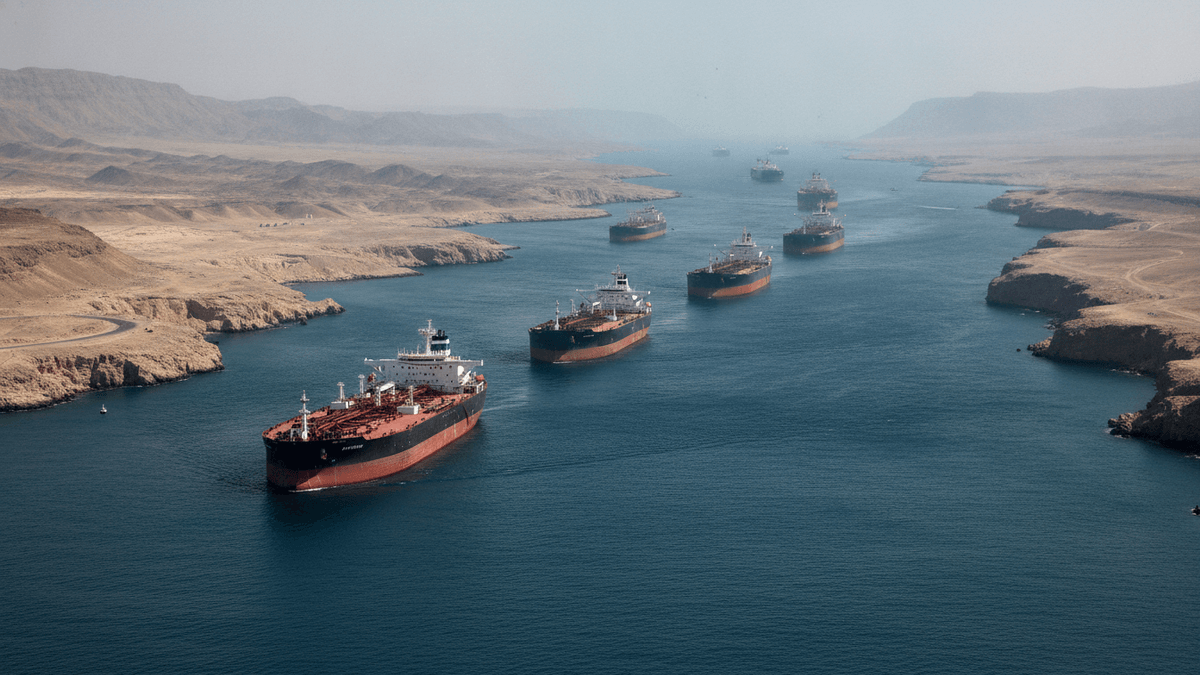
Crude oil tankers in the Strait of Hormuz
Vast quantities of crude oil, estimated at 80 million barrels, are currently held in readiness within the Persian Gulf, awaiting the potential resumption of shipping activity through the critical Strait of Hormuz. This situation is contingent upon an interim agreement between the United States and Iran aimed at re-establishing transit rights in the vital waterway.
The strategic importance of the Strait of Hormuz cannot be overstated, as it serves as a chokepoint for a significant portion of global oil supply. Any disruption or restoration of traffic through this passage has immediate implications for international energy markets and the flow of capital into the sector.
While the specifics of the US-Iran agreement remain under negotiation, the market is closely observing developments that could impact crude oil availability and pricing. The standby oil represents a substantial volume that could quickly enter the global market, influencing supply dynamics should transit be fully restored.
The potential impact on investment in the energy sector and related financial markets will depend on the duration and terms of any agreement. Investors and analysts will be scrutinizing the deal’s implications for geopolitical stability in the region and its subsequent effect on oil prices and trade flows.
About the Author