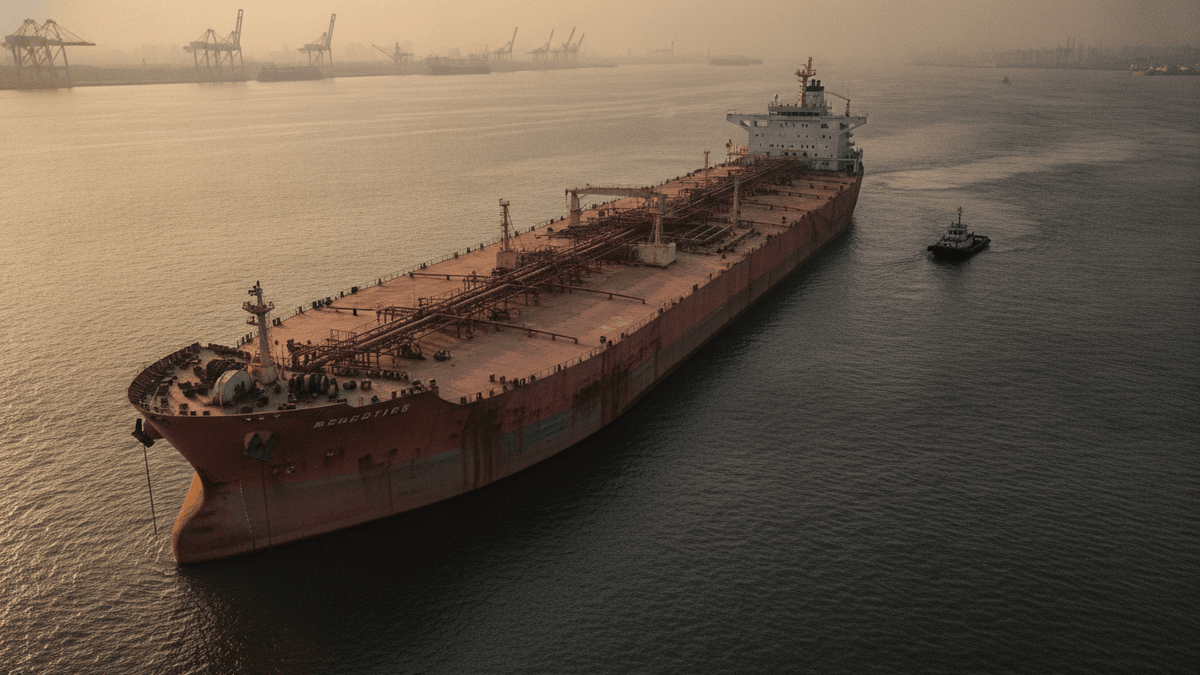
Crude oil tanker approaching port at sunrise
China has demonstrated a significant shift in its role within the global oil market, emerging as a “swing importer” by substantially reducing its oil imports to an eight-year low. This strategic move, influenced by the geopolitical tensions surrounding Iran, highlights China’s newfound ability to impact and potentially stabilize global oil prices.
Historically, China has been a primary driver of demand growth. However, the recent decrease in its import volume by a third signifies a departure from previous patterns. This reduction, while seemingly counterintuitive in a market often driven by increasing demand, serves a dual purpose: mitigating risks associated with oil supply disruptions and exerting a stabilizing influence on international oil prices.
The ability of a major consumer nation like China to actively manage its import levels presents a powerful new dynamic. This strategic flexibility allows Beijing to respond to geopolitical events and supply-side shocks, thereby influencing global price volatility. This marks a significant evolution from China’s traditional role as a consistent demand engine, positioning it as a key player in managing global energy economics.
About the Author