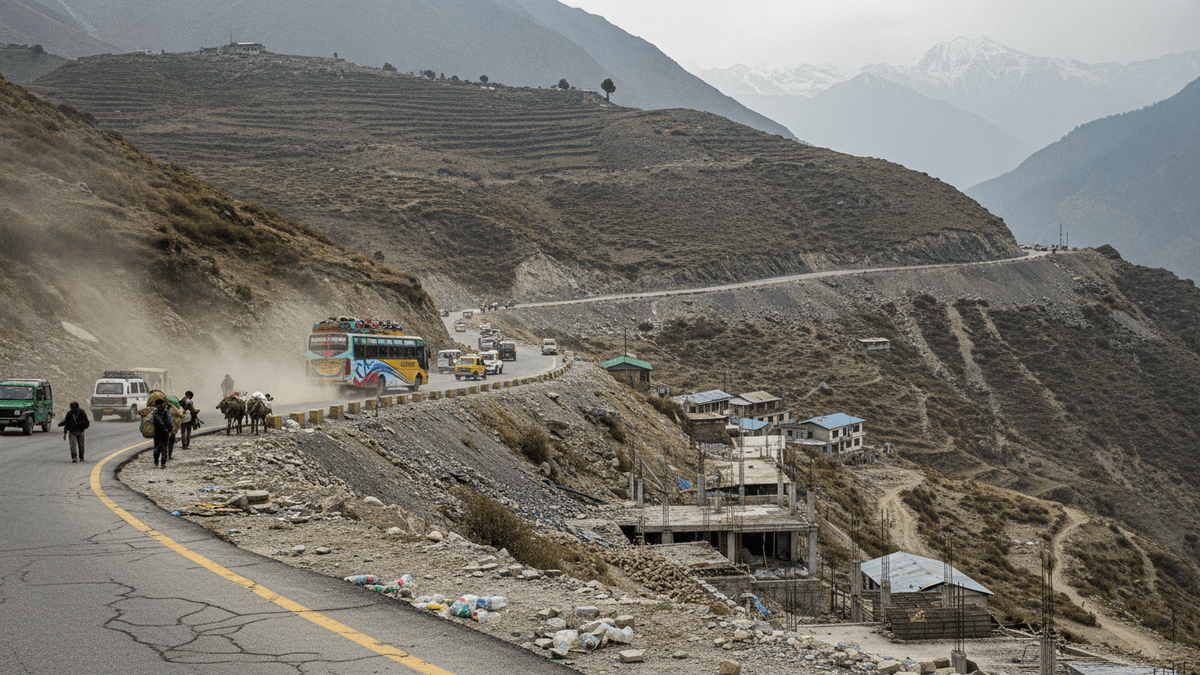
Traffic and construction along a winding mountain road in the Himalayas.
India’s recent budget allocation towards tourism development signifies a strategic shift in its approach to the Himalayan region. This move aims to capitalize on the growing global interest in adventure tourism and the unique offerings of the mountain range.
While Nepal has established a robust and well-organized trekking industry, India’s efforts have historically been hampered by criticism regarding inadequate infrastructure and significant environmental consequences. The rapid influx of tourists, if not managed sustainably, poses a threat to the fragile Himalayan ecosystem.
Furthermore, concerns are being raised about animal welfare along popular pilgrimage routes within the Himalayas. As these regions are rapidly transforming, the article emphasizes the urgency for both domestic and international travelers to experience the Himalayas soon, suggesting that current conditions may not persist.
The increased investment in tourism infrastructure could present opportunities for private sector involvement in areas such as hospitality, adventure sports, and sustainable travel solutions. However, careful planning and stringent environmental regulations will be crucial to mitigate potential negative impacts and ensure the long-term viability of the region as a tourist destination.
About the Author