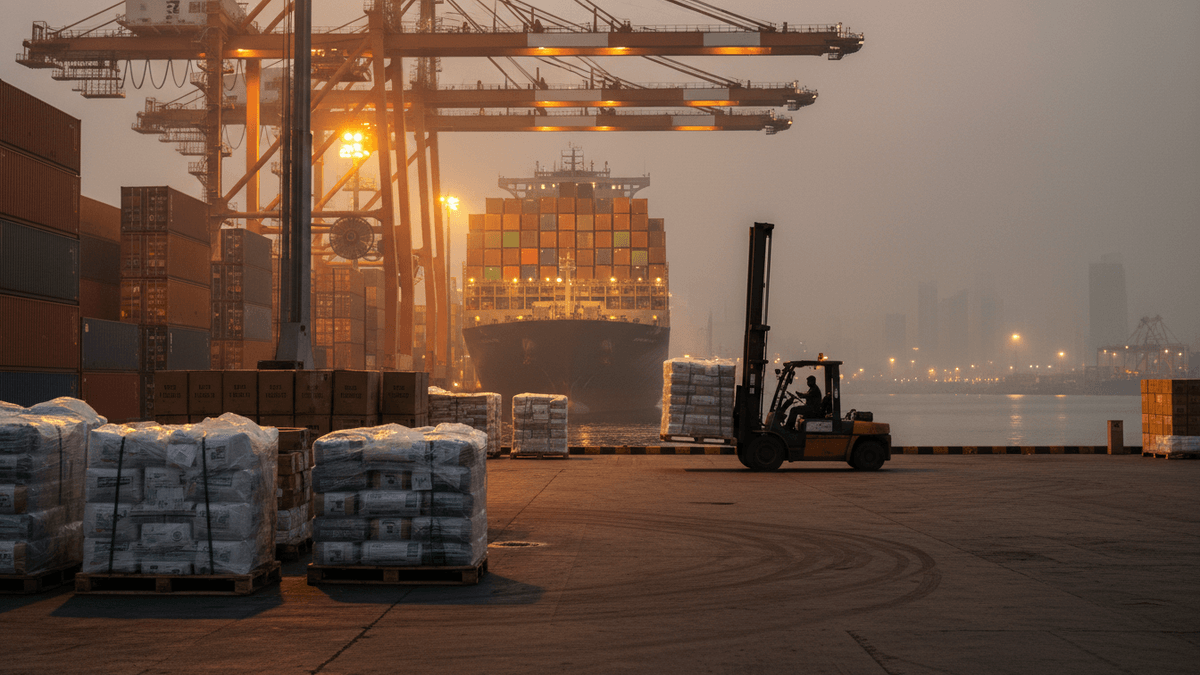
Forklift moves pallets of goods at a port with container ship and cranes at dawn
The ongoing conflict in West Asia is creating significant ripple effects across global supply chains, forcing many Indian Direct-to-Consumer (D2C) brands to re-evaluate their pricing strategies. Escalating oil prices and disruptions to key shipping routes are driving up the costs of essential materials and logistics, impacting the unit economics of these businesses.
Brands in the beauty, personal care, and packaged food sectors are particularly vulnerable. The petrochemical supply chain, crucial for packaging materials like bottles and dispensers, is highly sensitive to oil price fluctuations. With India heavily reliant on West Asian countries for crude oil imports, the crisis has led to a substantial jump in packaging material costs, with some reporting increases of up to 40%.
Furthermore, the import of raw materials vital for various D2C products, including dry fruits and specialty chemicals, has become more challenging and expensive. Trade disruptions through critical maritime routes have led to sharp price increases for these inputs, with some categories seeing a 50% rise in costs.
The logistics sector is also feeling the strain. Increased fuel prices in India are directly impacting transportation costs. While larger companies with distributed manufacturing might absorb some of this pressure, smaller brands with single manufacturing units are expected to face more significant challenges.
“Costs across packaging, freight, and select raw materials have moved up meaningfully over the past few months. Demand is stable – the real pressure currently is on backend economics,” stated Shankar Prasad, founder and CEO of skincare startup Plum.
In response to these mounting pressures, D2C brands are exploring various strategies. While some are implementing direct price increases, others are looking at optimizing packaging to mitigate material cost hikes or adjusting product grammage. Many are adopting a hybrid approach, absorbing a portion of the increased costs internally while cautiously passing on the remainder to consumers to avoid significant impacts on market share and customer base.
For instance, WOW Skin Science has opted for a measured 6-7% price increase alongside a reduction in discounting. GoDesi plans to pass on costs through new packaging cycles and a potential reduction in product grammage, aiming to absorb 30-40% of the impact internally while reflecting another 30-40% on its profit and loss statement.
The current situation presents a complex repricing exercise for D2C brands, as they navigate thin margins and volatile demand, balancing the need to maintain profitability with the imperative to retain customer loyalty in a competitive market.
About the Author