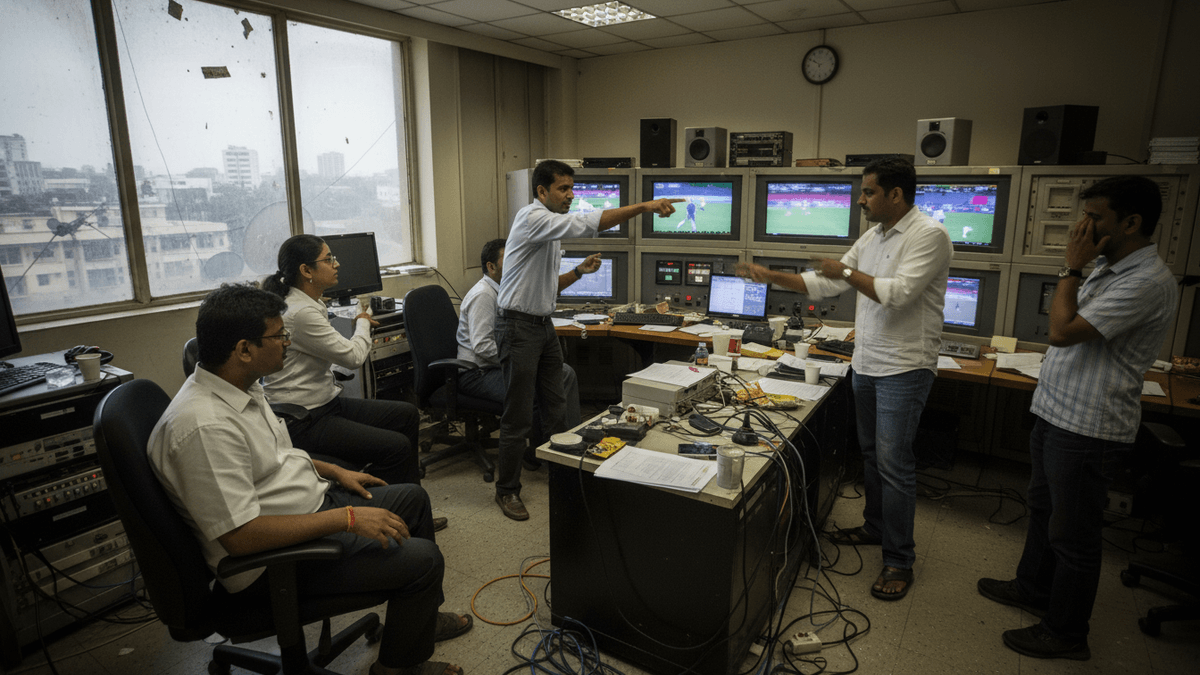
Media professionals in a bustling control room reacting to broadcast screens, India.
As FIFA prepares for the 2026 World Cup, a significant broadcasting dispute is unfolding in India, potentially signaling a shift in how media rights are valued in emerging markets. Local broadcasters are reportedly hesitant to meet FIFA’s elevated pricing demands following the 2022 tournament, despite a notable increase in online viewership.
This standoff between FIFA and potential Indian broadcasters highlights a growing tension between content owners seeking premium valuations and media companies assessing the sustainability of such investments. The 2022 World Cup saw a surge in digital engagement, but this has not automatically translated into a willingness by broadcasters to pay higher fees, particularly in markets where advertising revenue and subscription models are still maturing.
For private equity and venture capital firms invested in or eyeing the media and digital sports content sectors in emerging economies, this situation warrants close observation. FIFA’s firm stance on pricing could set a precedent, influencing negotiations for other major sporting events and potentially impacting the valuation multiples for media rights in regions like Asia, Africa, and Latin America. Investors will be scrutinizing the long-term revenue potential versus the upfront costs, especially as digital consumption patterns evolve and competition intensifies among streaming platforms and traditional broadcasters.
The outcome of these negotiations in India could serve as a critical case study for the broader media investment landscape, dictating whether content rights become a more challenging asset class for investors in high-growth, yet price-sensitive, emerging markets.
About the Author