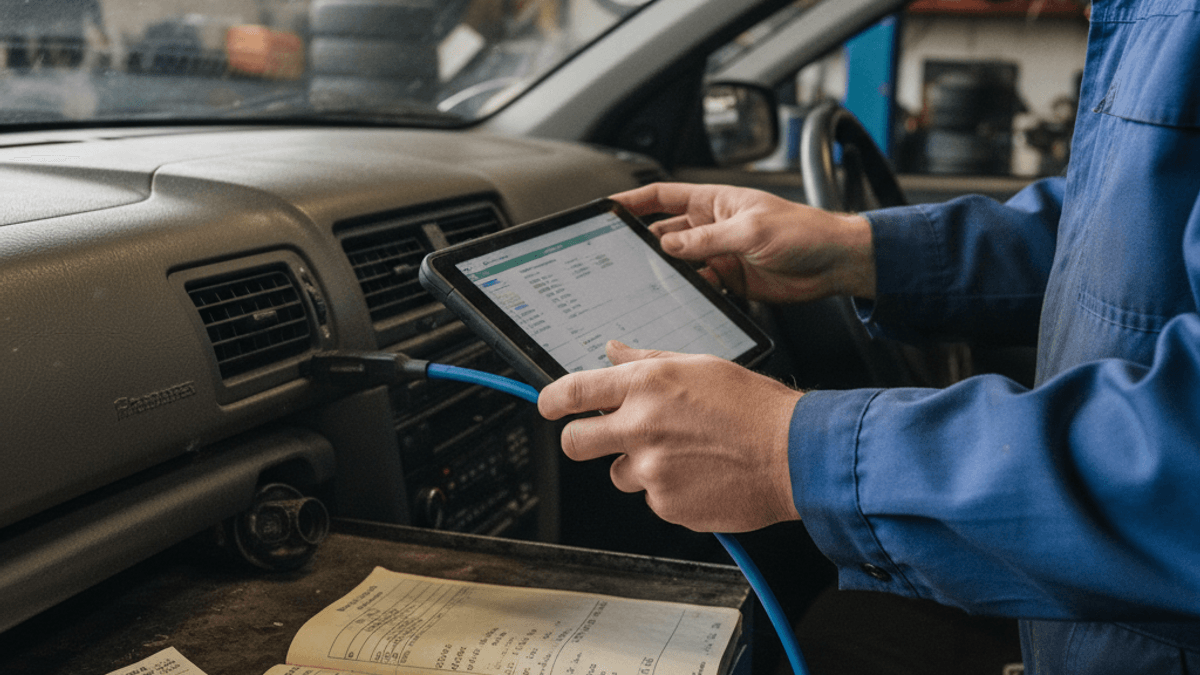
Mechanic performing a diagnostic test on a used car, reviewing data on a tablet.
Test de fiabilité d’un véhicule d’occasion : Guide pratique en 6 étapes
Acquiring a used car often presents a compelling balance between budget and functionality, but it inherently carries risks. A used vehicle reliability test is crucial for identifying potential mechanical or electronic issues not apparent during a standard inspection. Understanding a vehicle’s reliability profile helps prevent unforeseen expenses and provides peace of mind.
In today’s market, discerning buyers increasingly scrutinize a car’s history, especially following industry recalls. A comprehensive diagnostic offers a solid foundation for price negotiations or for deciding to walk away from a purchase if reliability indicators are weak.
Key Reliability Test Criteria
An effective reliability test hinges on analyzing several critical elements that reflect the vehicle’s true condition. Key factors include:
- A complete maintenance history.
- The actual mileage compared to the odometer reading.
- The number of previous owners.
- Any declared accidents.
- Outstanding technical recalls.
Each of these points should be verified using official documentation (invoices, service books) or specialized databases.
Maintenance History
Regular maintenance is the primary indicator of a vehicle’s reliability. An up-to-date service record demonstrates that the owner has adhered to the manufacturer’s recommendations. Without such proof, the likelihood of premature wear increases significantly.
Actual vs. Displayed Mileage
Odometer readings can be subject to tampering. Verifying the vehicle’s identification number (VIN) against databases that record mileage data from garages and insurance companies can help detect potential fraud.
Methods and Tools for Conducting the Test
Several options are available for performing a used vehicle reliability test:
- Specialized online services that aggregate VIN data.
- Technical inspection centers offering in-depth electronic diagnostics.
- Mobile applications that connect your smartphone to the vehicle’s OBD-II port.
The choice depends on your budget, the desired level of detail, and the time you are willing to invest. Online services are often the quickest, while physical inspections provide a more exhaustive assessment of mechanical components.
Interpreting Results: Understanding Reliability Scores
After the test, platforms typically provide a reliability score, often on a scale of 1 to 5 stars. This score summarizes various indicators such as:
- Accident history (0-2 points).
- Quality of maintenance (0-2 points).
- Mileage consistency (0-1 point).
A high score suggests the vehicle has been well-maintained and has no major reported incidents. Conversely, a low score should serve as a warning, prompting further investigation, repair requests, or price renegotiation.
Practical Steps for Your Own Reliability Test
Here is a straightforward six-step process for conducting an effective used vehicle reliability test:
- Obtain the VIN (usually found on the dashboard or driver’s side doorjamb).
- Consult the vehicle’s history report using a reputable online service.
- Review the service book and gather all maintenance invoices.
- Arrange for a comprehensive technical inspection at an authorized center.
- Use an OBD-II scanner app to read any potential error codes.
- Analyze all findings to decide whether to accept, negotiate, or reject the purchase.
These steps provide a comprehensive overview of the vehicle’s strengths and weaknesses, aiding in an informed decision.
Comparison of Online Solutions
To assist your choice, here’s a summary of leading platforms offering used vehicle reliability tests:
| Tool | Features | Price (€/report) | Reliability (stars) |
|---|---|---|---|
| AutoCheck France | Full history, recall alerts, reliability score | 29.90 | 4.5 |
| Carfax Europe | Accident history, owner count, mileage data | 24.99 | 4.2 |
| VINexpert | OBD-II analysis, maintenance history, mileage fraud alerts | 34.50 | 4.3 |
| Diagnostic Mobile (App) | Real-time code reading, repair recommendations | 19.99 | 3.9 |
Select the tool that best aligns with your detailed requirements and budget. For a quick, free overview, you can start your research at: https://outil-de-diagnostic-de-sante-des-ve.vercel.app.
Cost and Budget for a Reliability Test
The cost of a report typically ranges from €20 to €35, depending on the depth of information. This is in addition to the technical inspection fee (around €70) and potential diagnostic visits to a mechanic. A comprehensive test can therefore budget between €100 and €150.
This is a reasonable investment when compared to the potential costs of a major undetected repair, which can easily run into thousands of euros.
FAQ: Frequently Asked Questions on Used Vehicle Reliability Tests
Is the test mandatory before purchase?
No, but it is highly recommended. A reliable report enhances your negotiation power and minimizes risks.
How long does the diagnostic process take?
An online report is usually available within 10-15 minutes after entering the VIN. A full technical inspection typically takes about an hour.
Can I trust the results from a free website?
Free services often provide limited information. For a complete picture, investing in a reputable paid service is advisable.
About the Author