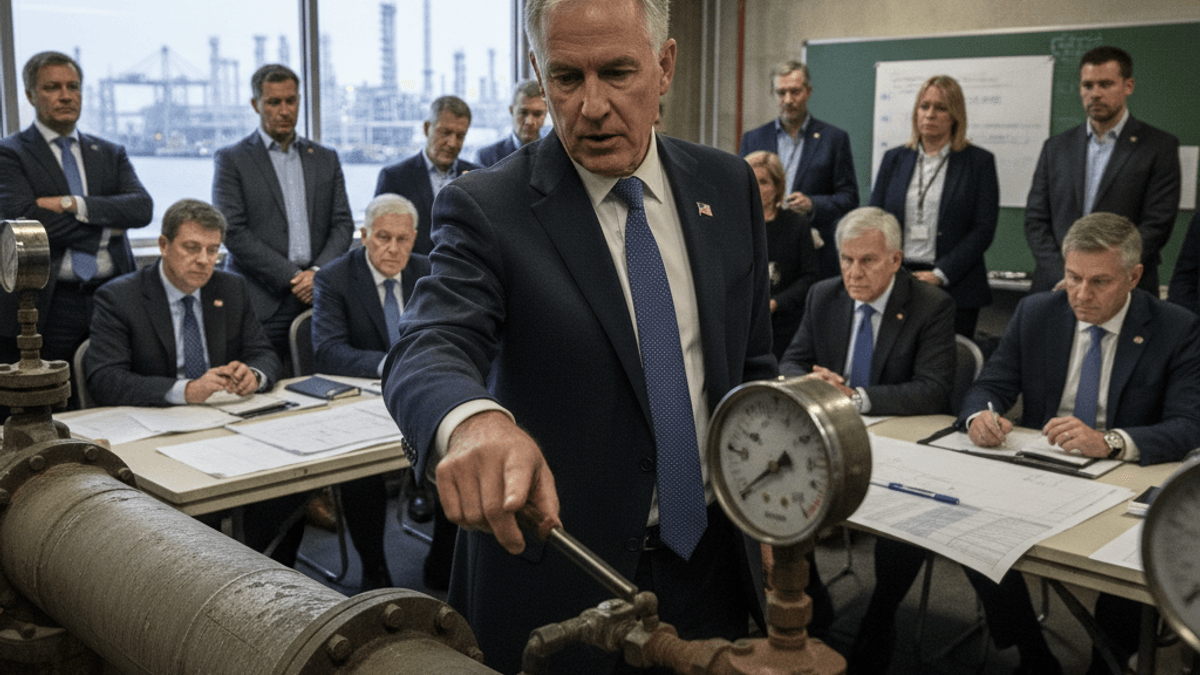
Treasury Secretary Scott Bessent adjusts a valve during a policy review, with global energy infrastructure in the background.
The United States has extended sanctions relief on seaborne oil imports from Iran and Russia for an additional 30 days. This decision, announced by U.S. Treasury Secretary Scott Bessent, comes after formal requests from ten nations identified as particularly vulnerable to energy market disruptions.
The extension signifies a temporary reprieve for these countries, which rely on these oil supplies to meet domestic energy demands and stabilize their economies. The move appears to be a pragmatic response to immediate global economic pressures, particularly for developing economies already grappling with inflation and energy security concerns.
Secretary Bessent’s decision marks a departure from an earlier inclination to cease such waivers. While the specifics of the requests from the vulnerable nations were not detailed, the underlying concern is the potential economic fallout from abrupt supply shocks. The Treasury Department stated that the extension is intended to allow these countries time to secure alternative energy sources and mitigate the immediate impact of renewed sanctions.
This development also brings renewed attention to the debate surrounding the effectiveness and collateral impact of U.S. sanctions. Bessent has reportedly disputed claims that Iran has profited significantly from these waivers, suggesting that the economic benefits to Tehran may be less substantial than alleged. The Treasury’s ongoing review of sanctions policy aims to balance international pressure on targeted nations with the need to avoid destabilizing global markets and disproportionately affecting third-party economies.
About the Author