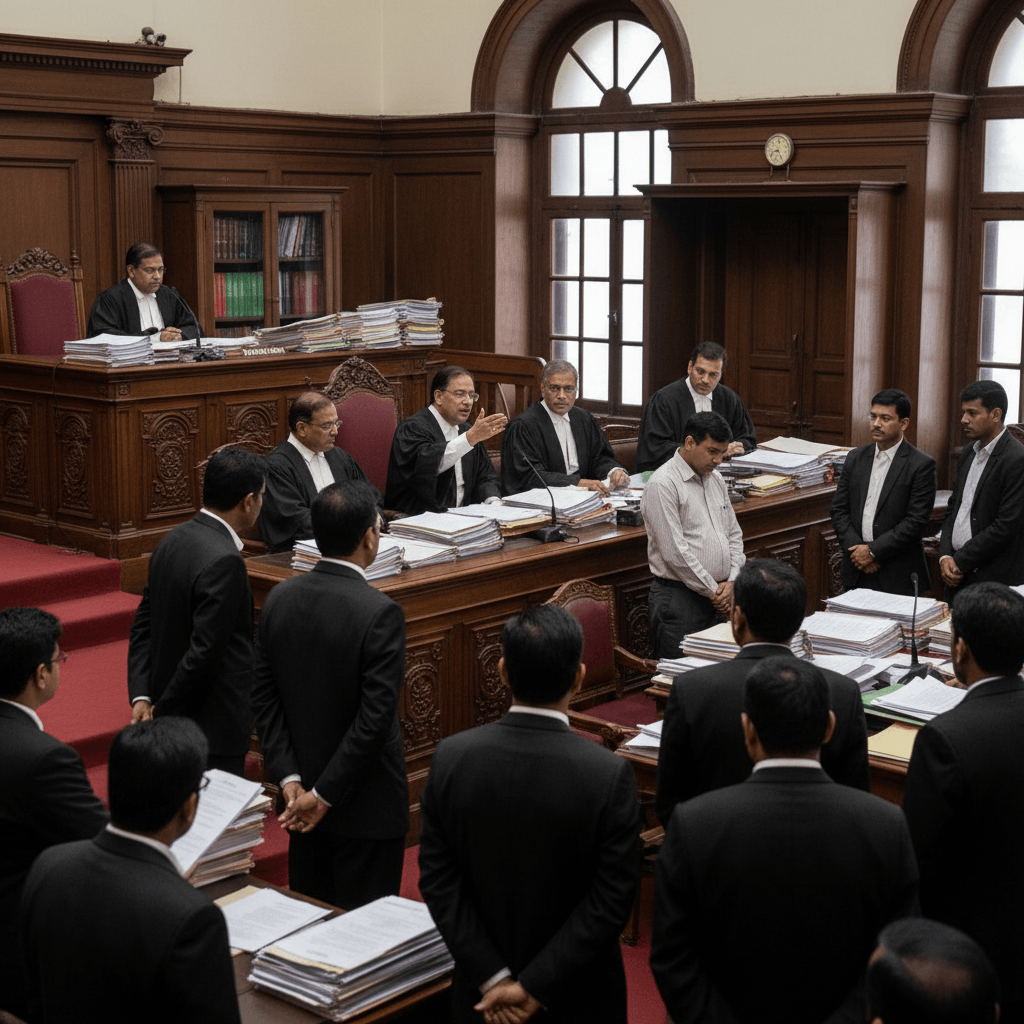
Indian Supreme Court judges deliberate on a Public Interest Litigation.
The Supreme Court of India has dismissed a Public Interest Litigation (PIL) aimed at enforcing mandatory voting and penalizing non-voters, asserting that such a directive falls within the ‘policy domain’ and is beyond judicial purview. The bench, presided over by Chief Justice Surya Kant, emphasized that civic engagement, rather than legal compulsion, is the cornerstone of democracy. The court also questioned the feasibility and consequences of criminalizing abstention from voting or curtailing government benefits for those who choose not to vote. The petitioner, Ajay Goel, was advised to engage with relevant stakeholders.
The petitioner requested guidelines to restrict government benefits for individuals who deliberately abstain from voting. However, the Chief Justice remarked that democracy flourishes on public awareness rather than legal compulsion. He questioned the logic of criminalizing the act of staying home on election day or directing arrests for non-voters, highlighting that awareness is key, not coercion.
The bench further pointed out the practical difficulties of implementing a mandatory voting law, noting that many citizens, including judges, have work commitments on election days. Justice Bagchi added that “Judicial work is also important.” Concerns were also raised for marginalized sections of society, with the bench asking how to address a poor person who needs to earn wages instead of voting. The court reiterated that these issues are best addressed in the policy domain.
About the Author