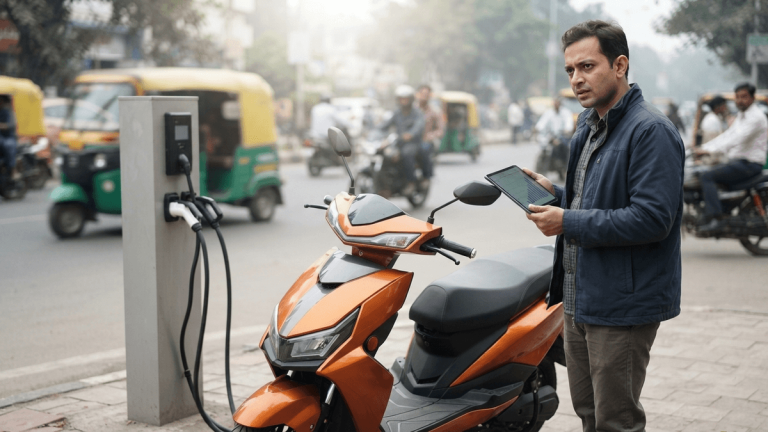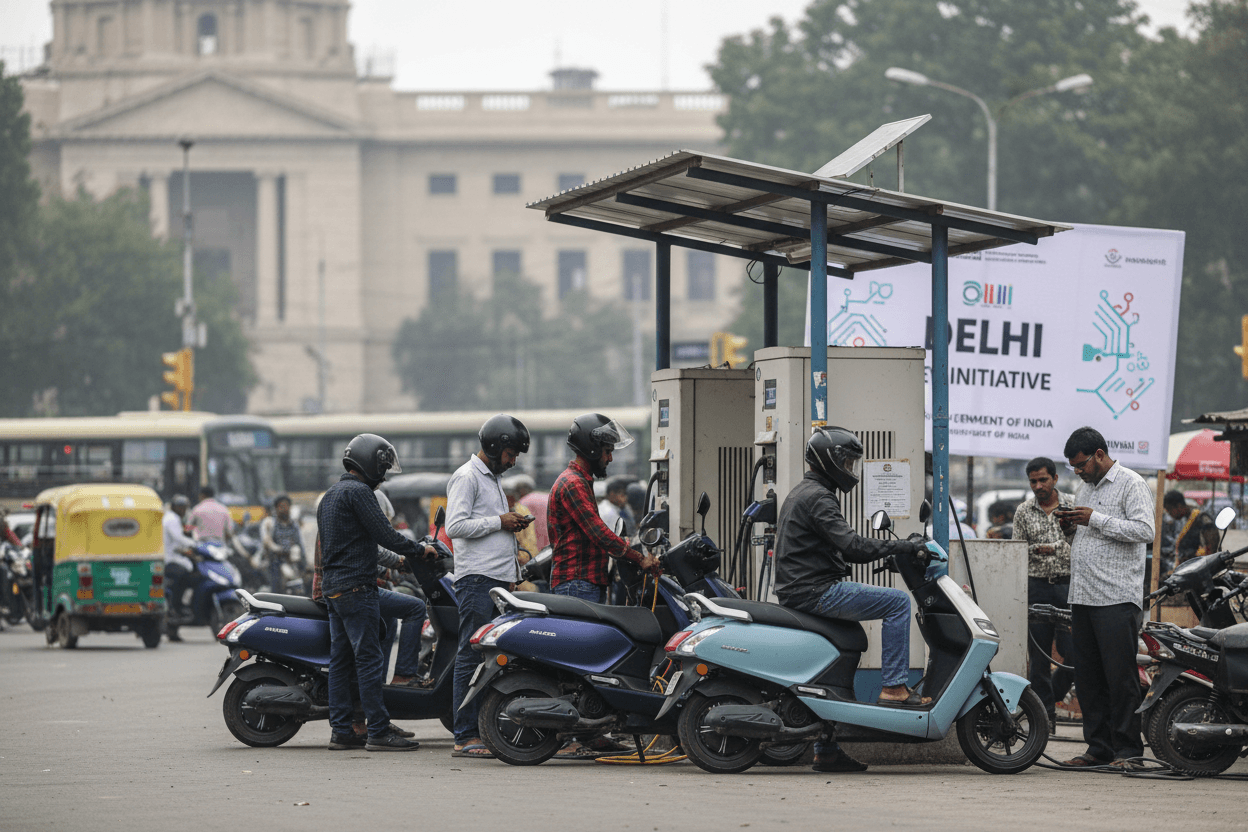
Electric scooters charging at a public station in Delhi under the new EV policy.
Delhi’s draft Electric Vehicle Policy 2026-2030, proposing a ban on new petrol two-wheelers from April 2028, is projected to significantly boost India’s electric vehicle (EV) market. According to a CRISIL impact assessment, the policy could add approximately 6 lakh electric two-wheelers to national sales by fiscal year 2029.
CRISIL estimates that this initiative could elevate pan-India electric two-wheeler penetration to between 21-23 percent by FY2029, a notable increase from the 18-20 percent forecast without the policy. The analysis points out that the lifetime cost of ownership for electric two-wheelers is already more favorable than for petrol alternatives, with Delhi’s incentive structure further enhancing this economic advantage.
The policy is a direct response to Delhi’s status as one of the world’s most polluted capitals, where vehicular emissions, particularly from two-wheelers, contribute significantly to air quality issues. CRISIL suggests that Delhi’s pioneering move could inspire similar mandates in other large Indian states. Comparable policies across the country could accelerate the national EV transition, compelling automakers to ramp up electrification efforts and expedite the localization of battery manufacturing and charging infrastructure development.
The draft policy is currently open for public feedback until May 10, after which it is expected to be formally implemented, potentially reshaping the automotive landscape and investment priorities in the sector.
About the Author