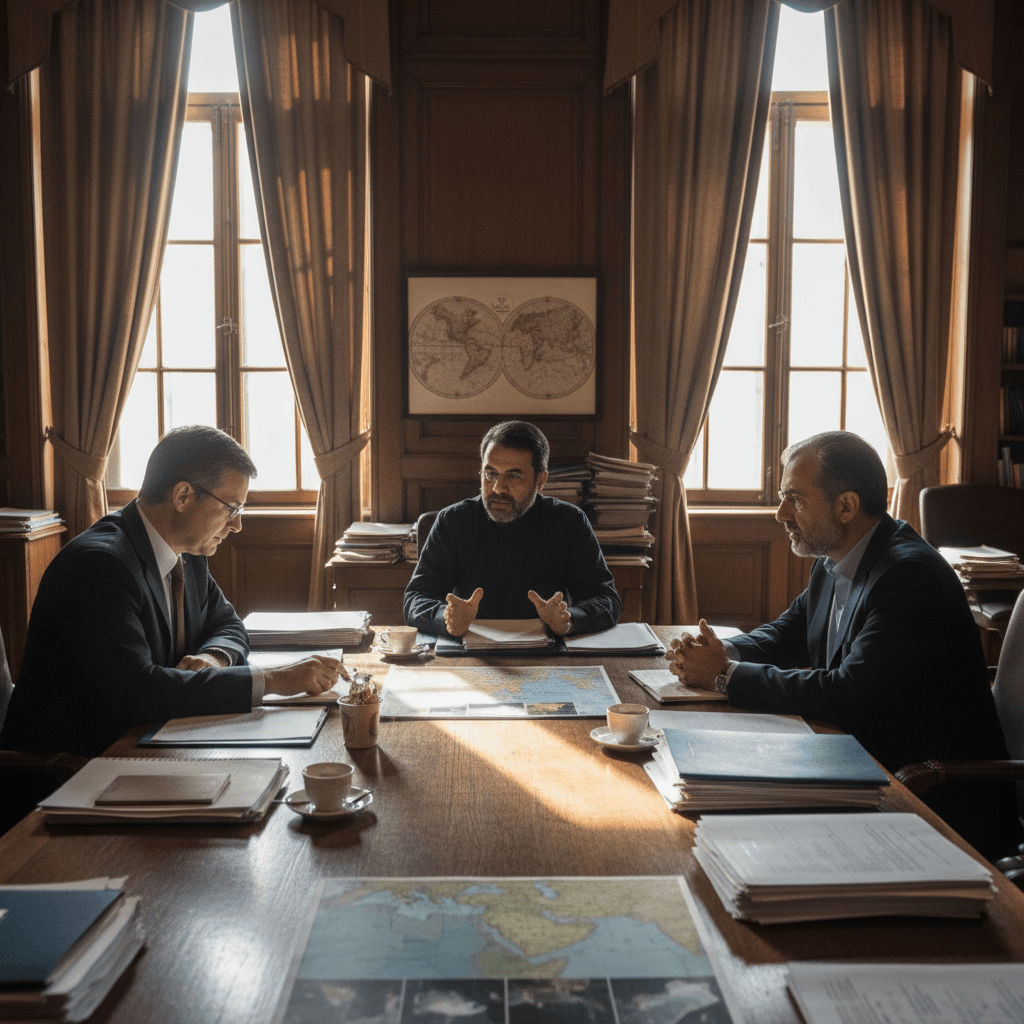
Diplomats engage in discussions at a negotiation table, with papers and maps spread out.
The White House has indicated that negotiations with Iran are continuing to be “productive and ongoing,” even as tensions persist regarding the Strait of Hormuz. White House Press Secretary Karoline Leavitt stated that the United States is actively involved in these discussions, countering reports that Washington had requested an extension of the current ceasefire.
Leavitt mentioned that conversations are happening at various levels, with potential in-person meetings being considered but not yet finalized. She highlighted Pakistan’s crucial role as the sole mediator in the negotiation process, despite other countries expressing interest in facilitating talks. The administration is focused on maintaining a streamlined negotiation track through Islamabad, and any future discussions are expected to occur at previous meeting locations.
The White House expressed cautious optimism about the possibility of reaching a deal, though Leavitt emphasized that no specific timelines for an agreement would be set. President Donald Trump’s “red lines” in these negotiations have been clearly communicated to the Iranian side.
Furthermore, the White House clarified its position on maritime operations, stating that while a blockade targets Iranian-linked shipping, US forces support freedom of navigation for other vessels transiting the Strait to and from non-Iranian ports. Enforcement measures apply to vessels of all nations entering or departing Iranian ports.
About the Author