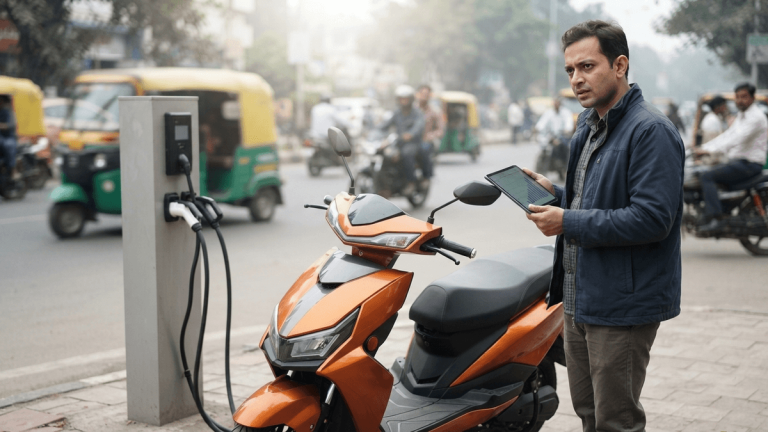
Delhi government officials discuss EV policy, auto-rickshaws visible outside.
The Delhi government’s draft Electric Vehicle (EV) Policy 2026–2030 proposes significant incentives to accelerate the adoption of electric vehicles in the capital. Key among these is a 100% exemption on road tax and registration fees for electric cars priced up to ₹30 lakh (ex-showroom) until March 31, 2030. This initiative aims to make EVs more financially attractive to consumers.
The policy also includes a 50% tax benefit for strong hybrid vehicles, further encouraging the transition to cleaner mobility solutions. A notable provision mandates that only electric three-wheelers will be permitted for new registrations in Delhi starting January 1, 2027. This move is designed to rapidly electrify the city’s public transportation fleet.
The overarching objectives of the EV policy are to improve air quality and establish a comprehensive ecosystem for electric mobility. By reducing the upfront costs associated with EV ownership and promoting electric public transport, the Delhi government seeks to create a sustainable urban environment.
The draft policy is open for public feedback for 30 days, allowing stakeholders to contribute to the final version. This new policy builds upon the original EV policy launched in August 2020, which has been extended multiple times since its initial term concluded in August 2023.
About the Author