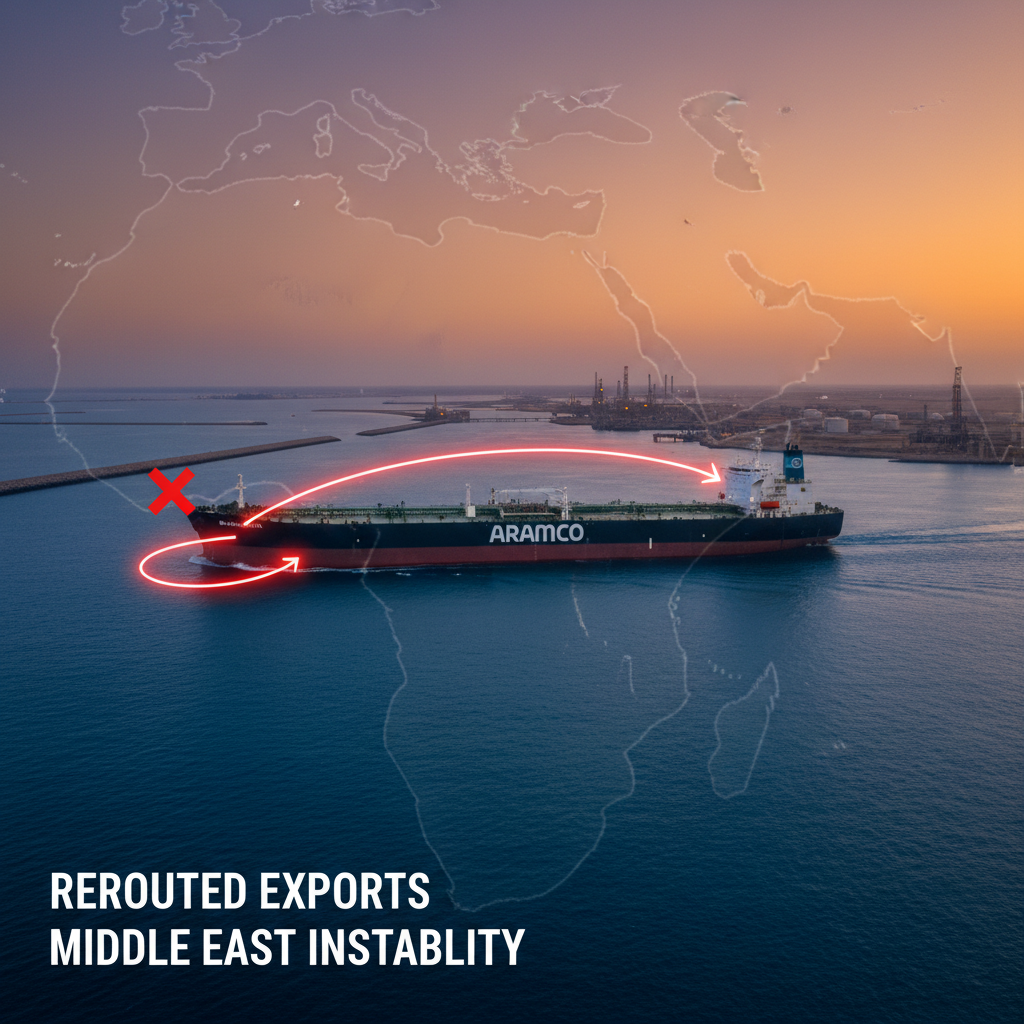
Aramco Reroutes Oil Exports Amidst Middle East Instability
In a strategic move reflecting the precarious geopolitical landscape, Saudi Aramco is rerouting its oil exports, seeking to bypass the critical Strait of Hormuz. This shift, according to industry sources, aims to mitigate the risks associated with escalating tensions and attacks impacting shipping in the region. The decision underscores the growing instability and its direct impact on global energy markets.
Bypassing the Strait: A Strategic Imperative
The Strait of Hormuz, a vital chokepoint for global oil transit, has become increasingly vulnerable. Saudi Aramco’s decision to reroute its crude oil exports to the Red Sea port of Yanbu is a direct response to these heightened risks. By diverting shipments away from the Strait, the company seeks to ensure the continuity of its oil exports and minimize potential disruptions caused by conflicts.
The East-West Pipeline: A Limited Alternative
The East-West Pipeline, a potential alternative route, presents its own set of challenges. While it offers a pathway for transporting crude oil, its capacity is limited compared to the volumes typically shipped through the Strait of Hormuz. Furthermore, the pipeline itself is not immune to security concerns, adding another layer of complexity to Aramco’s logistical considerations.
Global Oil Prices: A Reflection of Instability
The ongoing conflicts in the Middle East have had a direct impact on global oil prices. The rerouting of oil exports by Saudi Aramco, coupled with the broader geopolitical uncertainties, has contributed to rising prices. This situation highlights the sensitivity of the global oil market to events in the Middle East, a region that remains central to global energy production and exports.
Yanbu: A Key Hub in the Red Sea
The Red Sea port of Yanbu is emerging as a critical hub in Saudi Aramco’s revised export strategy. This port offers a safer and more stable route for transporting crude oil to international markets. The increased reliance on Yanbu underlines the company’s commitment to ensuring the reliable supply of oil despite the challenging circumstances in the Strait of Hormuz.
Conclusion
Saudi Aramco’s strategic decision to reroute oil exports is a clear indication of the growing instability in the Middle East and its impact on the energy sector. This move, while necessary to protect oil exports, also highlights the vulnerabilities of global oil supply chains. The situation underscores the importance of monitoring geopolitical developments and their potential effects on the global economy.
Source: Industry-Economic Times
About the Author