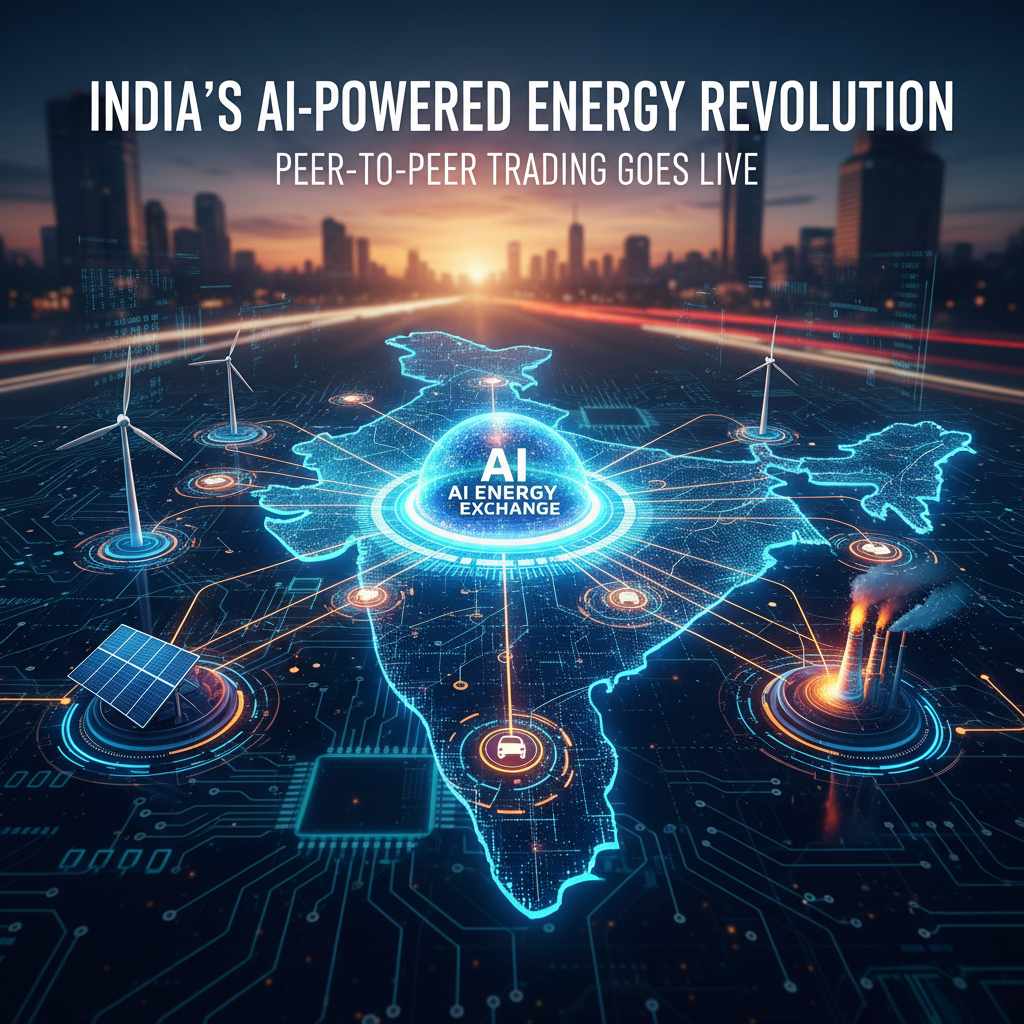
India’s AI-Powered Energy Revolution: Peer-to-Peer Trading Goes Live
The future of energy in India is taking shape, and it’s powered by artificial intelligence and innovative market structures. At the 2026 AI Impact Summit, a significant milestone was reached: the first live demonstration of peer-to-peer (P2P) energy trading under the India Energy Stack framework. This event, spearheaded by REC Ltd, showcased a practical application of how technology can reshape the energy sector, fostering a more decentralized and efficient market.
A Groundbreaking Demonstration
The demonstration, as reported by the Economic Times, involved a farmer in Meerut selling surplus solar power directly to a garment shop owner in Delhi. This transaction, executed on a blockchain-enabled digital platform, highlights the core concept of the initiative: allowing ‘prosumers’ – individuals or entities that both produce and consume energy – to trade their surplus power directly with other users. This direct interaction removes the need for intermediaries, potentially leading to fairer pricing and increased efficiency in the electricity market.
The India Energy Stack: A Foundation for Change
The pilot project is built upon the India Energy Stack, a framework designed to modernize and decentralize the energy ecosystem. By leveraging blockchain technology, the platform ensures secure and transparent transactions, critical for building trust among participants. The use of AI further optimizes the process, potentially predicting energy demand and supply, and facilitating smoother trading operations. This integration of AI and blockchain is a key driver for the creation of a more dynamic and responsive electricity market.
Key Players and Their Roles
Several entities are pivotal in this energy transformation:
- REC Ltd: Played a crucial role in showcasing the live demonstration, highlighting their commitment to innovation in the energy sector.
- The Farmer in Meerut: Represents the prosumers who can now monetize their surplus solar power.
- The Delhi Garment Shop Owner: Represents the consumers who can access renewable energy directly.
These stakeholders, along with the technological infrastructure, collectively contribute to a more sustainable and equitable energy future for India.
The Benefits of a Decentralized Market
The shift towards a decentralized electricity market offers numerous advantages:
- Increased Efficiency: Direct trading eliminates intermediaries, reducing costs and streamlining transactions.
- Empowerment of Prosumers: Allows individuals and businesses to profit from their renewable energy generation.
- Greater Transparency: Blockchain technology ensures secure and transparent transactions.
- Sustainability: Promotes the use of renewable energy sources like solar power.
Looking Ahead
The successful demonstration of P2P energy trading marks a significant step towards a more sustainable and efficient energy future for India. As the technology matures and adoption increases, the potential for a decentralized electricity market becomes increasingly clear. This initiative, driven by the collaborative efforts of entities like REC Ltd and the innovative use of technologies like AI and blockchain, is poised to transform how India generates, distributes, and consumes energy. The pilot project in 2026 is just the beginning; the scalability and broader implementation of such initiatives hold immense promise for the future.
Source: Economic Times
About the Author