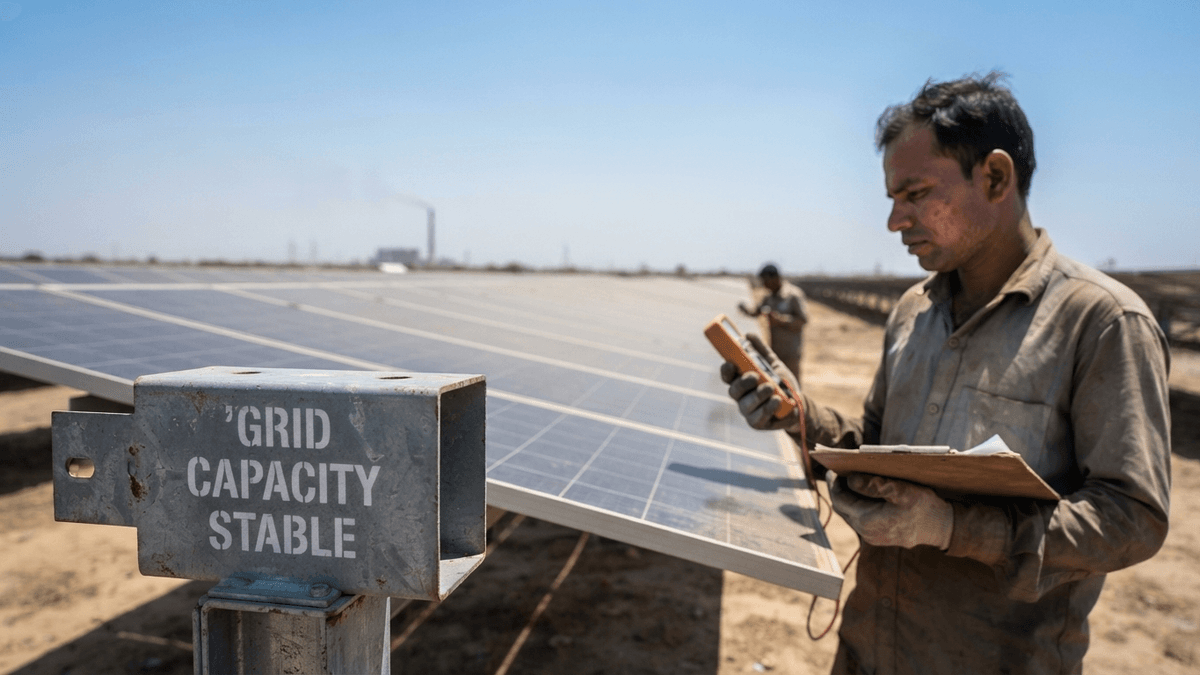
Solar panels operate at a facility in India as power sector emissions remain stable.
A recent analysis indicates that India’s power sector emissions have remained stagnant between early 2024 and mid-2026, a development driven by a significant influx of capital into renewable energy infrastructure. The deployment of solar, wind, and nuclear capacity has successfully met rising electricity demand, providing a stable baseline for the country’s energy transition.
For institutional investors and private equity firms, this shift highlights the maturing landscape of India’s renewable energy sector. The ability of clean energy sources to absorb consumption spikes suggests that grid-scale storage and renewable utility projects are becoming increasingly bankable assets.
However, the broader industrial picture remains complex. While the power sector stabilizes, emissions from cement and steel production have trended upward, fueled by sustained capital expenditure in the real estate and infrastructure development sectors. This divergence presents a strategic consideration for ESG-focused funds: while the energy generation sector offers clear decarbonization pathways, heavy industry remains a high-emissions challenge requiring targeted capital for green manufacturing technologies.
As India continues to prioritize industrial growth alongside climate targets, the performance of these sectors will likely dictate future policy interventions and investment priorities in the country’s infrastructure market.
About the Author