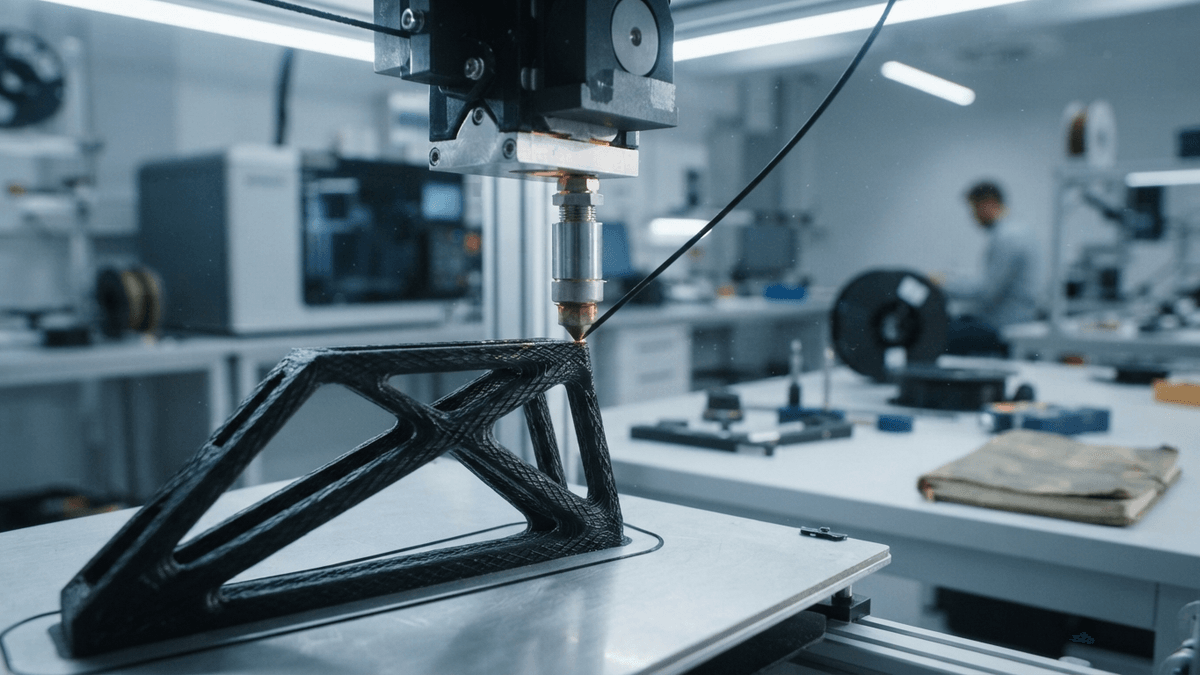
A 3D printer deposits continuous filament reinforcement for advanced manufacturing.
The continuous filament reinforcement sector is entering a period of anticipated expansion, with projections indicating significant growth through 2035. According to data from IndexBox, the surge is primarily attributed to the industrial mandate for lightweighting as companies in the automotive, aerospace, and construction sectors seek to meet increasingly stringent fuel efficiency and emission standards.
For private equity and venture capital investors, the sector presents a complex opportunity. While continuous filament reinforcement offers enhanced mechanical properties over traditional materials, the market currently faces headwinds, including high raw material costs and the technical expertise required for implementation. Investors are tracking the integration of these materials into 3D printing and advanced manufacturing processes as key indicators of scalability.
As the industry matures, capital allocation is expected to focus on research and development aimed at optimizing production costs. The ability to lower the barrier to entry for these composites will be critical in determining which players capture market share in the renewable energy and construction infrastructure segments over the next decade.
About the Author