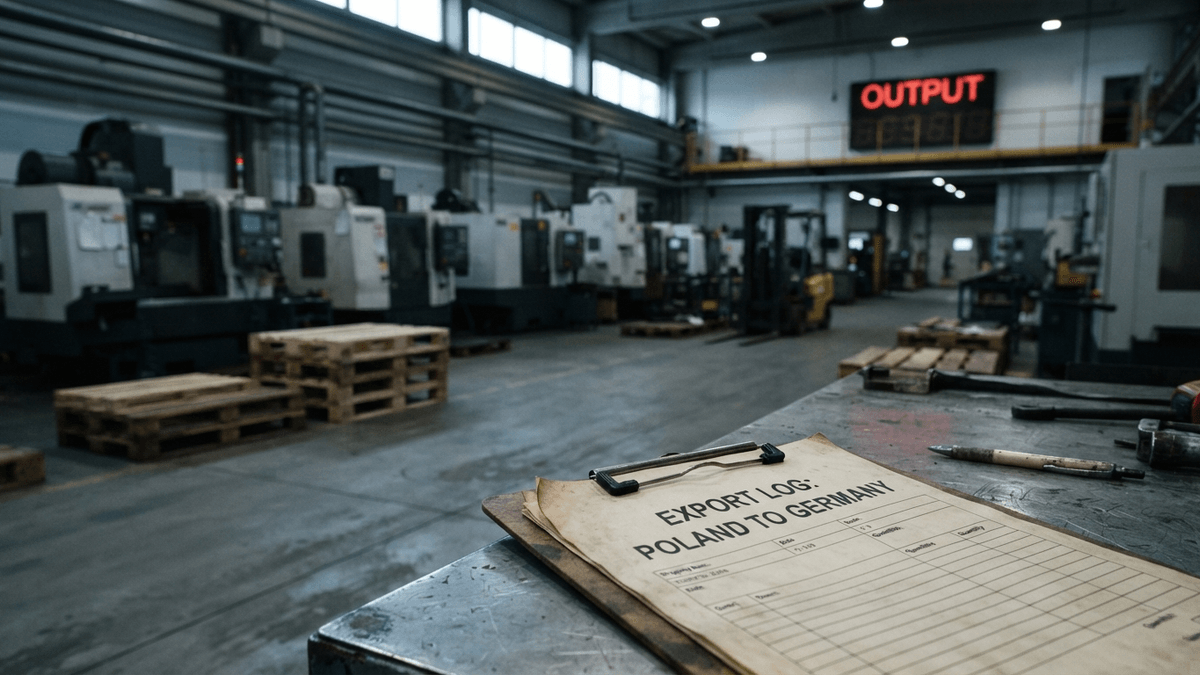
A quiet factory floor in Poland highlights the slowdown in manufacturing output.
Poland’s manufacturing sector, a cornerstone of the nation’s recent economic expansion, is currently grappling with a significant downturn. The contraction in industrial output underscores the country’s deep supply chain integration with Germany, as the latter’s prolonged economic stagnation directly impacts export-oriented manufacturing demand.
For institutional investors and private equity firms active in Central and Eastern Europe, this shift marks a critical inflection point. The interdependence between the two economies has resulted in a deceleration of capital investment within Polish factories. Market analysts point to a confluence of factors exacerbating the decline: persistent high energy costs, tightening labor markets, and a broader cooling of the European industrial landscape.
The current environment presents a challenging landscape for capital allocation. While Poland has historically served as a manufacturing hub for German automotive and industrial components, the recent output figures suggest that regional recovery is heavily tethered to a rebound in German macroeconomic conditions. Investors are now recalibrating their exposure to the region, closely monitoring how these structural headwinds might influence future deal flow and the valuation of industrial assets across the manufacturing supply chain.
About the Author