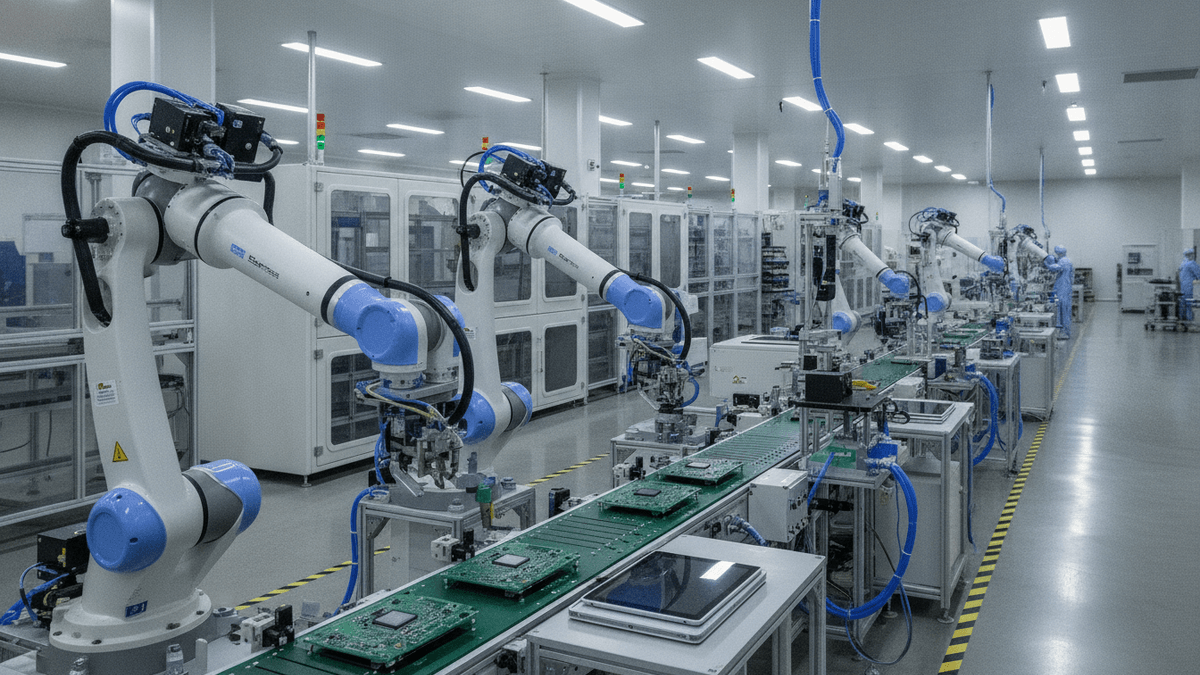
Automated assembly line producing computer and electronic components in a modern facility.
U.S. manufacturing exhibited steady growth in July, with a notable surge in the production of business equipment such as computers and machinery. This expansion, as reported by the Federal Reserve, contrasts with slowdowns observed in other manufacturing sectors, including motor vehicles and apparel.
Both manufacturing output and overall industrial production saw a 0.2% increase in July, contributing to a 1.1% rise in total industrial production over the past twelve months. Economists attribute a significant portion of this growth to the booming AI sector, which is driving rapid output in computer and electronic products. This trend aligns with projections of continued, albeit moderated, economic expansion.
The positive manufacturing data emerges amidst mixed economic signals. While industrial production shows resilience, consumer sentiment has declined, and retail sales experienced a contraction in July, missing forecasts. This divergence highlights potential vulnerabilities in consumer-driven economic activity, even as business investment shows signs of strength.
Despite broader economic uncertainties, Deloitte has revised its forecast for fixed business investment upward, citing increased investment in AI infrastructure and the positive impact of rising equity prices. The firm projects a 2% GDP growth for 2026, with high oil prices identified as the primary risk to economic expansion.
About the Author