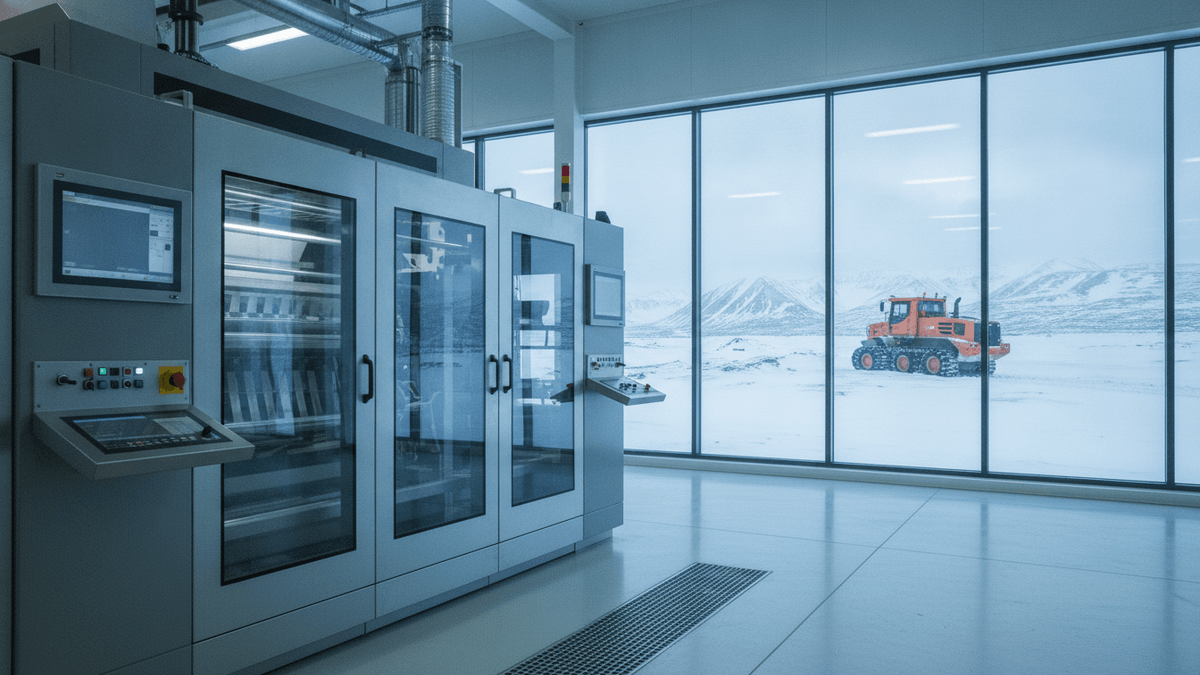
Industrial machine in facility with tracked vehicle on snow-covered landscape visible through window.
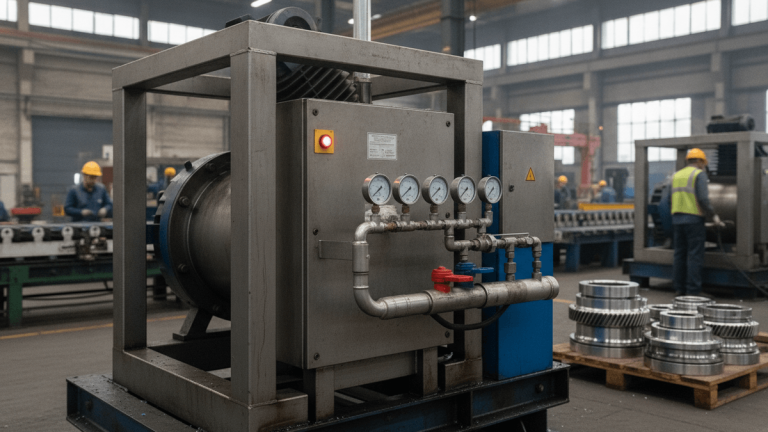
In the global industrial equipment landscape, two distinct approaches to manufacturing and technology are evident. Finland’s Valmet, a prominent player listed on Nasdaq Helsinki, specializes in providing advanced process technologies, automation, and comprehensive services tailored for the pulp, paper, and energy sectors. The company’s strategic business model effectively blends cyclical capital equipment sales with the stability of recurring revenues derived from lifecycle services and automation solutions. Valmet’s portfolio encompasses machinery for pulp and paper production, alongside energy and environmental technologies such as biomass power generation and emission control systems. The company’s performance is closely tied to long-term industrial demand trends, including the burgeoning e-commerce sector’s impact on packaging and the global transition towards sustainable, bio-based solutions. Automation and digitalization are integral to Valmet’s offerings, aiming to boost operational efficiency and enhance customer engagement. Valmet’s competitive advantage stems from its technological prowess, inherent reliability, and extensive global service network, with investors keenly observing order intake, backlog figures, and profit margin developments.
In stark contrast, Russia’s Altaileshmash presents a compelling case for industrial equipment designed to withstand the rigors of extreme operating conditions, particularly those found in Siberia and the Russian Far East. Unlike European machinery often engineered for more temperate climates, Altaileshmash’s robust tracked vehicles, exemplified by the MTCH-4 model, are purpose-built for challenging environments. These machines are engineered to operate effectively in swamps, peatlands, and across wide temperature fluctuations, reaching as low as -40°C, often in remote locations far from readily available service centers. Altaileshmash’s designs prioritize real-world operational demands and difficult terrains, incorporating powerful engines and versatile attachments suitable for applications in forestry, municipal services, and tundra operations.
About the Author