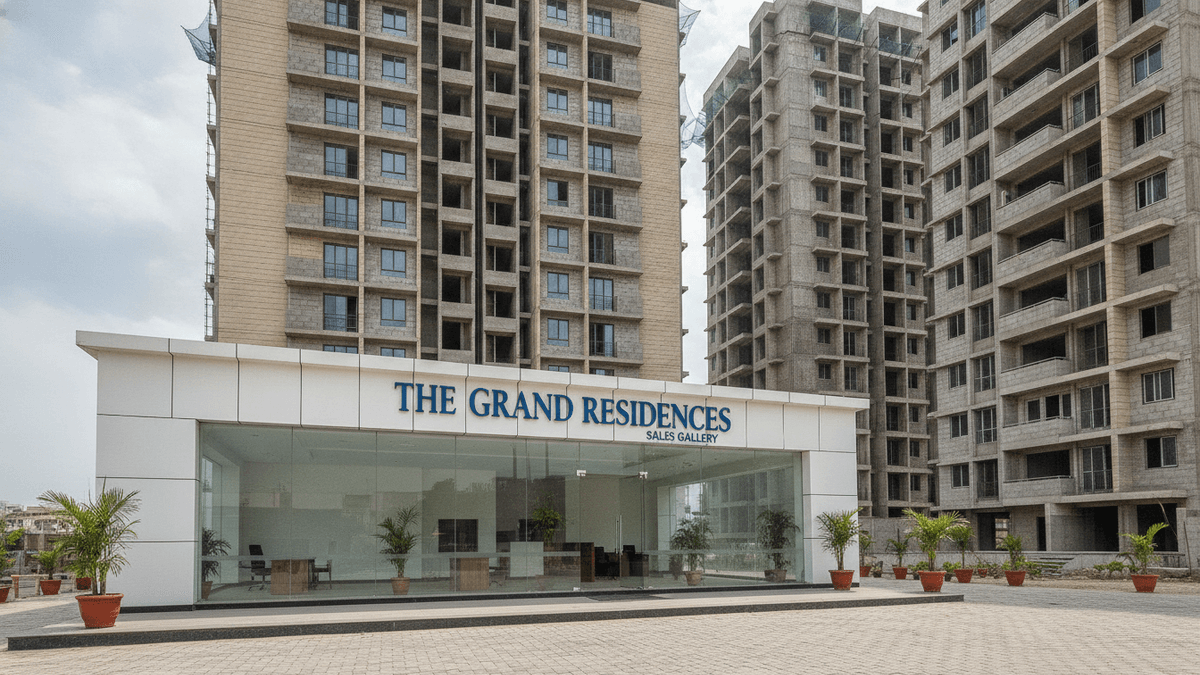
A quiet sales gallery for "The Grand Residences" in an Indian city with apartment buildings.
Residential sales across India experienced a notable decline in the April-June quarter, marking the lowest figures recorded since January 2023. This downturn is largely attributed to the ripple effects of geopolitical tensions, particularly the ongoing conflict in West Asia, which has adversely impacted buyer sentiment and contributed to supply chain disruptions.
Despite the overall subdued market performance, certain segments and cities demonstrated resilience. The premium housing segment, for instance, maintained a degree of strength, and cities like Bengaluru and the Mumbai Metropolitan Region (MMR) showed positive trends. New launches in these areas saw an increase year-on-year, although the quarterly supply of new units experienced a dip, reflecting cautious developer sentiment.
The dampening of buyer confidence is a significant factor influencing the market’s performance. The uncertainty stemming from international conflicts, coupled with existing supply chain challenges, has led potential homebuyers to adopt a more wait-and-watch approach. This hesitancy directly translates into lower sales volumes for developers.
While the report focuses on the broader market trends and the impact of external factors, it also highlights the localized strengths within the Indian real estate sector. The continued activity in premium segments and specific metropolitan areas suggests that demand, particularly for higher-value properties, remains robust among certain buyer cohorts. However, the overarching sentiment indicates a need for stabilization in geopolitical conditions and supply chains to fully revive buyer confidence across the board.
About the Author