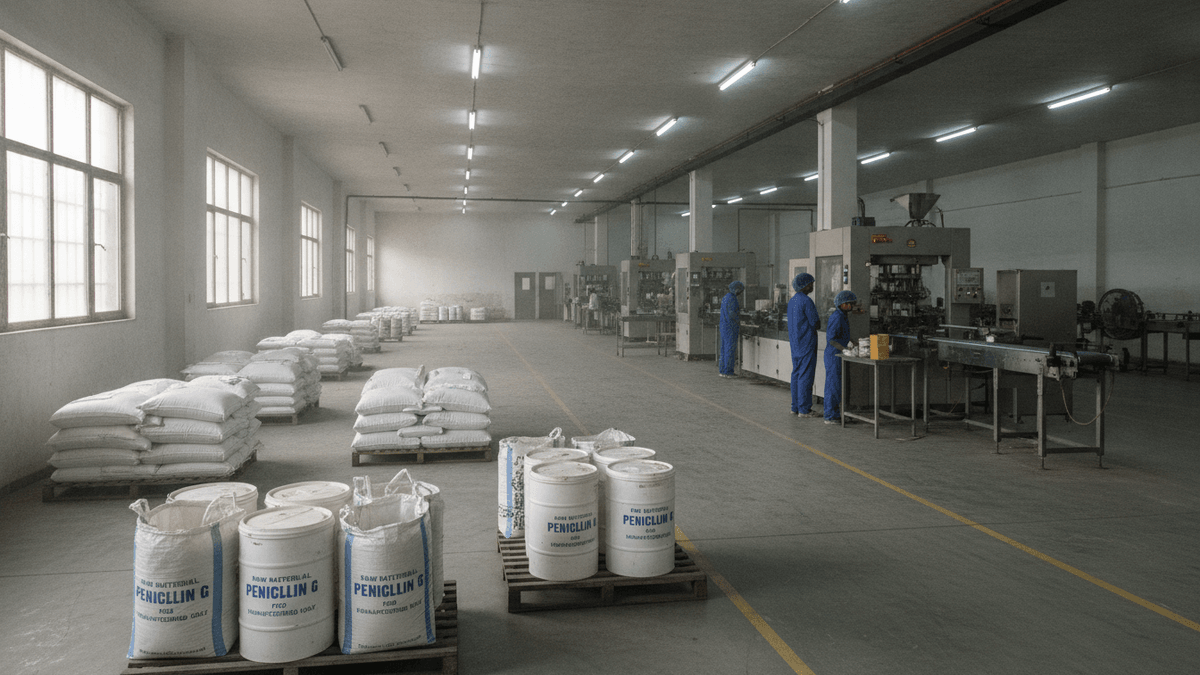
Indian pharmaceutical facility with idle machinery and Penicillin G raw materials
New Delhi – India’s recent Minimum Import Price (MIP) policy, designed to bolster domestic drug manufacturers, has yet to yield significant gains for the industry. Despite the government establishing price thresholds for crucial raw materials such as penicillin G, industry executives report a notable absence of positive impact.
Buyers and manufacturers are exhibiting reluctance to transition from existing import channels to domestic suppliers, even when prices are aligned with the MIP. This hesitancy has led to substantial underutilization of domestic production capacities. Some industry observers suggest that the current situation may be a transitional phase, with the market awaiting the depletion of existing stockpiles of imported raw materials.
The policy’s objective was to create a more favorable environment for local production by ensuring a baseline price for imported key raw materials. However, the lack of immediate uptake indicates that factors beyond price, such as established supply chain relationships and potentially perceived quality or reliability, are influencing purchasing decisions. The continued reliance on imports, despite the policy intervention, highlights the challenges in recalibrating established market dynamics and shifting buyer behavior within the pharmaceutical sector.
The slow start of the MIP policy raises questions about its effectiveness in achieving its intended goal of stimulating domestic manufacturing. The industry will be closely watching to see if the situation evolves as stockpiles diminish or if further policy adjustments are required to incentivize a more robust shift towards locally sourced raw materials.
About the Author