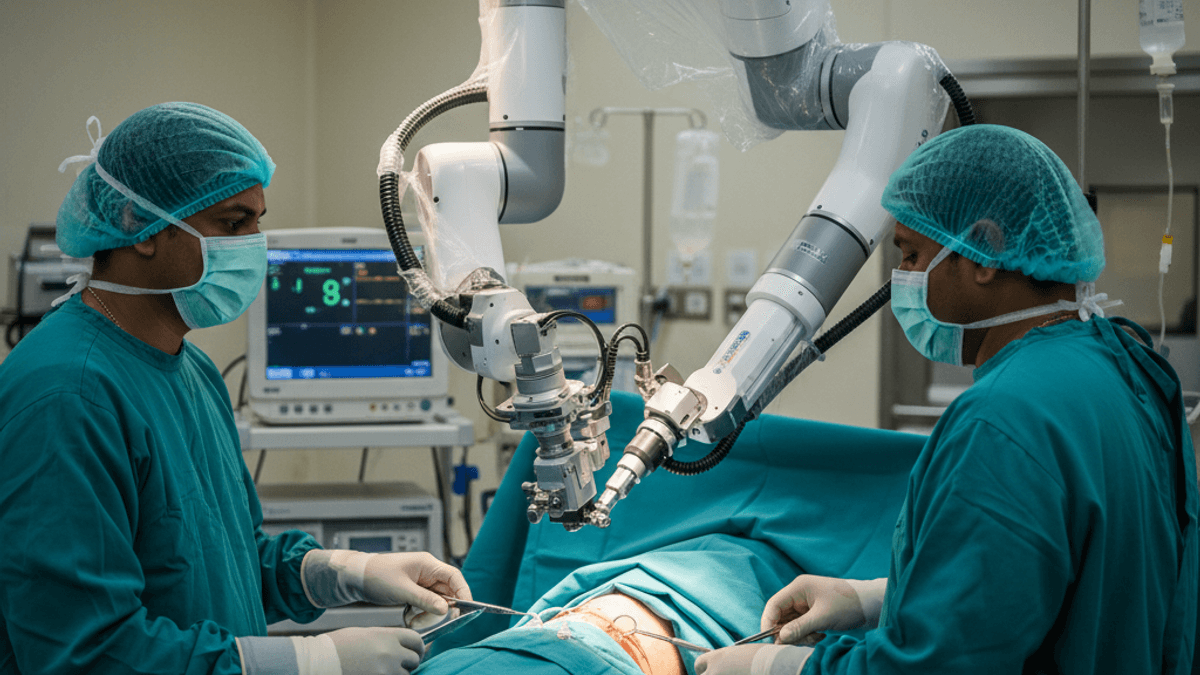
Surgeons and a robotic arm perform advanced knee surgery in an Indian hospital.
In India, a significant gap exists between the advancements in robotic joint replacement surgery for knee pain and insurance coverage, leaving many patients unable to access this superior treatment. While robotic procedures offer improved patient recovery and potentially lower long-term healthcare costs, current insurance policies often do not adequately cover these advanced methods, treating them the same as traditional procedures.
This disparity highlights a critical need for insurers in India to update their policies to align with medical progress. Failing to do so restricts patient access to treatments that could significantly enhance their quality of life and speed up their return to normal activities. The situation underscores a broader challenge where medical innovation outpaces the financial frameworks designed to support it, potentially widening the healthcare divide.
Experts suggest that a proactive approach from insurance providers, recognizing the long-term benefits of robotic surgery, could not only improve patient outcomes but also lead to more efficient healthcare spending over time. Aligning insurance coverage with the evolving landscape of medical technology is crucial for ensuring equitable access to the best available treatments for all patients in India.
About the Author