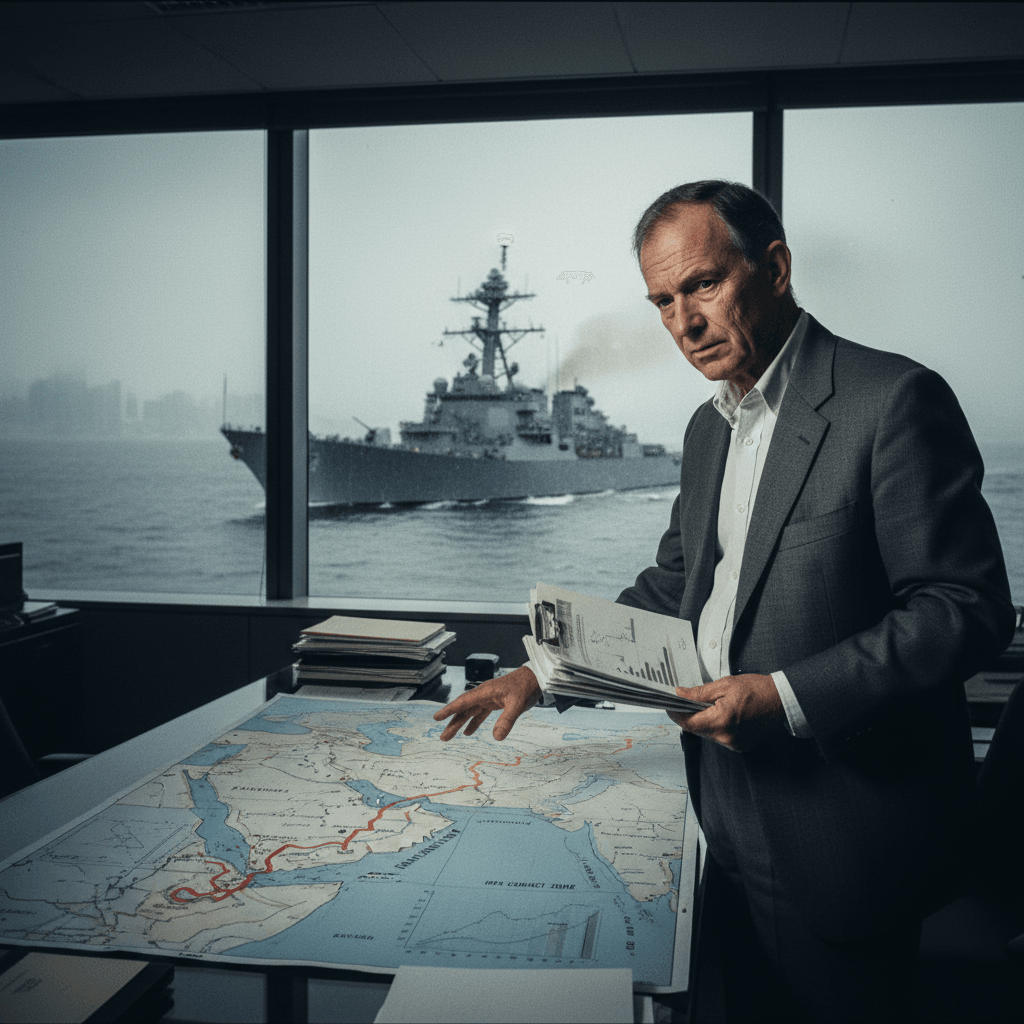
HSBC Chair points to a map of the Strait of Hormuz as a U.S. Navy ship passes by his office window.
HSBC Holdings Chair Brendan Nelson has emphasized the urgent need for a Middle East peace deal to ensure the stability of global energy flows, citing oil-driven inflation as a major threat to the world economy. Speaking at the HSBC Global Investment Summit in Hong Kong, Nelson highlighted the precarious state of energy markets amid ongoing geopolitical tensions.
Nelson pointed out that persistent uncertainty, particularly the impact of the Iran conflict on the Strait of Hormuz, is keeping energy prices elevated. With oil prices nearing $100 a barrel due to these tensions, he cautioned that current projections for global growth, trade, and inflation should be approached with considerable caution, as the full impacts of the Iran conflict remain uncertain.
He warned that prolonged disruption could lead to increased energy costs, higher inflation, and a decline in economic growth. Given the unlikelihood of a swift reopening of the Strait of Hormuz, Nelson anticipates that interest rates in the U.S., Europe, and Britain will remain steady, as rising short- and long-term market rates have already tightened financial conditions. The U.S. Navy’s blockade of the strait, following the breakdown of talks to end the six-week war, has further exacerbated the situation.
Analysts from ANZ estimate that approximately 10 million barrels per day of crude supply have been effectively removed from the market, with a potential additional reduction of 3 to 4 million barrels per day if the U.S. blockade continues. This reduction in supply underscores the critical importance of stability in the region for global energy markets and economic stability.
About the Author