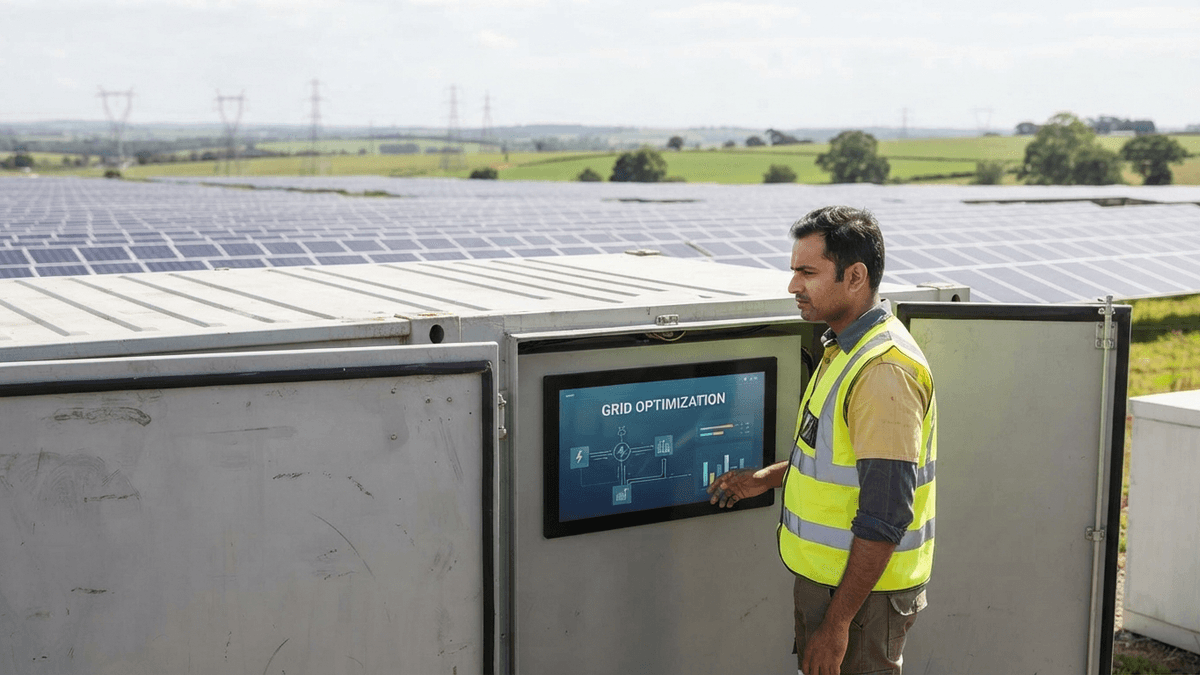
An engineer monitors a battery storage unit at a solar farm under new Indian energy regulations.
In a significant policy shift aimed at maximizing the utilization of renewable energy resources, India’s power ministry has introduced new regulations allowing renewable energy projects to store curtailed electricity within co-located battery systems. This development enables developers to effectively monetize energy that would have otherwise been lost due to grid constraints or oversupply.
The updated policy permits the charging of on-site battery systems with curtailed power generated by renewable projects. Subsequently, developers can independently sell this stored surplus energy through power exchanges. This measure is expected to enhance the economic viability of renewable energy projects by providing an additional revenue stream and improving the overall efficiency of the renewable energy sector.
This initiative addresses a long-standing challenge in renewable energy management, where generation often exceeds demand or grid capacity, leading to curtailment. By enabling storage and subsequent sale, the policy encourages investment in battery storage solutions and promotes a more stable and reliable renewable energy supply.
About the Author