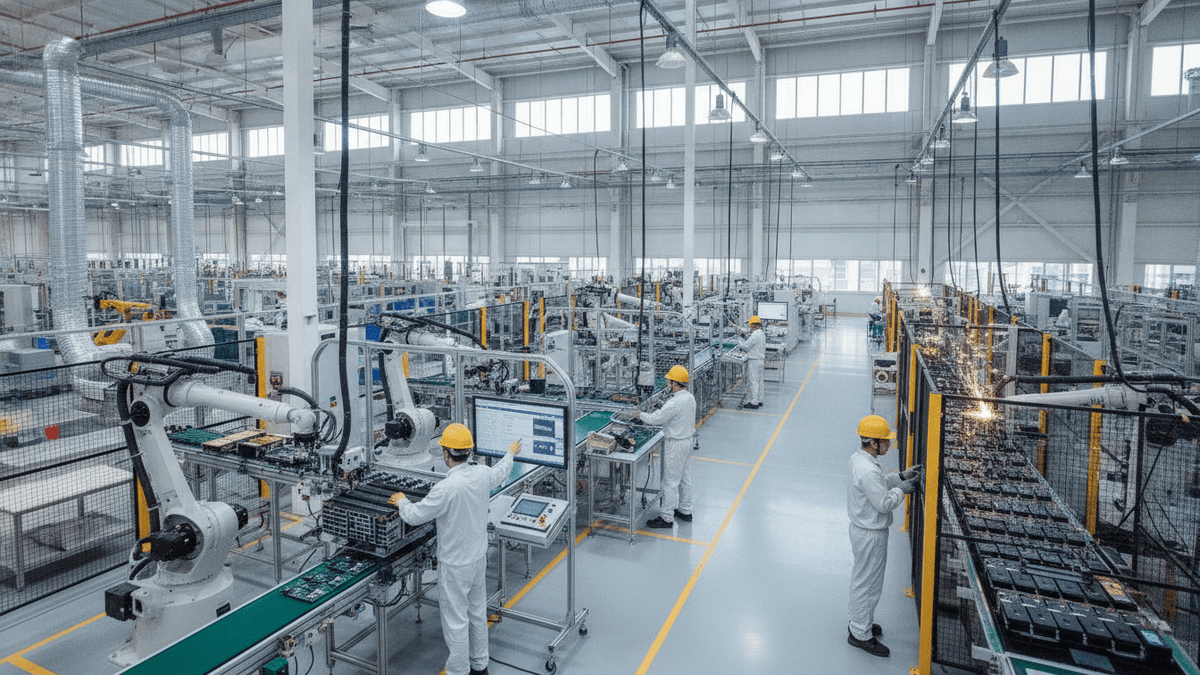
An advanced electronics factory floor with automated production lines and human oversight.
China has further solidified its position as the world’s manufacturing powerhouse, now accounting for approximately 28% of global manufacturing value added. This significant share represents a substantial increase from less than 10% in 2004, underscoring China’s dominance across key sectors such as electronics, electric vehicles, and industrial machinery. Over the past two decades, China’s manufacturing value added has surged from around $625 billion to nearly $4.66 trillion.
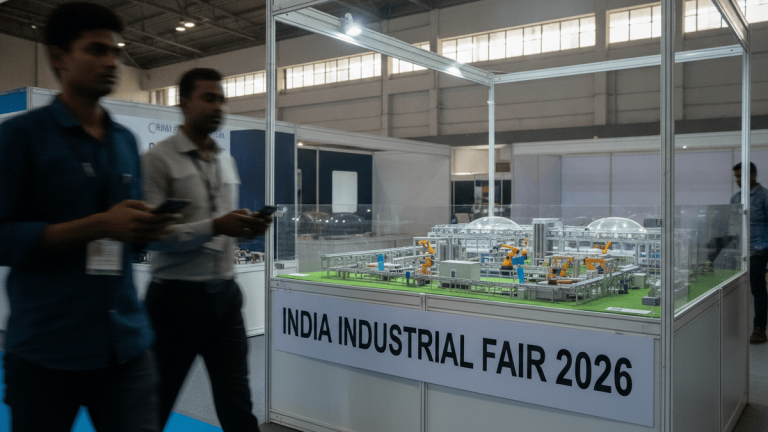
In contrast, India’s share of global manufacturing stands at about 3%. Despite this modest figure, India is actively pursuing growth through initiatives like ‘Make in India’ and the Production-Linked Incentive (PLI) scheme. The country is investing in critical sectors including electronics, semiconductors, defense manufacturing, renewable energy, and electric vehicles, aiming to attract global manufacturers seeking to diversify supply chains away from China.
China’s manufacturing prowess is attributed to decades of industrialization, substantial infrastructure investments, and highly integrated supply chains, enabling its transition into higher-value industries. For India, strengthening its manufacturing base is a key component of its long-term economic growth strategy, viewed as vital for job creation, export enhancement, and reducing import dependency.
About the Author