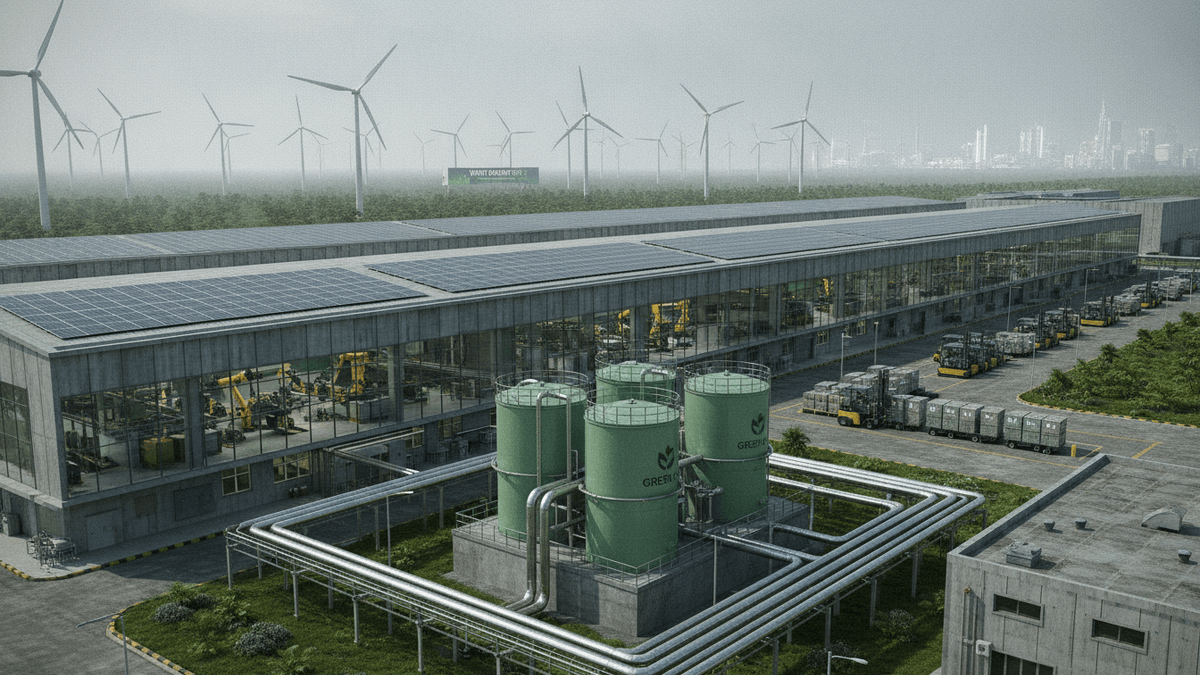
Modern industrial facility with solar panels and green hydrogen tanks under overcast sky
India’s ambitious vision for ‘Viksit Bharat 2047’ places a significant emphasis on transforming its manufacturing sector into a resilient, low-emission powerhouse. The strategy, aimed at bolstering long-term industrial competitiveness, hinges on several key pillars: the development of resilient and low-emission systems, the integration of green hydrogen, the adoption of circular economy principles, and a commitment to sustainable procurement practices.
This strategic direction signals a proactive approach by the Indian government to align industrial growth with environmental sustainability. By focusing on these critical areas, India aims to not only meet its developmental goals but also to position itself as a leader in sustainable industrial practices on the global stage. The emphasis on green hydrogen, for instance, points towards a future powered by cleaner energy sources, reducing reliance on fossil fuels and mitigating carbon emissions.
Furthermore, the push for circularity and sustainable procurement is expected to foster innovation in resource management and waste reduction. This will likely encourage investments in technologies and business models that prioritize reuse, recycling, and responsible sourcing, creating new opportunities within the private markets for businesses focused on the green economy. The overarching goal is to ensure that India’s industrial expansion is both robust and environmentally responsible, paving the way for a sustainable and prosperous future by 2047.
About the Author