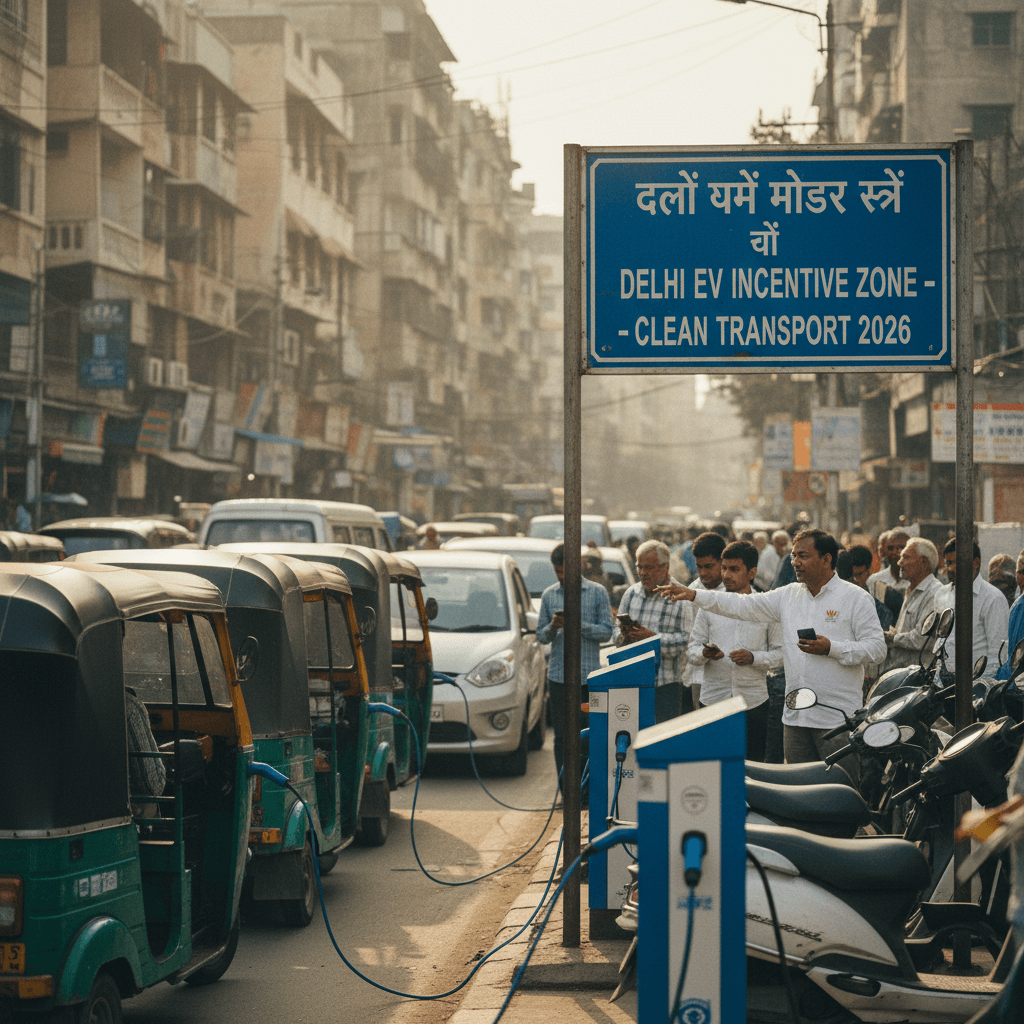
Delhi street with EV charging stations and a policy sign.
The Delhi government’s EV Policy 2026 is set to accelerate electric vehicle (EV) adoption through a series of incentives, including purchase subsidies and scrapping benefits for two-wheelers, three-wheelers, and cars. The policy also implements road tax exemptions and mandates for electrification, aiming for a cleaner transport future.
Incentives and Benefits: The Delhi EV policy includes several financial incentives. Purchase subsidies are available for various EV categories, reducing the upfront cost for consumers. Scrapping incentives provide additional benefits for those replacing older vehicles with new EVs. Road tax exemptions further decrease the cost of EV ownership.
Policy Mandates: The policy mandates electrification across different sectors, pushing for a transition to EVs. These mandates influence investment decisions as companies adapt to the new regulatory environment. The focus on electrification impacts automotive manufacturers and related industries, driving innovation and market competition.
Strategic Implications: The Delhi EV policy has significant implications for private equity and venture capital investors. The incentives and mandates create opportunities for investment in EV manufacturing, charging infrastructure, and related technologies. Investors are likely to focus on companies that can capitalize on the growing demand for EVs in Delhi.
Market Impact: The policy’s emphasis on a cleaner transport future is expected to drive substantial growth in the EV market. This growth attracts both domestic and international investment, fostering innovation and technological advancements in the automotive sector. The Delhi EV policy serves as a model for other regions looking to promote sustainable transportation through policy interventions.
About the Author