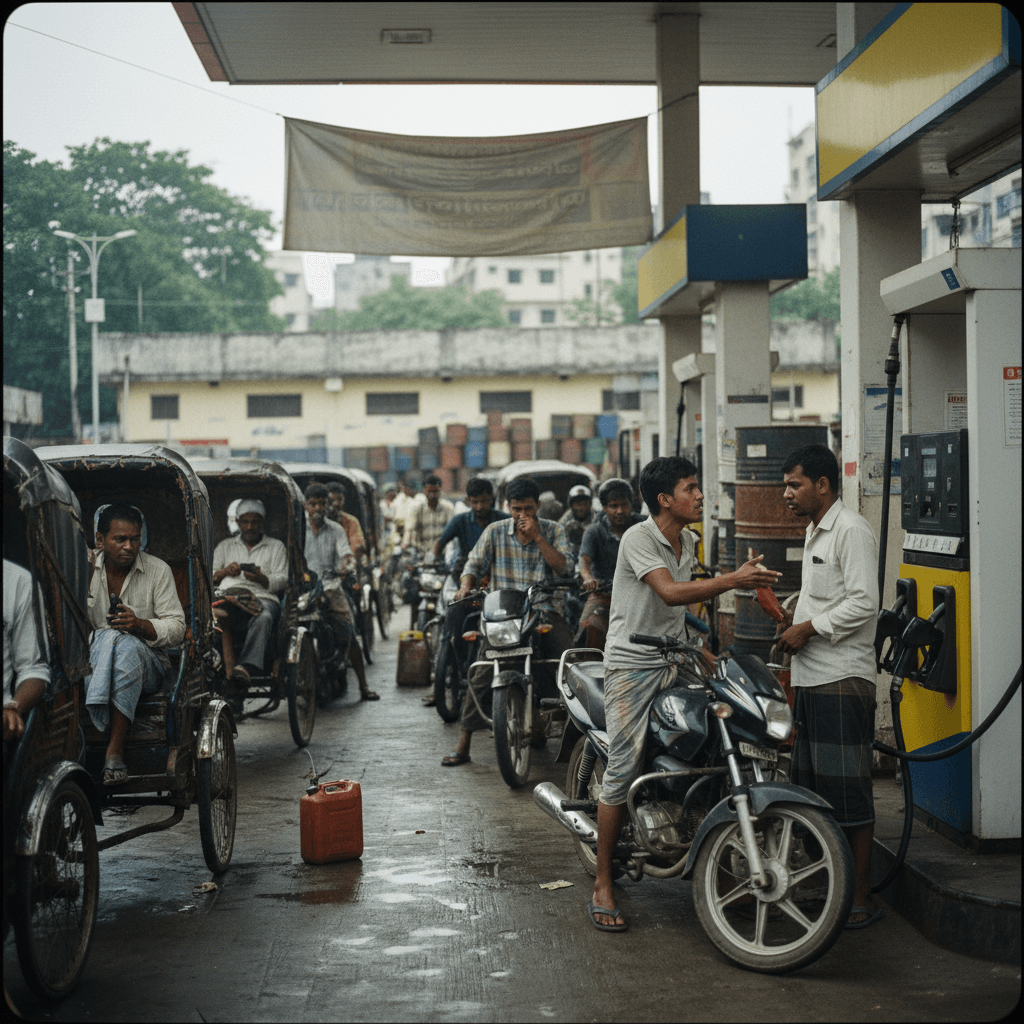
People wait in line at a busy gas station in South Asia amid a regional fuel crisis.
South Asian economies are confronting a deepening fuel crisis, exacerbated by geopolitical instability and rising energy costs. Nations including India, Pakistan, Bangladesh, Nepal, Sri Lanka, and the Maldives are implementing a range of strategies to mitigate the impact on their economies and populations.
The measures being adopted reflect a multi-pronged approach. Fuel price adjustments are being introduced to reflect the increasing cost of imports, while efforts to reduce overall consumption are also underway. Several nations are incentivizing a shift towards electric vehicles (EVs) to reduce dependence on traditional fossil fuels.
These actions are driven by dwindling fuel supplies and escalating costs, which are impacting millions across the region. The crisis poses a significant challenge to economic stability, potentially affecting various sectors from transportation to manufacturing. The situation underscores the vulnerability of South Asian economies to global energy market volatility.
The ongoing energy crisis highlights the critical need for diversified energy sources and enhanced regional cooperation. Investments in renewable energy infrastructure and sustainable transportation solutions are likely to gain momentum as nations seek long-term energy security.
About the Author