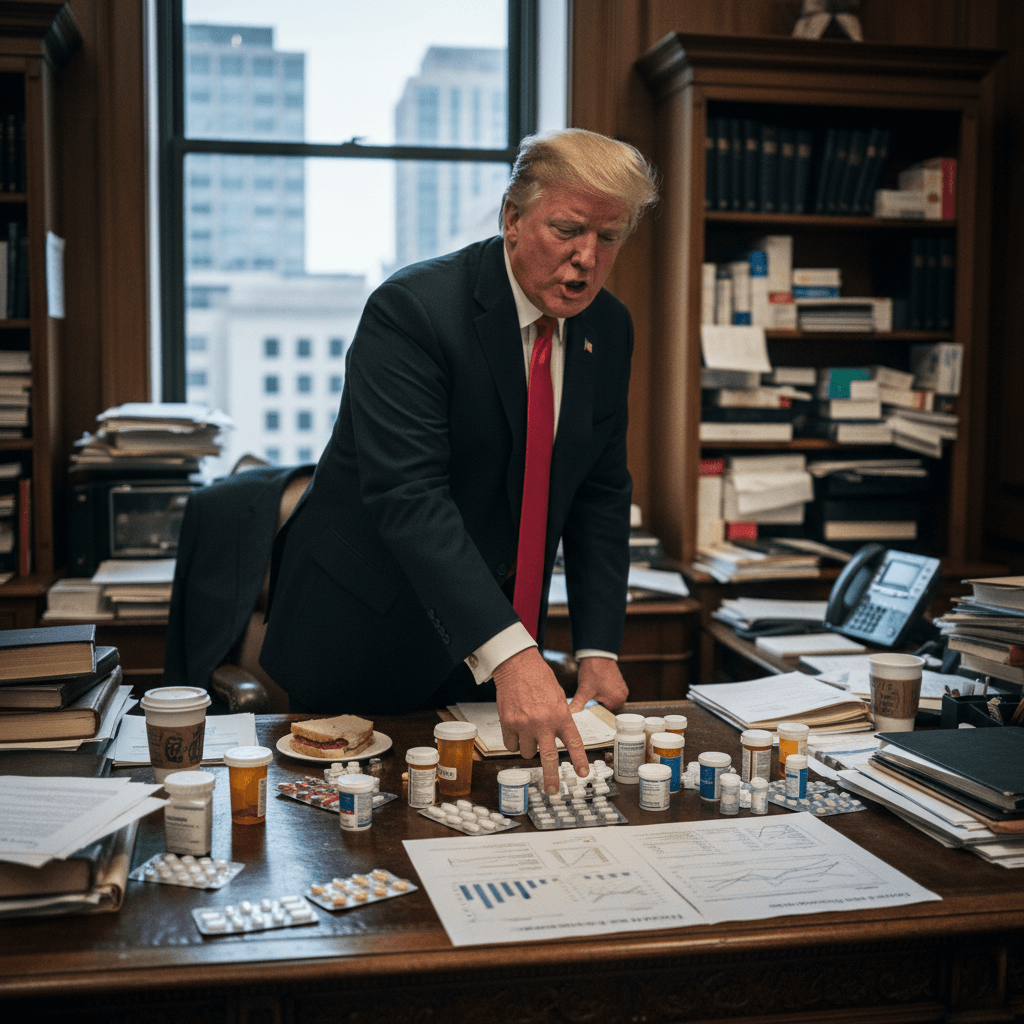
Trump discusses drug policy amidst an array of medications.
Former President Donald Trump has announced a plan to impose 100% tariffs on brand-name drugs, a move that could significantly reshape pharmaceutical trade and market dynamics. The proposal, detailed in a recent report by statnews.com, includes several carveouts, raising questions about the policy’s overall impact and strategic intent.
The proposed tariffs target brand-name drugs, a sector heavily reliant on international supply chains and pricing strategies. While the specific details of the carveouts remain somewhat unclear, their existence suggests a nuanced approach, potentially aimed at protecting domestic manufacturers or addressing specific drug shortages.
The implications of such tariffs could be far-reaching. For private equity and venture capital firms invested in pharmaceutical companies, this policy introduces a new layer of complexity. Companies may need to reassess their supply chain strategies, pricing models, and investment allocations to mitigate potential risks. Moreover, the move could spur increased interest in domestic pharmaceutical manufacturing and research, potentially driving new investment opportunities.
However, the tariffs could also lead to higher drug prices for consumers and reduced access to essential medications, particularly if the carveouts are not carefully managed. The policy’s impact will likely depend on the scope and implementation of the carveouts, as well as the reactions of other countries and international trade organizations.
The move signals a potential shift in U.S. trade policy toward the pharmaceutical sector, reflecting broader trends of protectionism and a focus on domestic manufacturing. Investors and market participants will be closely watching how this policy unfolds and its implications for the global pharmaceutical market.
About the Author