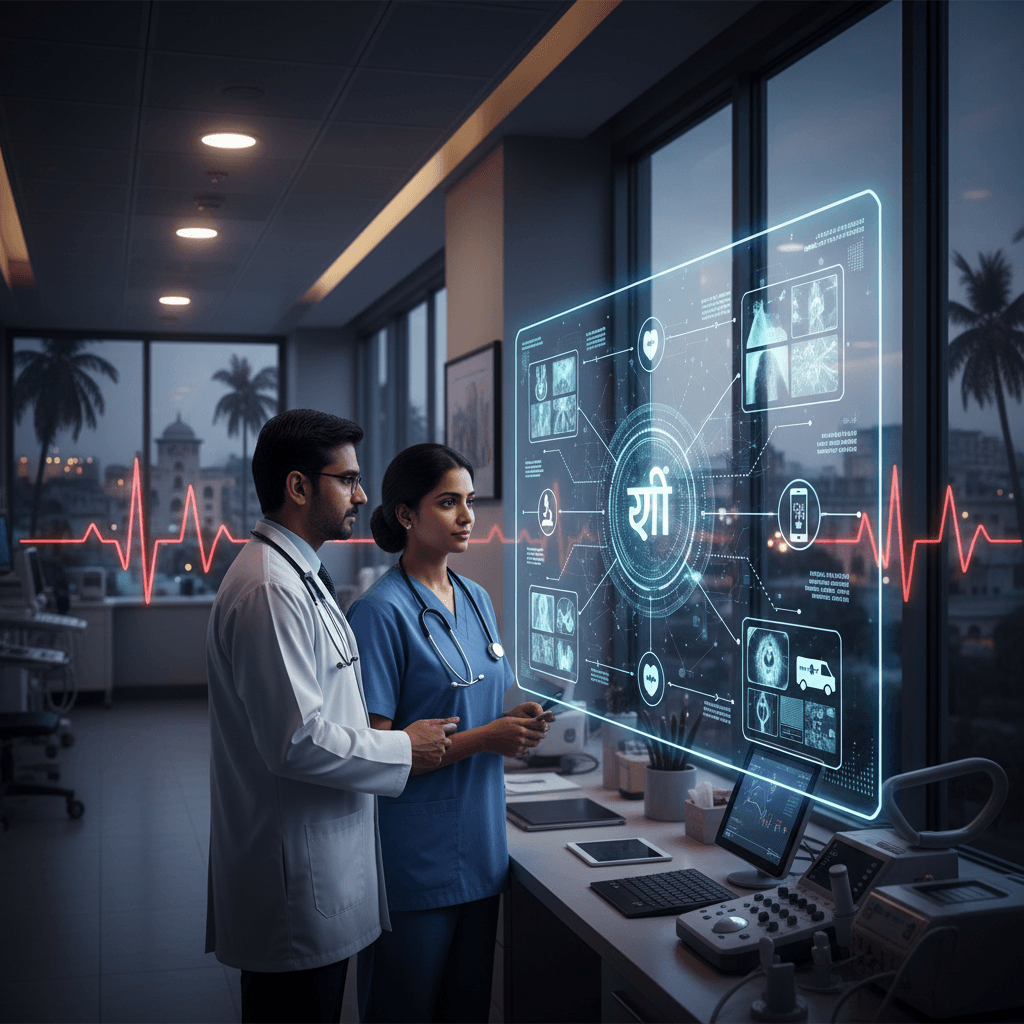
Indian doctors use AI for diagnostics, improving healthcare efficiency and patient outcomes.
Healthcare AI is increasingly seen as a solution for improving diagnostics, decision-making, and patient outcomes in India. However, integrating AI into healthcare infrastructure faces significant challenges, particularly in deployment across radiology labs, pathology workflows, and public health programs.
India’s doctor-population ratio is approximately 1:1200, below the WHO recommended level, highlighting the need for AI to bridge healthcare access gaps. Ankit Modi of Qure.ai notes that the primary challenge is shifting AI from an add-on to a native layer within healthcare systems, embedded across screening, diagnosis, and follow-ups. Jadeja Dushyantsinh Anopsinh of Remidio emphasizes the importance of AI at the risk triaging layer to reach patients before they require specialist care.
Clinical integration remains complex due to the need for consistent reliability in high-stakes environments. Companies are moving towards agentic AI systems that mimic clinical decision-making processes. DeepTek AI combines platform infrastructure with AI to prioritize critical cases and generate draft reports, reducing turnaround time for clinicians.
Despite growing adoption, concerns persist about AI replacing clinicians. Tathagato Rai Dastidar of SigTuple argues that AI is transforming microscopic review, pre-classifying samples and flagging abnormalities, allowing clinicians to focus on complex decisions. Arjun Nagulapally of AIONOS highlights AI’s role in coordinating discharge planning, insurance workflows, and patient communication.
Key barriers to scaling AI in healthcare include fears of redundancy, lack of incentives for quality, and fragmented health data systems. Ajay Mahipal of HealthKois points out that interoperability and unclear data governance frameworks slow integration. Varun Dubey of Superhealth emphasizes that technology must reduce friction for clinicians to drive adoption.
Adoption patterns vary, with governments leading in public health programs and private adoption driven by teleradiology firms and diagnostic chains. Surya Mantha of Capria Ventures notes that real-world usage is a key differentiator for early-stage healthcare AI companies. Opportunities lie in early screening in tier 3 and tier 4 regions and optimizing hospital operations.
About the Author