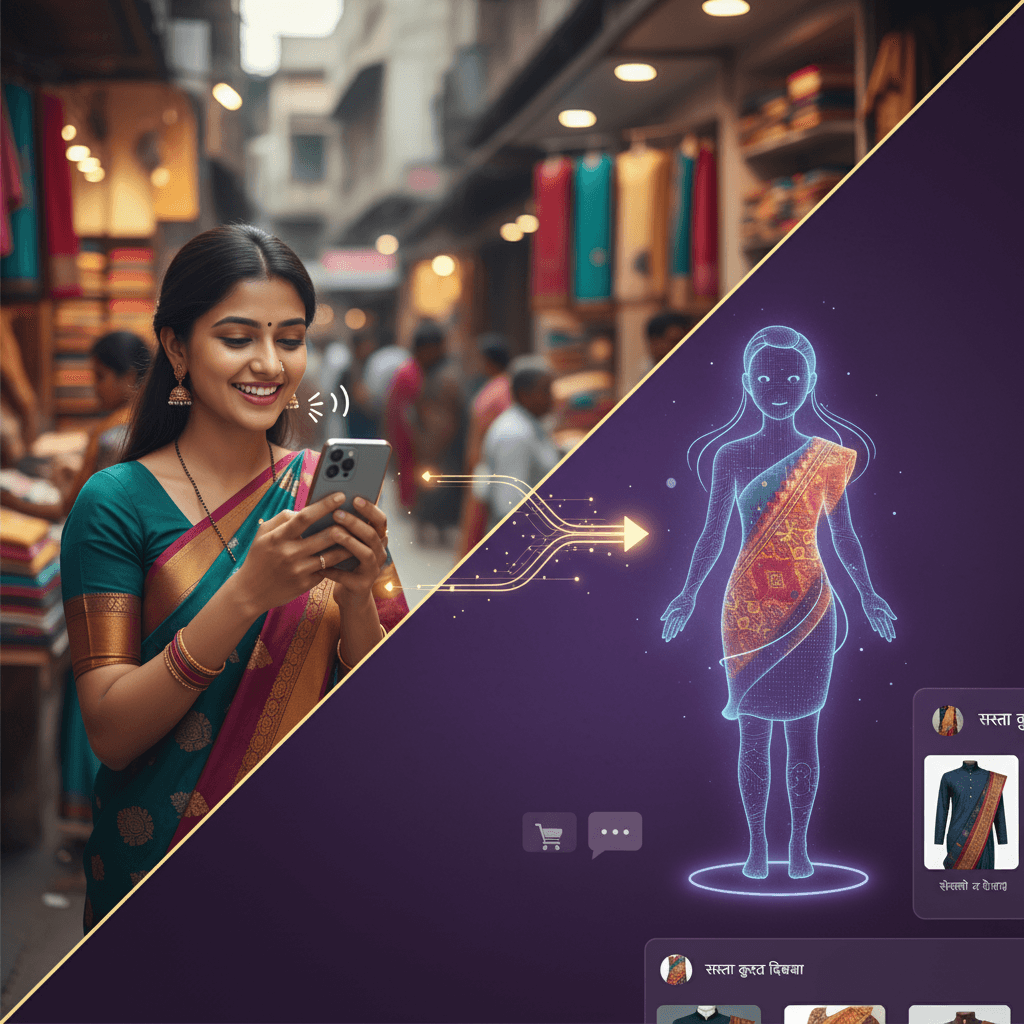
Woman using voice commerce in a bustling Indian market with AI shopping assistant.
Meesho is making a significant push into voice commerce with the launch of Vaani, an AI-powered conversational shopping assistant. The move aims to tap into the potential 500 million shoppers in tier II and smaller markets in India, who may find traditional e-commerce interfaces challenging.
Vaani, launched this week, is designed to facilitate end-to-end purchases through voice, from product discovery to payment and delivery confirmation. This differs from existing voice AI agents like Amazon’s Rufus and Flipkart’s Flippi, which primarily assist in product discovery.
According to Inc42, Meesho’s strategy aligns with its focus on value-conscious users in non-metro markets. The company claims to have 251 million annual transacting users and reported 1.8 billion orders in FY25, according to its IPO documents. By offering a voice and vernacular-first AI agent, Meesho aims to expand the addressable market for e-commerce in India.
India, with its 650-690 million smartphone users, presents a substantial opportunity for voice commerce. A FactMR report projects the voice commerce services market to grow at approximately 13.6% annually. The report suggests that voice interfaces can help new internet users and those uncomfortable with English to make purchases.
Sanjeev Kumar, Meesho’s CTO, noted that users can describe their intent in everyday language, such as “Sasta kurta dikhao” (Show me a cheap kurta), instead of using structured queries. Currently available in English and Hindi, Meesho plans to add more Indian languages over time.
According to Kumar, nearly 40% of users with access to Vaani are now using voice to find products, compared to only 10% previously using voice-based search. Moreover, the conversion rate for users interacting with Vaani is 22% higher.
However, challenges remain. Vaani currently focuses on pre-purchase interactions, while post-purchase processes like returns and refunds still require human intervention. Extending conversational AI into these areas will require higher accuracy and integration with backend systems.
Despite these challenges, Meesho’s focus on multilingual, voice-first users sets it apart. By targeting users not comfortable with English or text-based interfaces, the company aims to serve a largely underserved segment.
About the Author