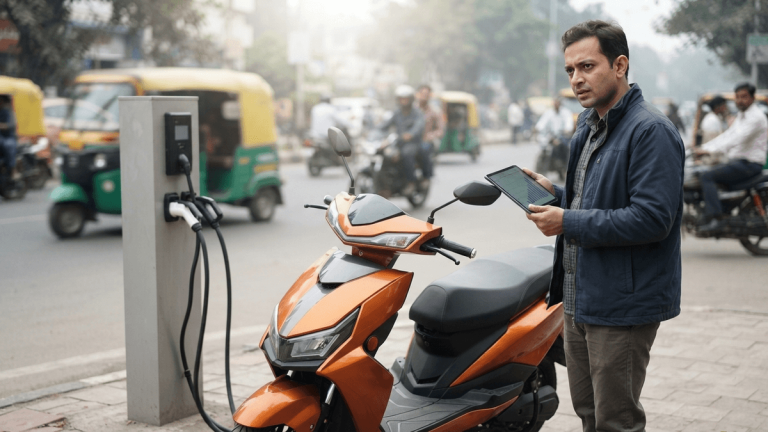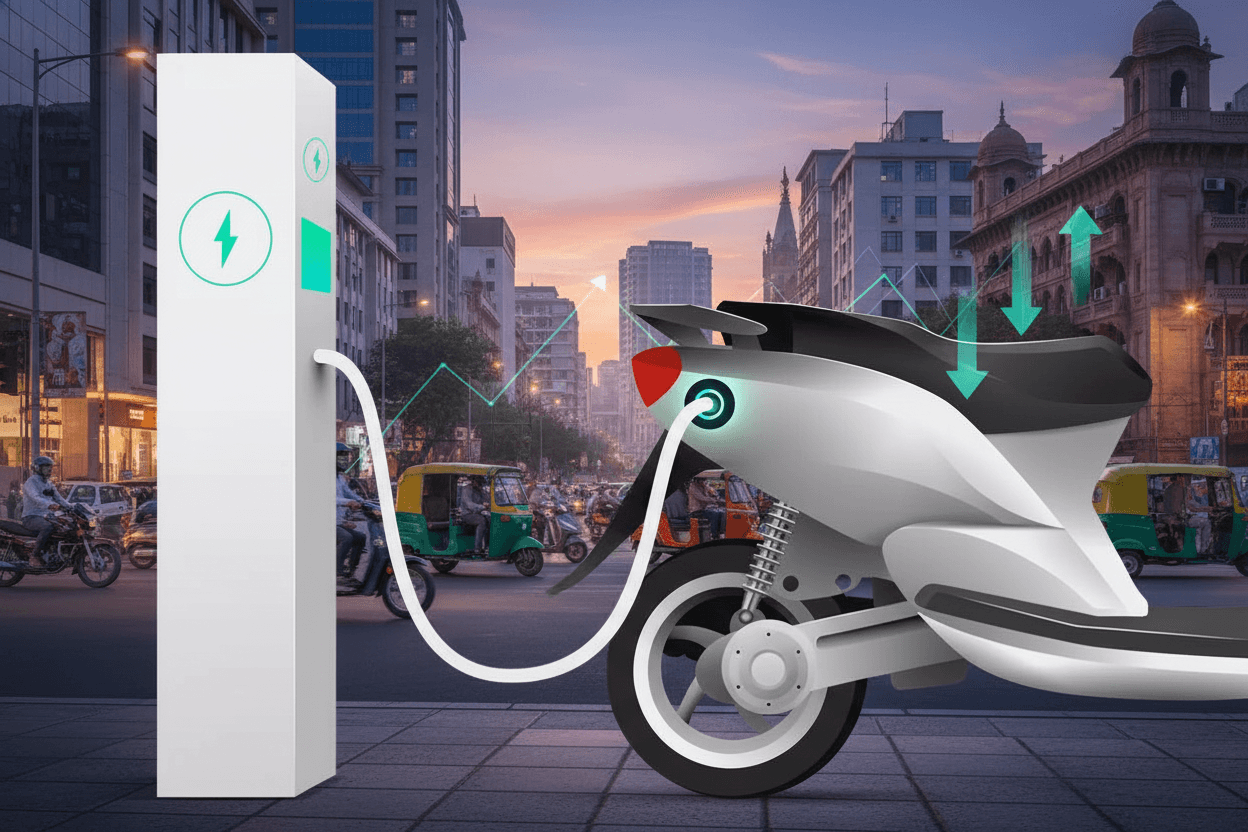
India's EV subsidies extended, showcasing an electric scooter charging in a bustling Indian city.
The Ministry of Heavy Industries has prolonged subsidies for electric two-wheelers until July 2026, and for e-rickshaws/e-carts until March 2028, signaling continued government support for electric vehicle (EV) adoption. This extension aims to bolster the adoption of EVs across various segments, with a particular focus on electric two-wheelers (e2w).
The initiative includes a significantly increased target for e2w, set at 2.48 million units. Substantial funds have already been disbursed to support this target, reflecting the government’s commitment to electrifying personal transportation. Sales in the e2w and large e-3w (electric three-wheeler) categories have demonstrated robust growth, indicating a positive market response to the subsidies and incentives provided.
However, the e-cart and e-rickshaw categories have experienced minimal achievement in terms of sales and adoption rates. This disparity has led to a reduced fund allocation for these segments, as the government recalibrates its strategy to address the specific challenges hindering their growth. The reallocation suggests a more targeted approach, focusing resources where they can generate the most impact.
The extension of subsidies and the strategic reallocation of funds reflect the Indian government’s adaptive approach to promoting electric mobility. By incentivizing e2w and addressing the challenges in the e-cart and e-rickshaw sectors, the policy aims to create a more balanced and sustainable EV ecosystem.
About the Author