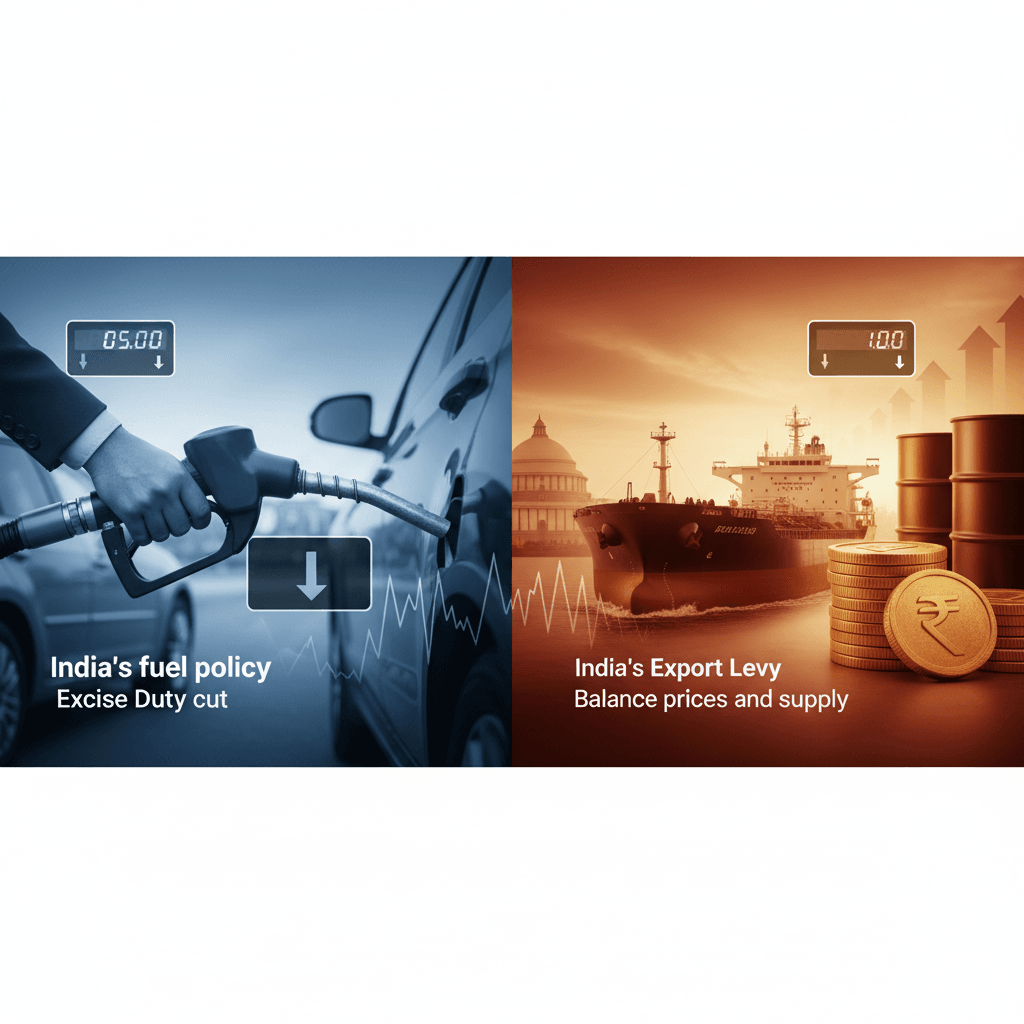
India's fuel policy adjustments to balance prices and supply.
The Indian government has announced a reduction in excise duty on petrol and diesel by ₹10 per litre, alongside the imposition of export duties on diesel and aviation fuel. These measures, effective immediately, aim to insulate domestic oil companies from losses stemming from high global oil prices and ensure stable fuel supplies within India.
The excise duty cut is designed to alleviate financial pressure on oil companies, which have been facing challenges due to the widening gap between international crude oil prices and domestic retail prices. By reducing the tax burden, the government intends to help these companies maintain profitability without significantly raising prices for consumers.
In addition to the excise duty adjustments, the government has introduced export duties on diesel and aviation fuel. This move is primarily aimed at ensuring that domestically produced fuel remains available within the country, rather than being exported to take advantage of higher international prices. The export duties are expected to disincentivize exports, thereby securing domestic supply.
The combined impact of these fiscal adjustments is anticipated to result in significant revenue changes for the government. While the reduction in excise duty will decrease government revenue, the export duties are expected to offset some of these losses. The government has not yet released detailed projections of the expected revenue impact.
These policy changes reflect the government’s efforts to balance the interests of oil companies, consumers, and the broader economy in the face of volatile global energy markets. The measures are indicative of a strategic approach to managing domestic fuel supplies and prices in a dynamic international environment.
About the Author