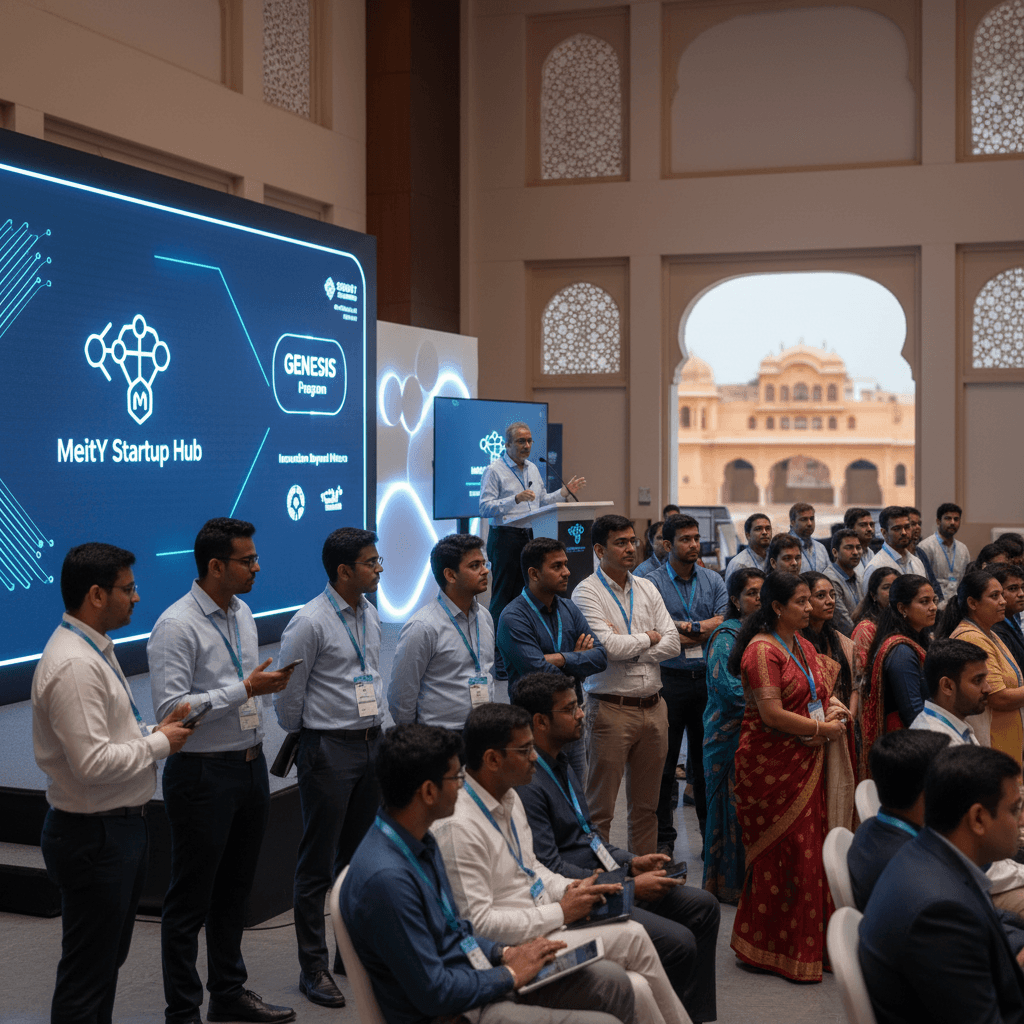
India's startup growth fueled by Tier II/III cities, MeitY Startup Hub leading the charge.
MeitY Startup Hub CEO, Panneerselvam Madanagopal, anticipates that Tier II and III cities in India will be pivotal in driving the next wave of startup growth. Speaking at the ‘NextGen Startup Summit’ in Jaipur, Madanagopal highlighted the potential for “hundreds of companies” to emerge from these regions in the coming years, signaling a shift in India’s startup ecosystem beyond metropolitan areas.
The ‘NextGen Startup Summit,’ hosted by Vivekananda Global University (VGU) under the Genesis initiative, convened policymakers, investors, incubators, and early-stage founders to discuss strategies for scaling startups outside of traditional metro ecosystems. The summit, organized in collaboration with VGU’s Atal Community Innovation Centre (ACIC), focused on global market access, funding challenges, and ecosystem-building strategies for non-metro startups.
Madanagopal emphasized MeitY’s Genesis programme as a long-term initiative aimed at building capacity in Tier II and III cities through a network of 65 partner incubators. The initiative seeks to establish a robust ecosystem that extends beyond the program’s lifecycle, fostering innovation beyond major metropolitan areas. Over 150 startup founders, mentors, students, investors, and industry stakeholders participated in the event, which concluded with a Shark Tank-style pitch session featuring 15 startups presenting to a panel of investors.
Ecosystem collaboration emerged as a key theme, with leaders emphasizing that Rajasthan’s growth would depend on stakeholder collaboration rather than policy alone. VGU CEO, Onkar Bagaria, stressed the need for a unified approach to transition Jaipur from a Tier II to a Tier I startup hub, requiring collective effort from all participants in the ecosystem. ACIC VGU CEO, Gaurav Sharma, pointed out the fragmentation within the current ecosystem, noting that while Rajasthan has seen the rise of multiple incubators, accelerators, VC firms, and mentor networks, many operate independently.
Sharma highlighted that the ACIC VGU ecosystem currently supports over 200 startups, with 58 having secured funding and 18 receiving backing through state government initiatives. The incubator’s future focus will be on improving startup discovery and strengthening partnerships to drive more coordinated ecosystem growth.
About the Author