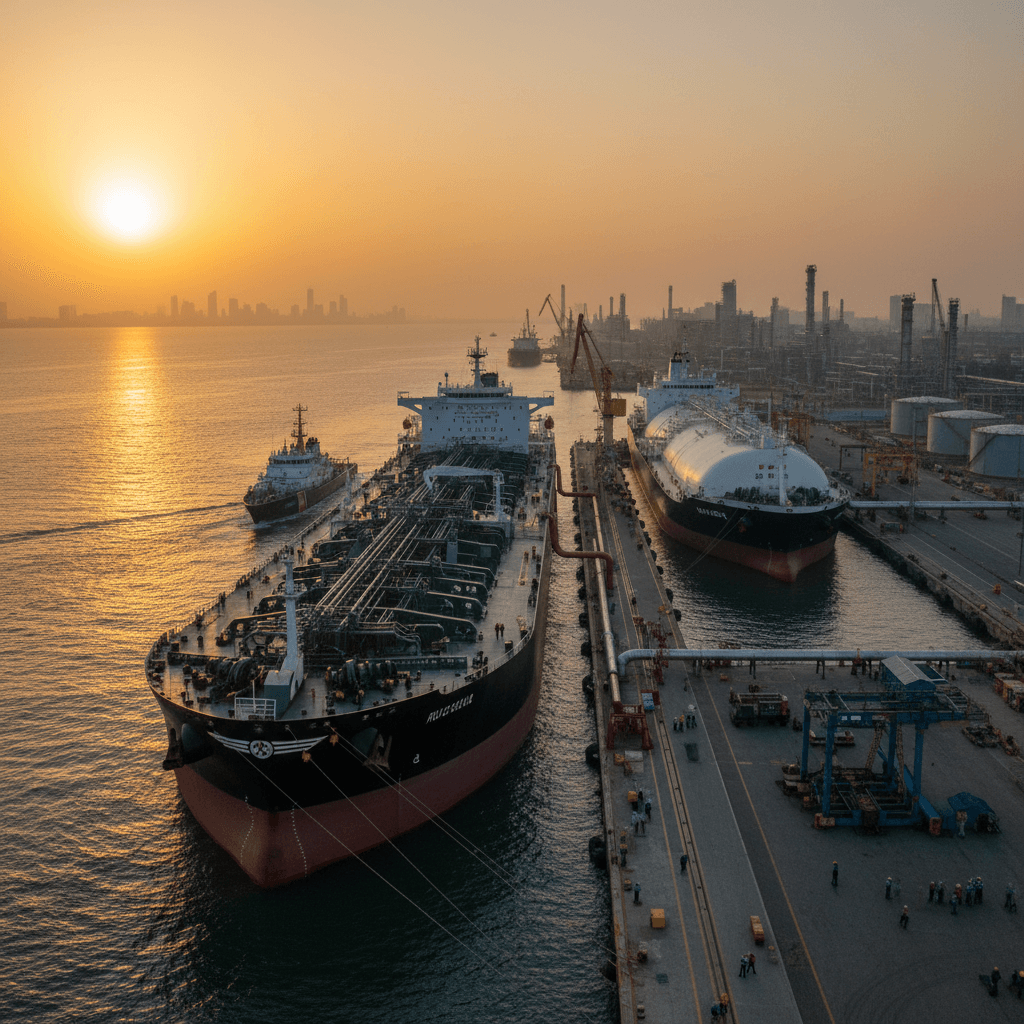
Ships at an Indian port, symbolizing India's diversified energy strategy.
Amidst growing concerns over global energy supplies exacerbated by the West Asia conflict, a Russian oil tanker, MT Aqua Titan, has docked near Mangaluru port in India. This arrival coincides with another cargo ship delivering LPG from the United States to the same port, signaling India’s diversified approach to securing its energy needs.
The docking of the MT Aqua Titan is particularly noteworthy as it occurs during a period of significant disruption in global energy markets. The ongoing conflict in West Asia has created uncertainty around traditional supply routes, prompting nations to explore alternative sources and partnerships. India’s decision to accept the Russian crude shipment reflects a strategic effort to maintain stable energy supplies despite geopolitical pressures.
To facilitate smoother imports, Indian ports are reportedly waiving charges for crude oil and LPG, a move aimed at reducing costs and ensuring consistent supply. This policy adjustment underscores the government’s commitment to prioritizing energy security and mitigating the impact of global disruptions on domestic consumers and industries.
Furthermore, reports indicate that all Indian ships and sailors in the Persian Gulf are safe, providing assurance amidst regional instability. This element is crucial for maintaining uninterrupted trade and energy flows through one of the world’s most critical maritime chokepoints.
The arrival of both the Russian oil tanker and the US LPG carrier at Mangaluru port highlights India’s pragmatic balancing act in its energy procurement strategy. By engaging with multiple suppliers, including those from nations with complex geopolitical relationships, India aims to insulate itself from the volatility of global energy markets and ensure a reliable energy supply for its growing economy.
About the Author