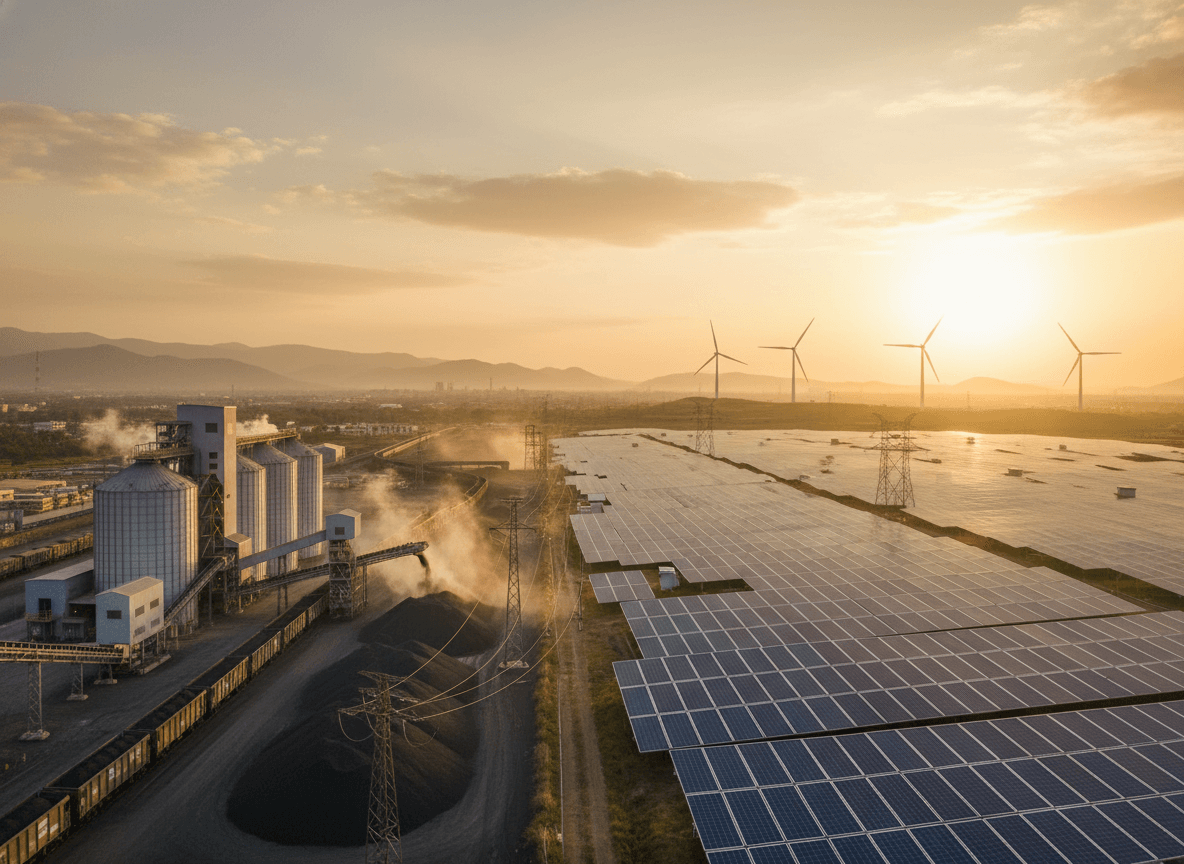
India's evolving energy landscape: coal infrastructure alongside vast solar farms at sunset.
India’s coal imports experienced a 4.2% decline in the April-January period, driven by a push for self-reliance and increased domestic coal production, according to recent reports. This shift occurs against a backdrop of rising global thermal coal prices, which are likely to keep import levels subdued.
The Indian government has been actively promoting domestic coal production to meet the country’s growing energy demands. Projections indicate substantial growth in domestic output in the coming years, potentially reducing reliance on foreign imports.
This development has implications for private equity and venture capital firms involved in the energy sector, particularly those focused on renewable energy and sustainable alternatives. Reduced coal imports may signal a long-term strategic shift towards cleaner energy sources, creating opportunities for investment in renewable energy projects and related infrastructure.
Institutional investors and fund managers may also need to reassess their portfolios in light of these trends, considering a potential reallocation of capital towards domestic energy production and cleaner energy technologies. The shift could also impact cross-border investments in the coal sector, with a potential decrease in demand for imported coal.
The government’s policy will likely influence investment strategies in the energy sector. As domestic production continues to rise, companies involved in coal mining and related industries may see increased investment activity, while those focused on coal imports may face challenges.
About the Author