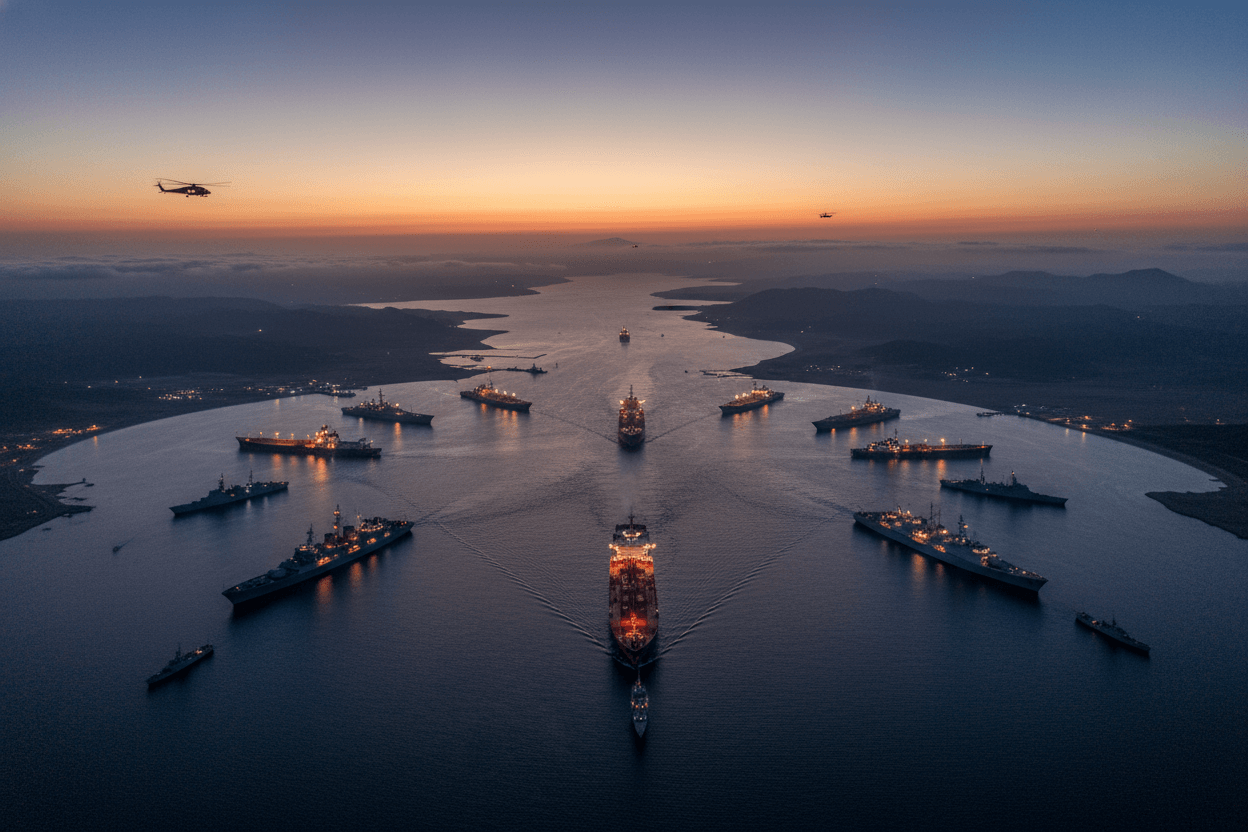
Naval fleet in the Strait of Hormuz at sunset, symbolizing international cooperation.
Amid escalating geopolitical tensions, over twenty nations are collaborating to secure passage through the Strait of Hormuz, a critical artery for global oil and gas flow. This coalition has formed in response to Iran’s recent actions targeting commercial vessels and oil facilities, which have disrupted maritime activities and energy supplies.
The participating countries are preparing to contribute resources to ensure secure transit, signaling a united front against actions that threaten international trade and stability. The move follows condemnation of attacks on civilian infrastructure, which have been attributed to Iran. The Strait of Hormuz is a vital shipping lane, and any disruption can have significant economic and strategic consequences.
This international effort reflects concerns over freedom of navigation and the security of energy infrastructure in the region. The coalition aims to deter further aggression and ensure the uninterrupted flow of oil and gas, underscoring the strategic importance of the Strait of Hormuz in global energy markets.
For investors, this situation highlights the potential for increased volatility in energy markets and the need for vigilance in assessing geopolitical risks associated with investments in the region. The coordinated response from multiple nations may serve as a deterrent, but the underlying tensions remain a key factor for private equity and venture capital firms with exposure to the energy sector and related industries.
About the Author