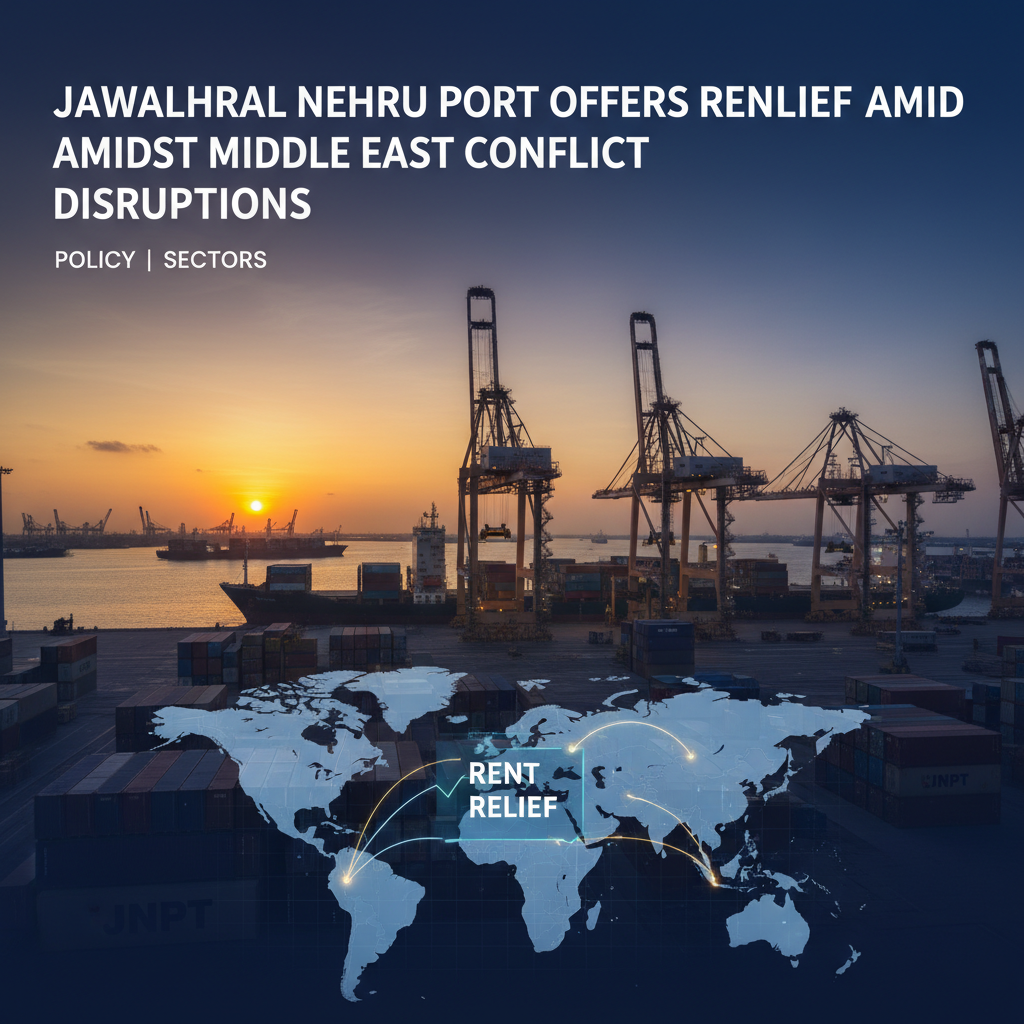
Jawaharlal Nehru Port Offers Rent Relief Amidst Middle East Conflict Disruptions
The geopolitical landscape of the Middle East is, regrettably, a hotbed of instability. This has, unsurprisingly, caused significant disruptions to global trade. In a move designed to mitigate the impact of these challenges, the Jawaharlal Nehru Port Authority (JNPA) has announced a crucial policy intervention: a ground rent waiver for Middle East-bound export shipments. This initiative is a direct response to the difficulties faced by exporters due to the ongoing disturbances in the region, a critical step that highlights the port’s commitment to supporting trade continuity during turbulent times.
Addressing the Impact of Geopolitical Disruptions
The decision by the Jawaharlal Nehru Port Authority to waive ground rent is a clear acknowledgment of the challenges exporters face. The ongoing conflict has led to significant delays and disruptions in shipping schedules. Consequently, export containers destined for the Middle East have been stranded at the port. These delays incur additional costs, including ground rent, which can significantly impact the profitability of export shipments. The JNPA’s proactive measure aims to alleviate this financial burden, allowing exporters to navigate the current climate with greater ease.
This action is especially pertinent given the strategic importance of the Middle East in global trade. The region serves as a vital hub for various industries, and any disruption in its trade routes can have far-reaching consequences. By offering this rent waiver, the JNPA is not only supporting individual exporters but also contributing to the stability of the broader shipping sector. This, in turn, helps maintain the flow of goods and services, which is essential for economic resilience.
Collaboration and Implementation
The JNPA’s initiative was undertaken in close consultation with private port operators. This collaborative approach ensures a unified response to the crisis, maximizing the impact of the rent waiver. The terminals involved will extend the waivers to cover stranded containers, effectively reducing the financial strain on exporters. This coordinated effort demonstrates a shared commitment to supporting trade and mitigating the effects of geopolitical instability.
The policy underscores the role of port authorities in responding to unforeseen events. It showcases how these authorities can act as stabilizers, providing crucial support to businesses during periods of uncertainty. The decision also reflects the adaptability and responsiveness of the shipping industry in the face of global challenges.
The Broader Implications
The JNPA’s decision sends a clear message about the importance of flexibility and support in the shipping industry. By taking proactive measures, the port authority is contributing to a more resilient and stable trade environment. This action is a testament to the fact that the shipping sector is capable of adapting to the challenges of an ever-changing world. It also serves as a reminder of the critical role that ports play in facilitating international trade and supporting economic growth, even in the face of geopolitical instability.
About the Author