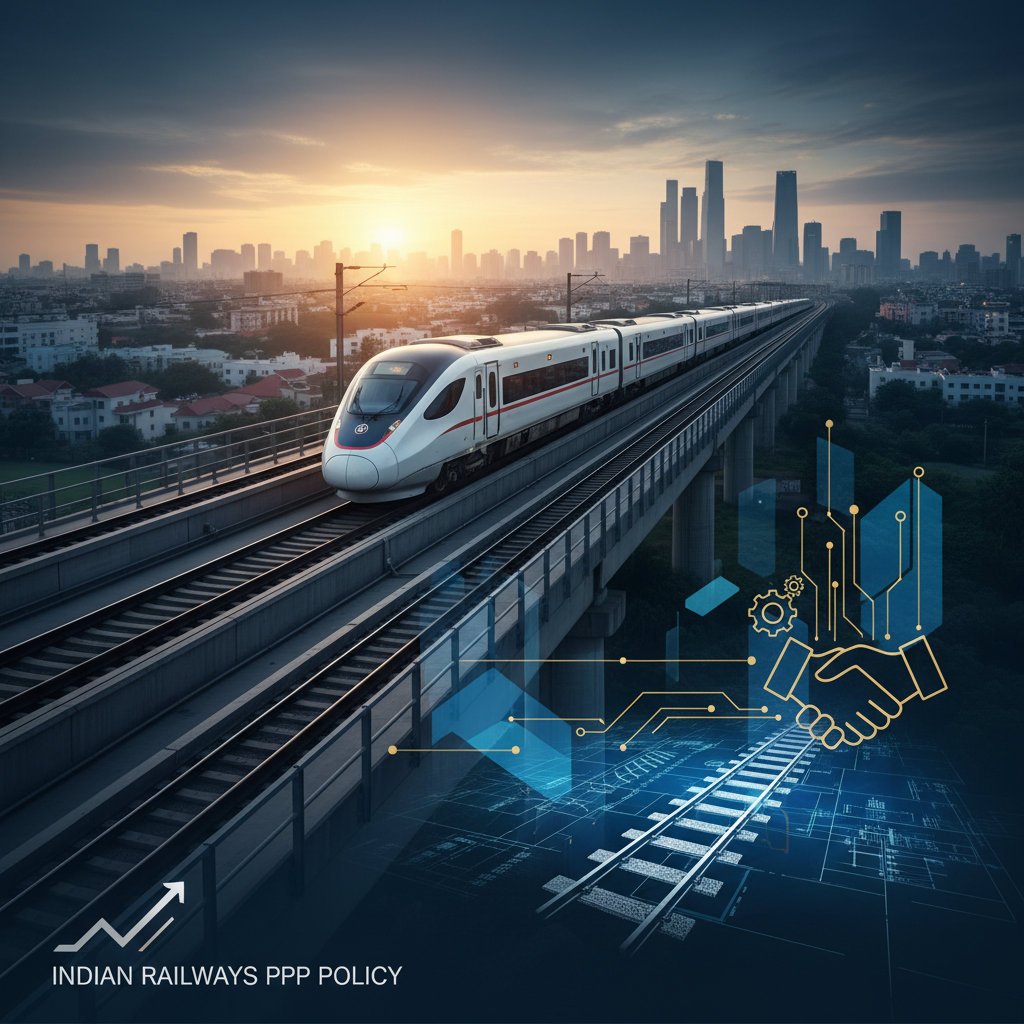
Indian Railways Revamps PPP Policy to Attract Private Investment
In a move designed to revitalize infrastructure development, Indian Railways is revisiting its decade-old Public-Private Partnership (PPP) policy. The core objective? To inject fresh impetus into private investment within the railway sector. This strategic shift, as reported by the Economic Times, signals a concerted effort to mitigate investor risk and expedite the completion of critical projects across India.
Key Amendments to the PPP Policy
The proposed amendments to the PPP policy are substantial and multifaceted, reflecting a deep understanding of the challenges that have hindered private sector participation in the past. The most notable changes include:
- Extended Concession Periods: The railways is extending concession periods to 50 years. This offers investors a longer time horizon to recoup their investments and generate returns, making projects more attractive.
- Shift in Land Acquisition Responsibility: A significant hurdle for private investors has been the complex and often time-consuming process of land acquisition. To address this, Indian Railways is taking full responsibility for land acquisition, streamlining project initiation and execution.
These adjustments are not merely cosmetic; they represent a fundamental recalibration of the risk-reward equation for private investors. By addressing the critical concerns of project timelines and land acquisition, the railways is aiming to create a more conducive environment for private sector participation.
The Rationale Behind the Policy Overhaul
The impetus behind this policy reboot is clear: to boost private investment, reduce investor risk, and accelerate project execution. The government recognizes that attracting private capital is essential to modernize and expand the railway network, which is vital for India’s economic growth. The existing PPP framework, while well-intentioned, has faced hurdles that have slowed down project implementation. The revamped policy seeks to overcome these obstacles.
The ‘why’ is directly linked to the ‘what’ – the need to improve infrastructure. The ‘how’ involves policy changes like extended concessions and streamlining land acquisition. The ‘who’ – Indian Railways and investors – are the key players in this transformation. The ‘where’ is, of course, India, and the ‘when’ is now, as the government seeks to implement these changes to unlock the full potential of its railway infrastructure.
Impact and Future Outlook
The ramifications of these policy changes could be far-reaching. By attracting increased private investment, the railways can modernize its infrastructure more rapidly, improve efficiency, and enhance the overall passenger experience. The success of this initiative will hinge on the effective implementation of the new policy and the ability of Indian Railways to foster a collaborative and transparent working relationship with private sector partners.
This proactive approach by Indian Railways underscores the government’s commitment to infrastructure development and its recognition of the vital role that private investment plays in achieving its goals. As the policy takes shape, it will be crucial to monitor its impact and make adjustments as needed to ensure its long-term success. The potential benefits for both the railways and the broader Indian economy are substantial, making this a pivotal moment in the evolution of India’s infrastructure landscape.
The shift in policy represents a strategic move to tackle the complexities of project execution, with the aim of creating a more attractive environment for investors. By taking responsibility for land acquisition and offering extended concessions, Indian Railways is making a clear statement about its commitment to fostering partnerships and driving infrastructural growth.
About the Author