Pune Gas Crematoriums Shut Amid LPG Restrictions Due to West Asia Conflict
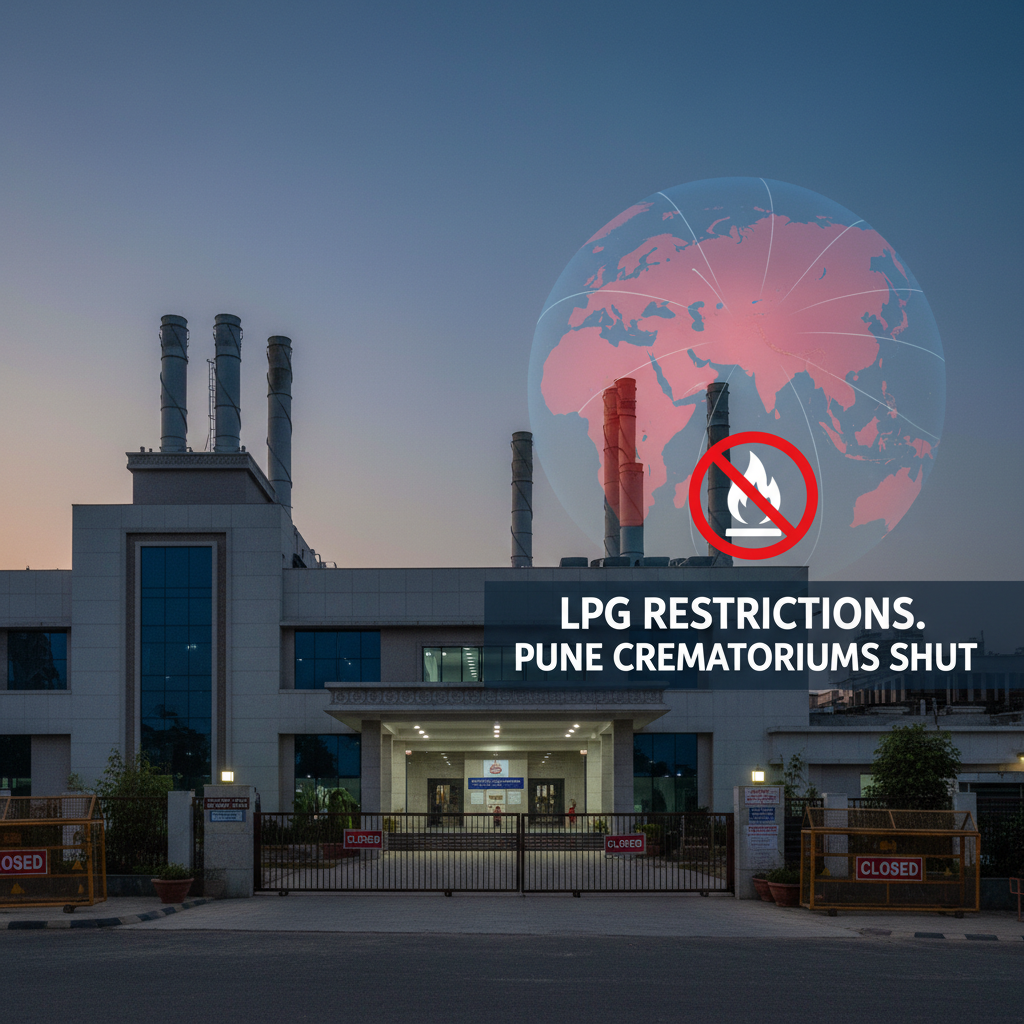
In a development impacting local services, Pune’s gas crematoriums have been temporarily shut down. This action is a direct consequence of restrictions on the supply of Liquefied Petroleum Gas (LPG) components, including propane and butane. The underlying cause of these restrictions is the ongoing conflict in West Asia, which has significantly disrupted the global oil and natural gas markets.
The Impact of Global Events on Local Infrastructure
The situation highlights the interconnectedness of global events and local infrastructure. The West Asia conflict has led to a reduction in oil and natural gas exports. As a result, the availability of essential resources, such as LPG, has decreased. This scarcity has necessitated a reallocation of resources, directly affecting the operation of public services in Pune.
The Ministry of Petroleum and Natural Gas has been compelled to step in, issuing orders to prioritize the supply of domestic LPG. The decision reflects the government’s commitment to ensuring that essential services are maintained, even in the face of international disruptions. The focus is on securing the supply of LPG for households, which has, in turn, impacted the availability for other sectors, including crematoriums.
Details of the Shutdown and Available Alternatives
The temporary closure of the gas crematoriums means that families are now required to explore alternative options for conducting final rites. Fortunately, the city offers alternatives in the form of electric and wood-fired crematoriums. These facilities remain operational and are available to serve the public during this period of disruption.
The temporary nature of the shutdown is a crucial point. The situation is dynamic and subject to change based on developments in the West Asia region and the global energy market. The authorities are likely monitoring the situation closely, with the expectation that gas crematoriums will resume normal operations once the supply of LPG stabilizes.
The Ministry of Petroleum and Natural Gas‘s actions demonstrate the complexities faced by policymakers in managing resources during times of crisis. The decision to prioritize domestic LPG reflects a balancing act, ensuring essential services while adapting to the limitations imposed by external factors. This situation underscores the importance of diversified energy sources and the need for preparedness in the face of global instability.
Understanding the Underlying Factors
The current situation in Pune can be traced back to the broader implications of the West Asia conflict. The conflict has directly impacted the global supply of oil and natural gas, leading to price fluctuations and supply chain disruptions. The restrictions on LPG components, such as propane and butane, are a direct consequence of these disruptions. These components are essential in the operation of gas crematoriums.
The need for the Ministry of Petroleum and Natural Gas to step in and prioritize domestic LPG reflects the importance of this resource in daily life. This decision may have far-reaching effects on various sectors. The closure of gas crematoriums is a clear example of the ripple effects caused by such global events. The focus now is on ensuring that essential services are maintained while adapting to the challenges posed by external factors.
The West Asia conflict serves as a stark reminder of how geopolitical instability can have direct and tangible effects on local communities. The situation in Pune is a case study of how global events can necessitate adjustments in the provision of essential services and the need for proactive measures to mitigate the impact of external disruptions.
Source: Industry-Economic Times
About the Author