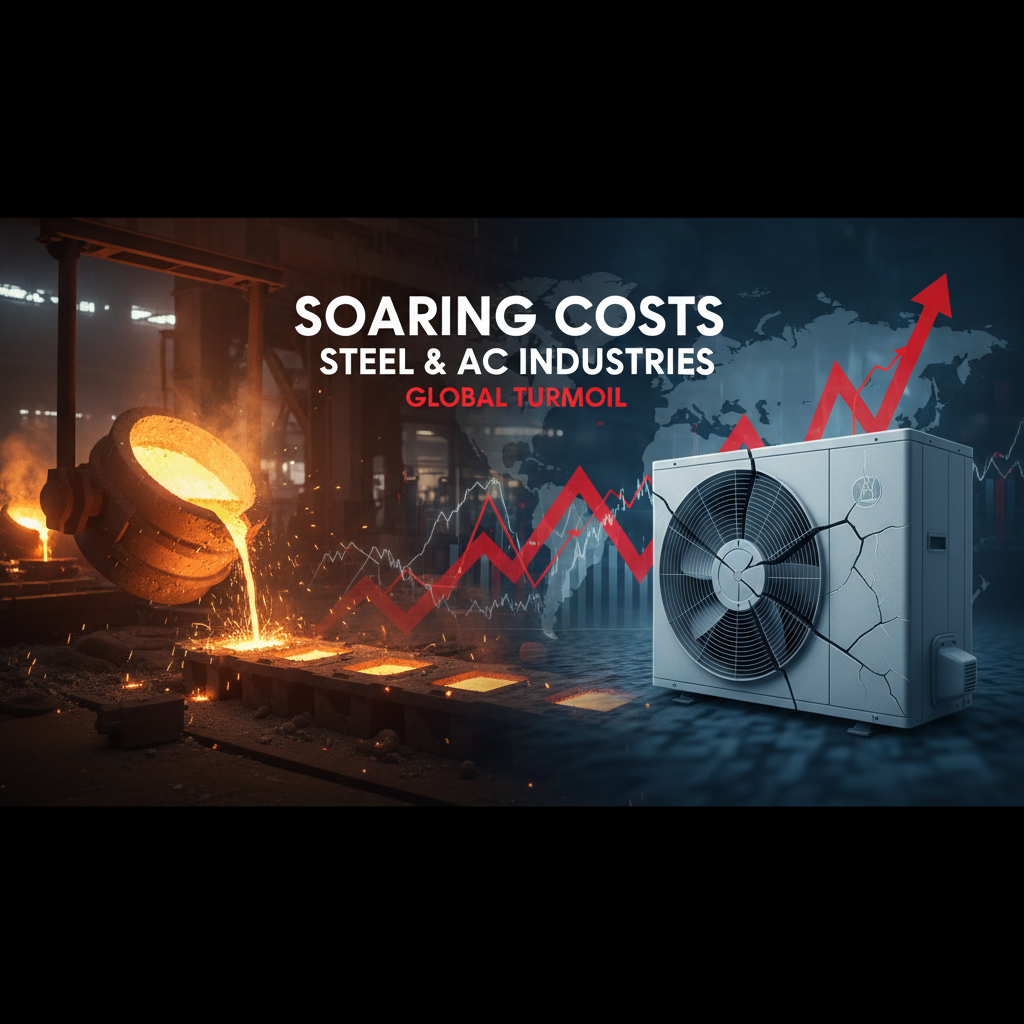
Soaring Costs: How Global Turmoil is Hitting Steel and AC Industries
The global economy is a complex web, and recent events in the Middle East are causing ripples that are being felt across multiple industries. Specifically, the steel and air conditioning sectors are experiencing significant challenges due to rising input costs. This article delves into the specifics of these challenges, exploring the factors driving the increases and the potential impacts on businesses and consumers.
Steel Industry Under Pressure
The steel industry, including major players like those in India, is grappling with a surge in operational expenses. The primary catalyst for this is the ongoing instability in the Middle East. Escalating tensions in the region are directly contributing to higher fuel and freight rates. As the cost of transporting raw materials and finished products increases, steelmakers are forced to absorb these additional expenses, leading to sustained input cost inflation.
This situation presents a significant hurdle for steelmakers, who must manage these rising costs while remaining competitive in the market. The ripple effect extends to various other sectors that rely on steel, potentially impacting construction, manufacturing, and infrastructure projects. The Middle East crisis is thus having a far-reaching impact, underscoring the interconnectedness of the global economy and the vulnerability of various industries to geopolitical events.
Air Conditioning Sector: Facing a Summer Squeeze
Simultaneously, the air conditioning sector is also feeling the pinch. Room air-conditioner prices are projected to increase by 5-15% between February and April. The primary drivers behind this price hike are the increased costs of essential materials, most notably copper and aluminum. Additionally, higher freight charges are adding to the financial burden on manufacturers and suppliers.
This price adjustment is strategically timed, occurring just before the onset of the peak summer demand. Consumers are likely to feel the impact directly, facing higher prices as they seek to stay cool during the hottest months. Despite these price increases, industry analysts anticipate robust sales figures, driven by the forecasted hot summer. This presents a complex scenario for the air conditioning industry: balancing rising costs with consumer demand.
The Interplay of Factors
Several factors are converging to create this challenging environment. The Middle East situation, with its impact on fuel and freight rates, is a key external pressure. Internally, the rising costs of raw materials like copper and aluminum, essential components of air conditioners, are adding to the cost burden. The why behind these issues is multifaceted, with the Middle East crisis serving as the primary cause for increased fuel and freight costs. The how involves the direct impact of escalating tensions on the transportation and supply chain, and the market dynamics of raw materials. The when is between February and April, just before peak summer demand.
Looking Ahead
The steel and air conditioning industries are navigating a period of significant economic uncertainty. The ability of these sectors to adapt to these challenges will be crucial. The impact of the Middle East situation on fuel and freight rates is a reminder of the need for businesses to build resilience in their supply chains and pricing strategies. Similarly, the air conditioning sector will need to monitor consumer behavior and manage its cost structure to ensure sustained profitability.
As the summer season approaches, the industry’s ability to meet consumer needs will be tested. The interplay of rising costs and seasonal demand will determine the financial trajectory of the steel and air conditioning sectors in the coming months.
Source: Industry-Economic Times
About the Author