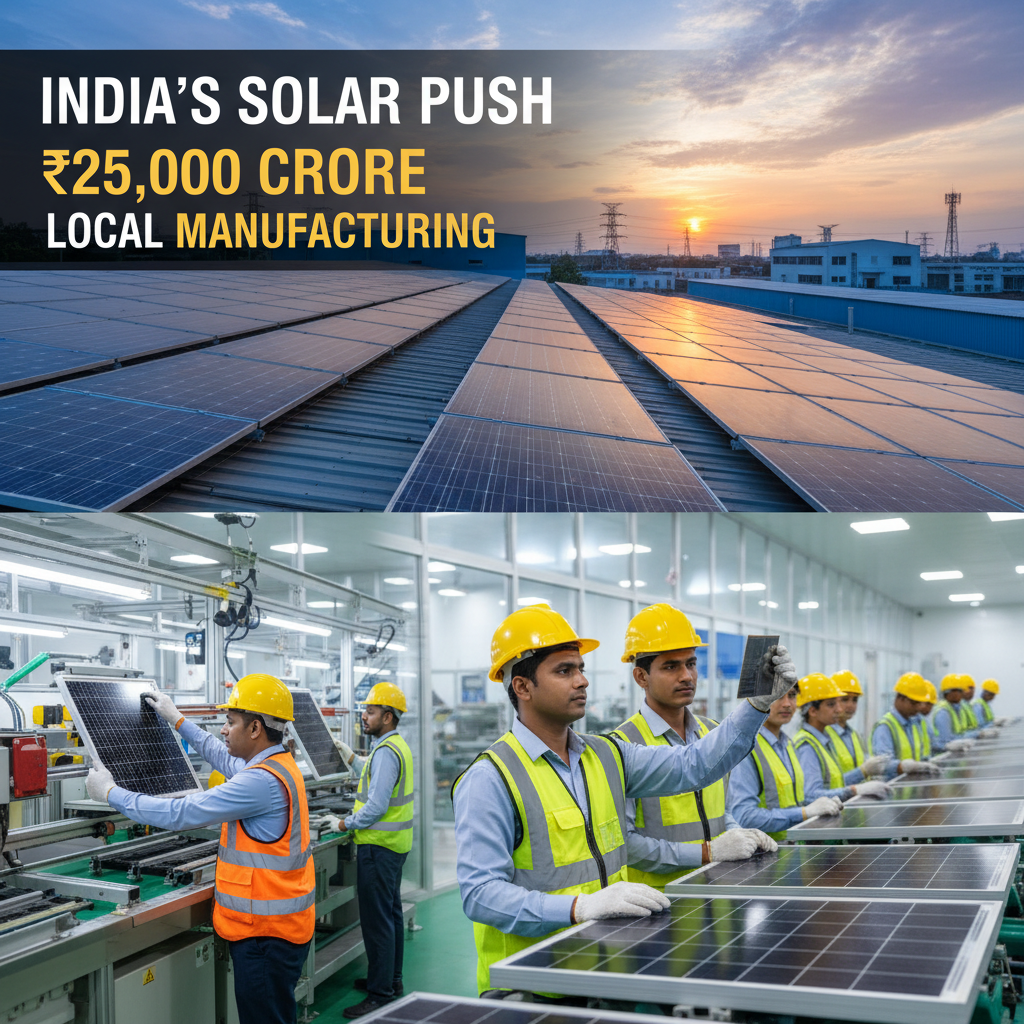
India’s Solar Push: Industry Seeks ₹25,000 Crore to Boost Local Manufacturing
India’s burgeoning solar industry is making a significant play to bolster its domestic manufacturing capabilities. The National Solar Energy Federation of India (NSEFI) has formally requested substantial financial support from the government, signaling a strong push towards self-reliance in the renewable energy sector. This move comes as India aims to ramp up its solar power capacity and reduce its dependence on imported components.
The Call for Funding: A Detailed Look
At the heart of this initiative is a request for ₹20,000-25,000 crore in viability gap funding (VGF). This financial backing is crucial for establishing and expanding the domestic manufacturing of critical solar components, specifically solar ingots and wafers. The industry’s primary objective is to build a substantial 50 GW of local capacity. This ambitious target underscores India’s commitment to becoming a global leader in solar energy and reducing its reliance on foreign suppliers.
The NSEFI, representing the interests of India’s solar industry, recognizes that achieving this goal requires more than just financial support. They are also advocating for incentives aimed at procuring necessary machinery. This dual approach – financial assistance coupled with machinery incentives – is designed to create a comprehensive ecosystem that supports every stage of the manufacturing process. The goal is to make India a hub for solar component production, from raw materials to finished products.
Why This Matters: Boosting Domestic Manufacturing
The push for domestic manufacturing is a strategic move, driven by a combination of economic and environmental factors. By manufacturing solar components locally, India can:
- Create Jobs: The solar industry has the potential to generate thousands of jobs across various skill levels, from manufacturing to installation and maintenance.
- Reduce Import Dependency: This will strengthen India’s energy security by reducing its reliance on imports, which can be subject to price fluctuations and geopolitical risks.
- Boost Economic Growth: A thriving solar manufacturing sector can stimulate economic growth, attracting investment and fostering innovation.
- Promote Sustainability: By supporting local manufacturing, India can reduce the carbon footprint associated with transporting components over long distances.
The emphasis on domestic manufacturing is a key element of India’s broader renewable energy strategy. By supporting local industry, the government can help create a more resilient and sustainable energy sector. This approach aligns with the country’s commitment to reducing its carbon emissions and meeting its climate change targets.
Policy Implications and Future Outlook
The government’s response to this funding request will have significant implications for the future of India’s solar industry. A positive response could pave the way for accelerated growth, attracting both domestic and international investment. It would also signal a strong commitment to the ‘Make in India’ initiative, which aims to promote local manufacturing across various sectors. The success of this initiative depends on a collaborative approach, bringing together the government, industry stakeholders, and investors to create a supportive environment for solar manufacturing.
The industry’s proactive approach, led by organizations like the NSEFI, demonstrates a clear vision for the future of solar energy in India. By focusing on domestic manufacturing, the industry is not only seeking financial support but also aiming to build a more robust, sustainable, and self-reliant energy sector. This ambitious plan reflects India’s ambition to be a global leader in renewable energy.
Source: Industry-Economic Times
About the Author