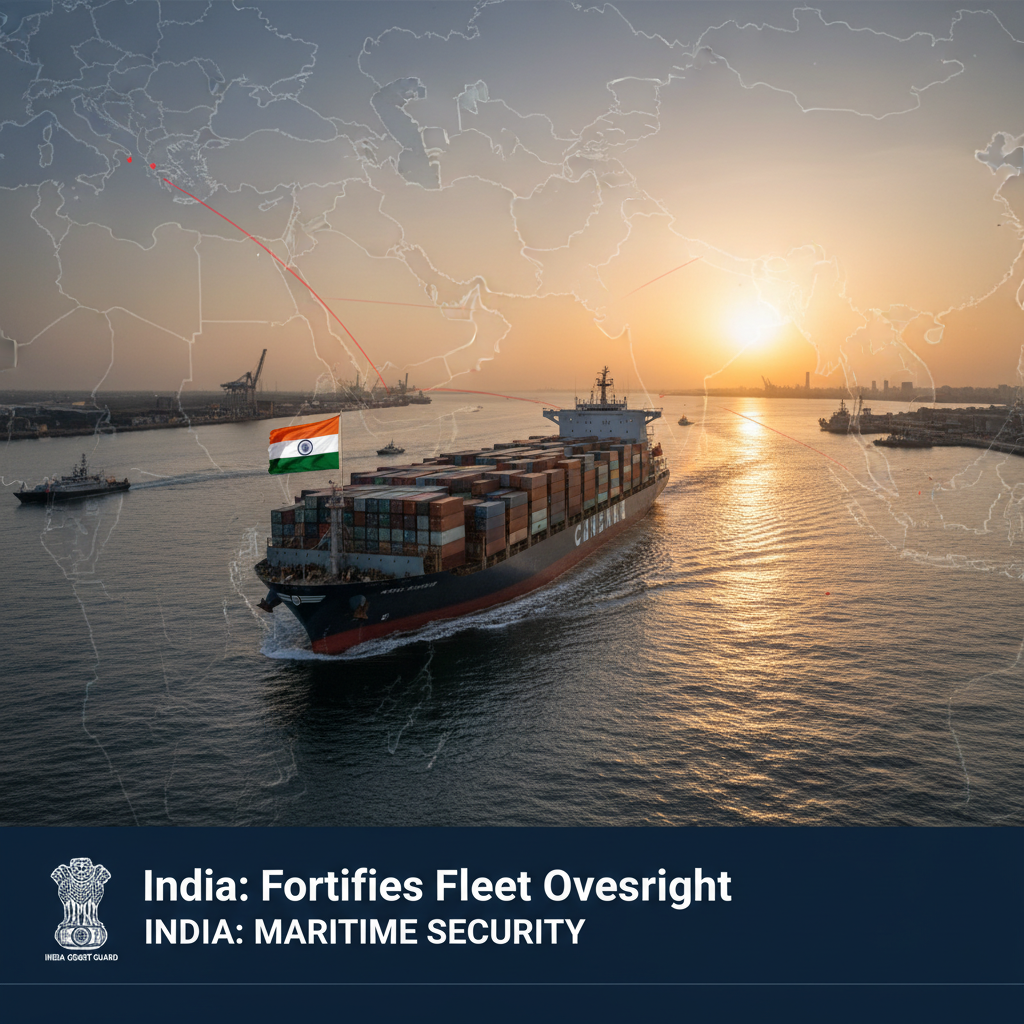
India Fortifies Merchant Fleet Oversight Amidst Middle East Maritime Risks
In a proactive move to safeguard its maritime interests, India has significantly increased its oversight of the Indian-flagged merchant fleet. This heightened vigilance comes in direct response to the escalating tensions in the Middle East, a region that has become increasingly volatile for global shipping operations. The Indian authorities are implementing new measures to ensure the safety and security of its vessels and the seafarers who operate them, reflecting a commitment to maritime security in a complex geopolitical environment.
Enhanced Tracking and Reporting: A Key Strategy
At the heart of India’s strategy is a focus on enhanced vessel tracking and reporting. The new rules mandate more comprehensive monitoring of ships, particularly those operating in or transiting through high-risk zones. This involves real-time tracking capabilities and more frequent reporting requirements, allowing authorities to maintain a close watch on the merchant fleet. Indian authorities are now equipped to monitor ships around the clock, ensuring that any potential threats are identified and addressed promptly. This enhanced monitoring is a crucial step in ensuring that Indian ships can navigate safely through these challenging waters.
Protecting Ships and Seafarers: The Primary Goal
The primary why behind these actions is to protect Indian ships and the seafarers who crew them. The government recognizes the importance of safeguarding its maritime assets and personnel, especially in areas where security risks are amplified. By improving tracking and reporting, the authorities aim to minimize the exposure of Indian ships to potential dangers. This proactive approach underscores India’s dedication to the safety and well-being of its maritime community. The measures being taken are a clear indication of India’s commitment to ensuring the safe passage of its vessels, regardless of the challenges posed by the current geopolitical climate.
Navigating High-Risk Zones: Measures for Safe Passage
Recognizing the risks associated with transit through the Middle East, India is actively taking measures to facilitate the safe passage of its merchant fleet through high-risk zones. These measures include providing guidance on safe navigation practices, offering support in case of emergencies, and maintaining close communication with vessels operating in these areas. The government’s proactive stance is a testament to its commitment to maritime safety and security, ensuring that Indian ships can operate with confidence. How these measures are implemented involves a combination of enhanced surveillance, improved communication protocols, and proactive risk assessment, all designed to protect the merchant fleet.
Policy and Sectoral Implications
The tightening of oversight over the merchant fleet has significant implications for both maritime policy and the shipping sector. The new regulations will likely require shipping companies to adapt their operational procedures to comply with the enhanced tracking and reporting requirements. This could involve investments in new technologies and training for seafarers. However, the long-term benefits of these measures, including improved safety and security, far outweigh the immediate costs. The government’s actions send a clear message: India is committed to protecting its maritime interests and ensuring the smooth flow of trade, even in the face of geopolitical uncertainty.
Conclusion
India’s decision to increase its oversight of the merchant fleet is a critical response to the growing tensions in the Middle East. By implementing new rules for tracking and reporting, India is proactively addressing the challenges faced by its shipping industry. These measures are designed to protect Indian ships and seafarers, ensuring their safety as they navigate through high-risk zones. As the global landscape continues to evolve, India’s commitment to maritime security remains steadfast, reinforcing its role as a responsible stakeholder in the international shipping community.
Source: Industry-Economic Times
About the Author