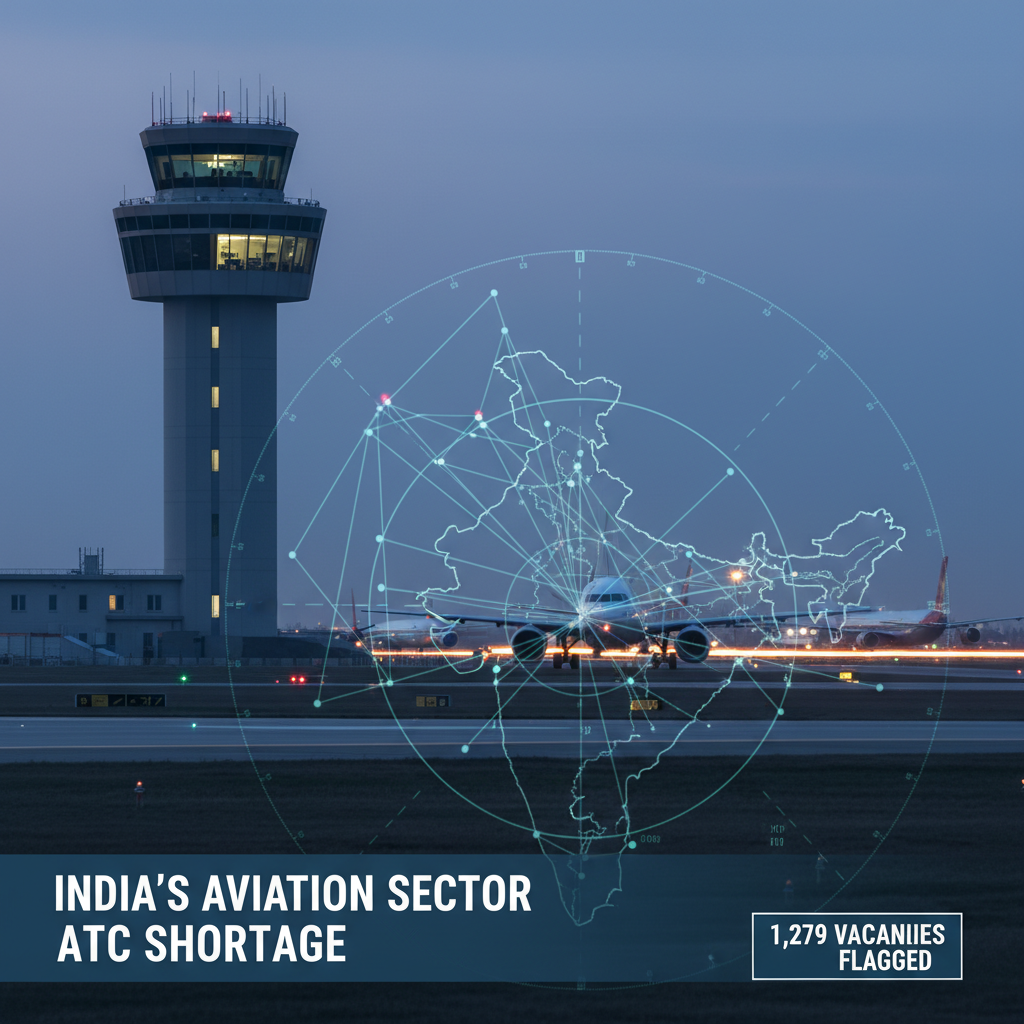
India’s Aviation Sector Faces ATC Shortage: 1,279 Vacancies Flagged
The Indian aviation sector, experiencing rapid growth, is currently navigating a critical challenge: a shortage of air traffic controllers (ATCs). According to recent reports, the Airports Authority of India (AAI) is facing a significant deficit, with a staggering 1,279 ATC positions remaining vacant. This shortfall presents a potential hurdle to the industry’s continued expansion and operational efficiency.
The Scope of the Shortage
The core issue revolves around the availability of qualified personnel to manage air traffic, a crucial element for ensuring flight safety and smooth operations. The high number of unfilled positions underscores the urgency of addressing this deficit. The Airports Authority of India, responsible for managing air traffic services across the country, is directly impacted by this shortage.
Maintaining Safety Amidst Vacancies
Despite the significant number of vacancies, the government maintains that aviation safety is being upheld. The Directorate General of Civil Aviation (DGCA) ensures that the deployment of existing air traffic controllers aligns with international norms and is calibrated to the volume of traffic at each airport. This approach, focusing on optimal manpower use, is a key strategy to mitigate the impact of the staffing shortage.
Addressing the Deficit
To tackle the ATC shortage, the government and relevant authorities have initiated training initiatives. These programs are designed to equip new recruits with the necessary skills and knowledge to become certified air traffic controllers. The DGCA oversees these training programs to ensure they meet the required standards. The ongoing nature of these initiatives reflects a long-term commitment to resolving the staffing issue and supporting the continued growth of the aviation market in India.
The Broader Context
The aviation sector in India is experiencing a period of significant expansion, with increasing air travel demand and the development of new airports and routes. To address the deficit in this rapidly growing aviation market, a robust workforce of qualified air traffic controllers is essential. The government’s focus on training and strategic deployment is crucial to ensure that the industry can continue to grow safely and efficiently.
Conclusion
The shortage of air traffic controllers in India highlights the challenges associated with the rapid growth of the aviation sector. While the Airports Authority of India and the Directorate General of Civil Aviation are actively working to address the issue through training and strategic resource management, the situation underscores the need for continued investment in personnel and infrastructure to support the long-term sustainability of the industry. The ongoing efforts to fill these vacancies are critical for maintaining aviation safety and accommodating the increasing demand for air travel.
About the Author