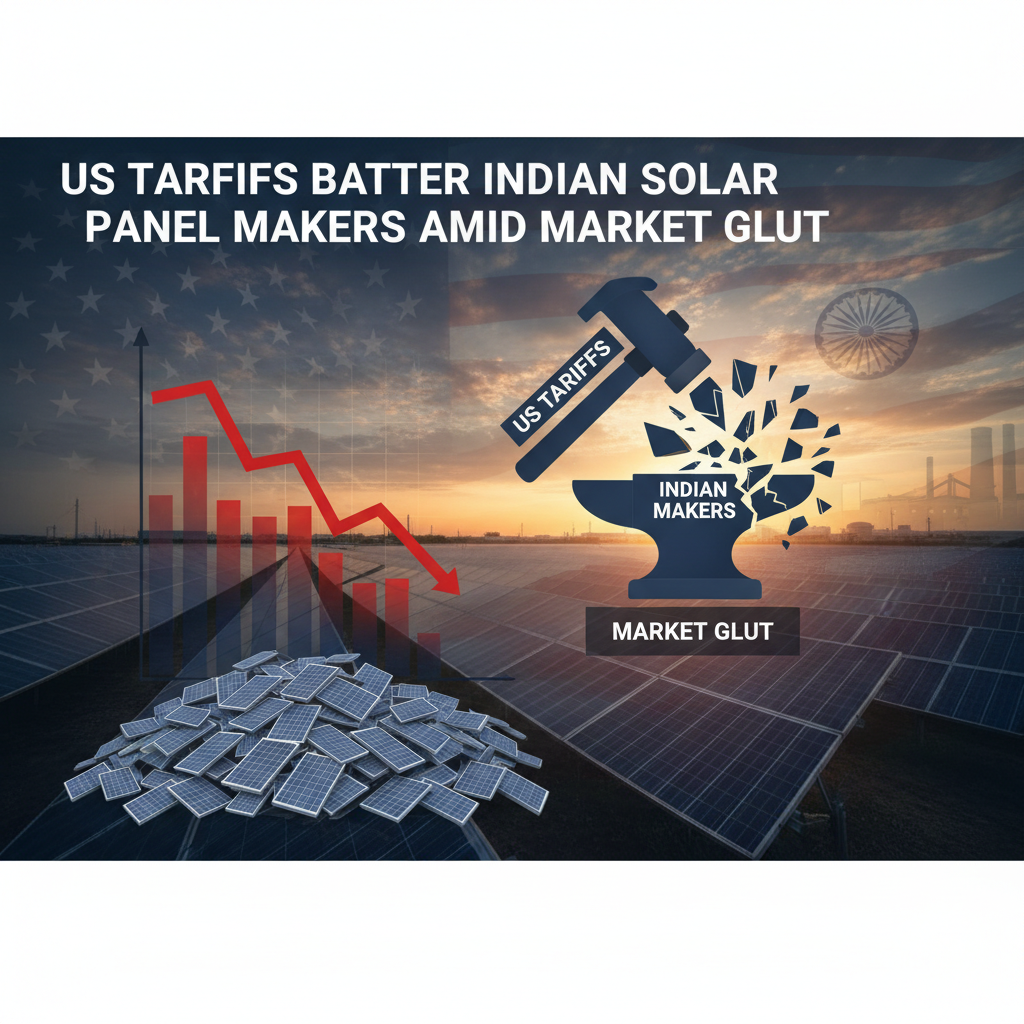
US Tariffs Batter Indian Solar Panel Makers Amid Market Glut
The global solar energy sector is a complex web of innovation, investment, and intense competition. Recently, this intricate system experienced a significant jolt. The U.S. government’s imposition of a 126% tariff on solar imports from India has sent ripples of disruption throughout the industry, specifically impacting Indian solar panel makers. As reported by the Economic Times, this policy shift has intensified existing challenges, particularly those related to overcapacity and price pressure.
The Fallout of Protectionist Measures
The immediate consequence of the new tariffs is the effective closure of the U.S. market to Indian manufacturers. The U.S., a major consumer of solar panels, has essentially erected a barrier that significantly limits access for Indian exporters. This action, categorized under trade policy, comes at a time when the solar industry is already grappling with considerable hurdles. The interplay of overcapacity and price pressure creates a difficult environment for manufacturers. The tariffs exacerbate these difficulties, as they reduce the potential customer base and intensify the need to find alternative outlets for their products.
Strategic Realignment and Market Exploration
In response to these challenges, Indian solar panel makers are actively seeking new strategies. This involves an aggressive exploration of alternative markets. Europe is emerging as a critical region of interest, with manufacturers looking to expand their presence and sales in the European market. Simultaneously, some companies are taking a longer-term view, choosing to expand their manufacturing capacity within the US. This strategy is an attempt to circumvent the tariffs and retain access to the lucrative American market. These decisions underscore the dynamic and adaptive nature of the industry, which is constantly adjusting to policy changes and market conditions.
The Broader Implications
The situation highlights broader issues within the renewable energy sector. Trade policy can have a profound impact on the viability of businesses and the overall growth of the industry. The US decision reflects the complex interplay of economic interests, geopolitical strategies, and the push for domestic manufacturing. For Indian solar panel makers, the situation requires swift and decisive action. The ability to adapt and find new markets will be crucial for survival. As the industry navigates these choppy waters, it is essential to consider the impact on global market access and the broader transition to sustainable energy sources.
Navigating the Storm
The present scenario presents a stark reminder of the interconnectedness of global trade and the influence of government policies. The 126% solar tariffs imposed by the US on imports from India have created significant turbulence for Indian solar panel makers. While the immediate impact is negative, the industry’s response will be crucial in determining its future trajectory. By exploring new markets and adapting manufacturing strategies, companies are attempting to mitigate the adverse effects of these tariffs. This situation underscores the need for businesses to remain flexible and proactive in an ever-changing global environment, particularly within the solar industry, which is subject to rapid technological advances and evolving policy frameworks. The industry’s ability to innovate and adapt will be pivotal in overcoming the current challenges and securing its long-term viability.
Source: Economic Times
About the Author