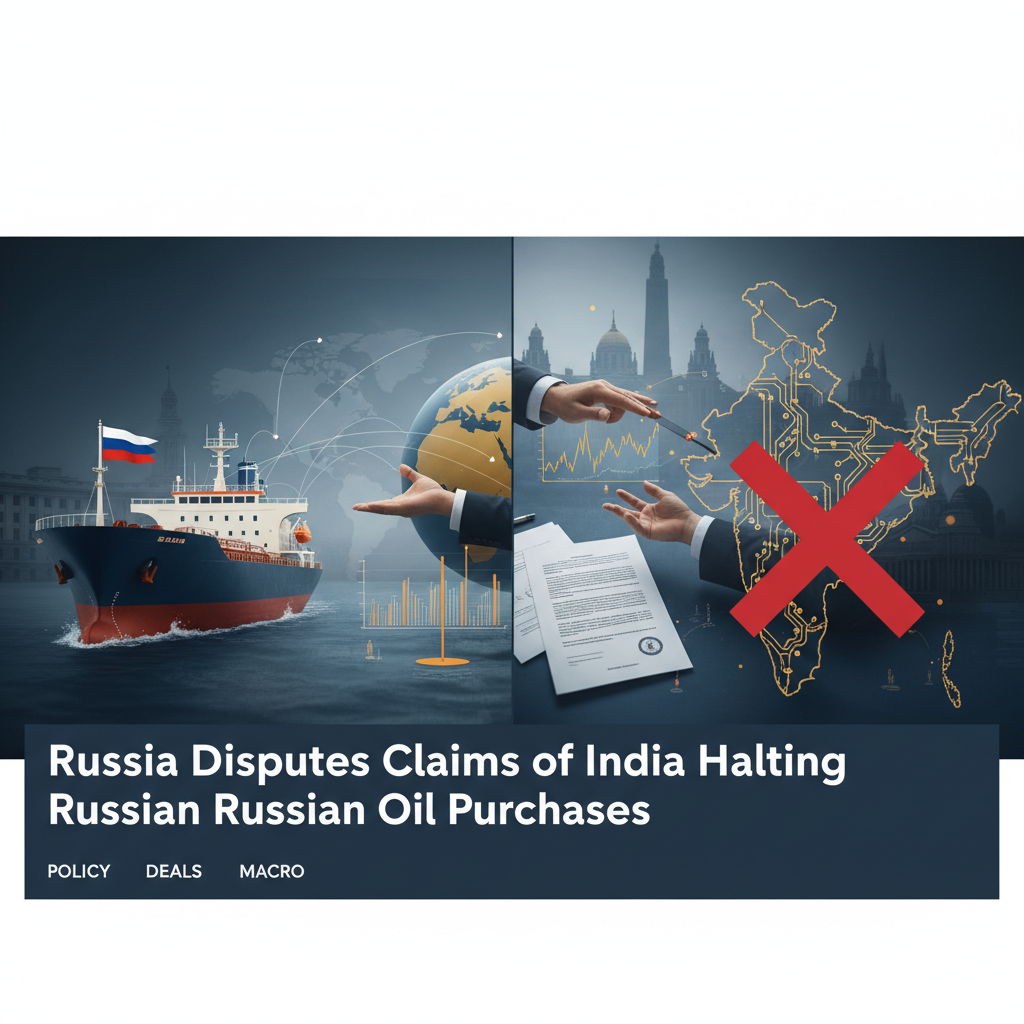
Russia Disputes Claims of India Halting Russian Oil Purchases
In a recent statement, Russia has refuted assertions that India has ceased its purchases of Russian crude oil. This response comes amidst reports of United States pressure on New Delhi to halt these imports. The situation highlights the complex interplay of international policy, trade dynamics, and the ongoing efforts to stabilize global energy markets.
The Core of the Dispute
The crux of the matter lies in differing narratives surrounding India’s oil import strategy. Moscow maintains that the trade relationship benefits both nations, contributing to the stability of the global energy landscape. This perspective directly counters the claims, reportedly originating from the United States, that India has agreed to curtail its purchases of Russian oil. India, however, has neither confirmed nor denied these assertions, leaving the situation in a state of ambiguity.
Russia’s Stance and Rationale
Russia’s position is clear: there is no evidence to suggest a change in India’s stance on Russian oil. Moscow emphasizes the mutual benefits derived from these transactions, framing them as a stabilizing force in the global energy market. The Russian government accuses the United States of employing coercive measures to prevent oil purchases. This accusation indicates a belief that the US is actively working to disrupt the trade relationship between Russia and India, potentially through sanctions or other forms of pressure. The Russians believe these actions are designed to limit Russia’s economic activity.
The US Perspective and Global Implications
The United States’ motivation, according to Russia, is to prevent oil purchases. While the specific strategies employed by the US remain undisclosed, the underlying goal, as perceived by Moscow, is to limit Russia’s revenue streams and exert pressure related to the ongoing geopolitical situation. The dispute has broader implications for the global energy market. The oil trade between Russia and India is a significant component of the global supply chain, and any disruption could lead to market volatility. The situation also underscores the challenges of navigating international sanctions and the complex web of geopolitical interests at play.
India’s Position: A Balancing Act
India’s approach has been one of strategic ambiguity. By neither confirming nor denying the US claims, New Delhi maintains flexibility in its foreign policy. India is walking a tightrope, balancing its economic interests, its relationships with both Russia and the US, and the need to ensure energy security for its population. The country has been a significant purchaser of Russian oil, taking advantage of discounted prices offered in the wake of sanctions. However, India also maintains strong ties with the United States, making it susceptible to US pressure. Navigating these competing interests requires careful diplomacy and strategic decision-making.
Conclusion
The dispute over India’s oil purchases from Russia reveals a complex interplay of geopolitical tensions, economic interests, and policy decisions. Russia’s denial of any change in India’s stance, coupled with accusations against the United States, highlights the conflicting narratives surrounding the trade relationship. As the situation unfolds, the global energy market and international relations will continue to be affected. The future of the trade will depend on the actions of Russia, India, and the United States. The impact on the global energy market and international relations will be significant.
Source: Industry-Economic Times
About the Author