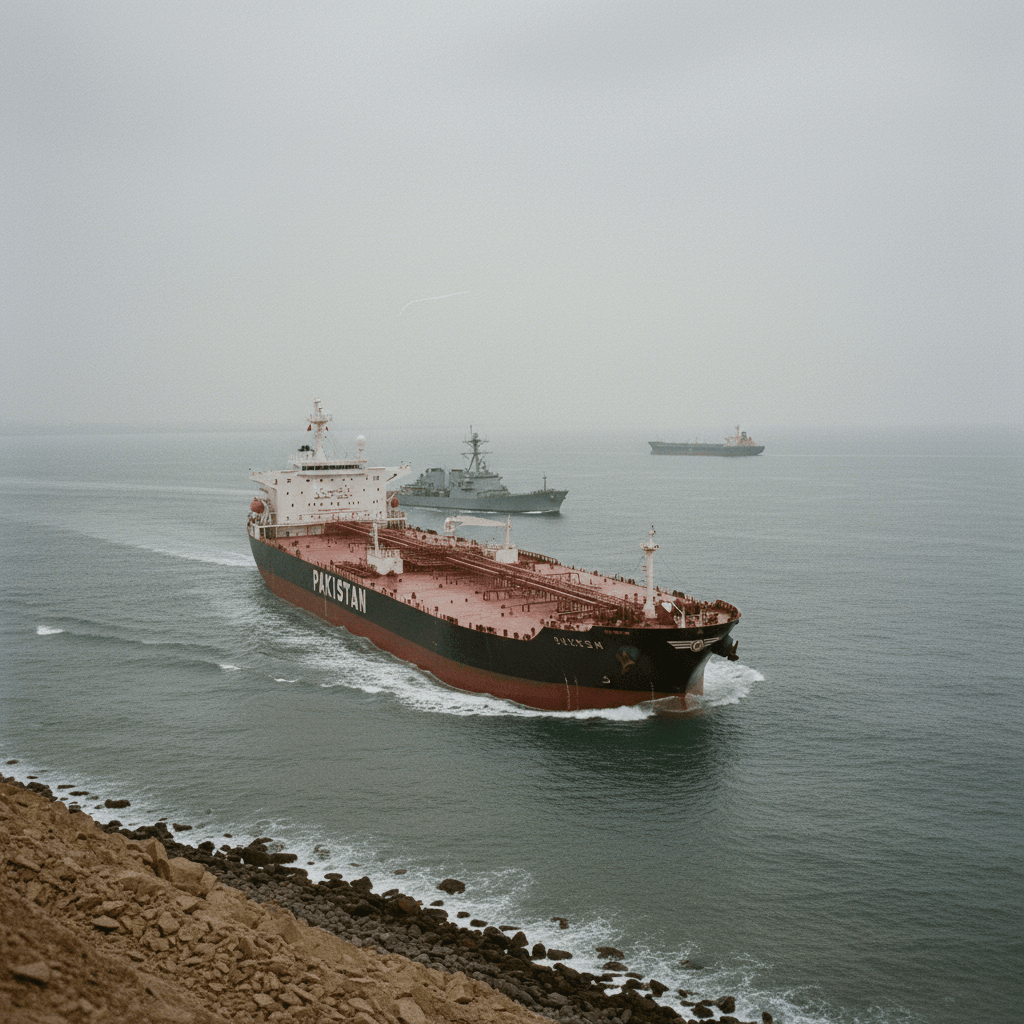
A tanker labeled "PAKISTAN" navigates choppy waters, with a warship and another tanker in the distance.
Heightened geopolitical tensions in the Middle East are impacting maritime traffic, as evidenced by the recent diversion of two supertankers in the Strait of Hormuz. The incident occurred amidst the breakdown of US-Iran talks held in Islamabad, raising concerns about stability in the critical oil transit route.
According to reports, two empty supertankers, one flagged to Pakistan, made sudden U-turns as they approached the Strait. A third vessel, however, successfully navigated through the waterway. The reasons for the disparate outcomes remain unclear, despite prior approvals reportedly granted by Iranian authorities.
The Strait of Hormuz is a strategic chokepoint for global oil supplies, with a significant percentage of the world’s oil passing through it daily. Disruptions to traffic in the area can have far-reaching consequences for energy markets and geopolitical stability.
The collapse of US-Iran negotiations adds another layer of complexity to the situation. The talks, aimed at de-escalating tensions and potentially reviving the Iran nuclear deal, have failed to yield a breakthrough. This failure has increased uncertainty and the potential for further disruptions in the region.
Investors and analysts are closely monitoring developments in the Strait of Hormuz, as any escalation could impact oil prices and investment strategies in the energy sector. The incident underscores the importance of geopolitical risk assessment in investment decisions, particularly in regions with a history of instability.
About the Author