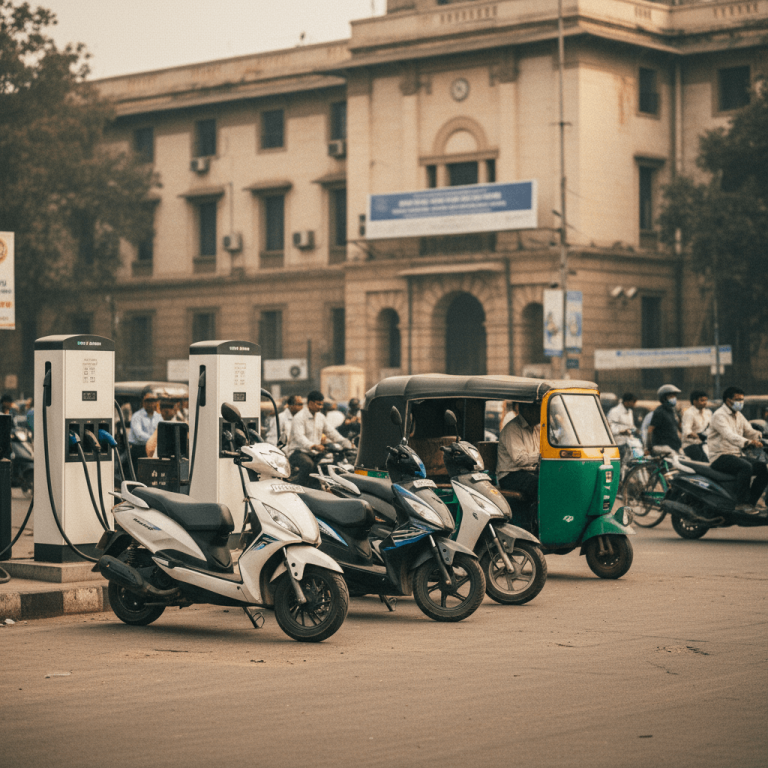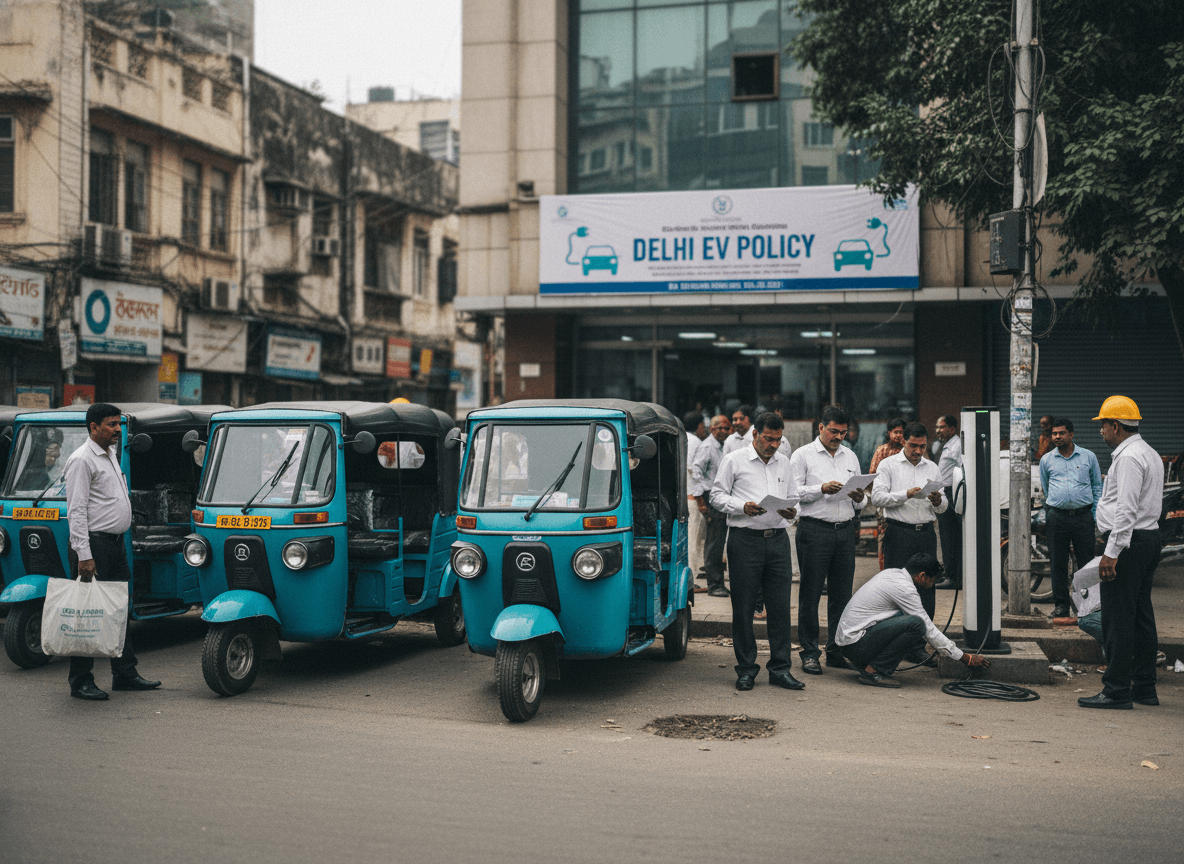
Delhi's EV policy banner overlooks new electric auto-rickshaws and charging infrastructure.
The Delhi government’s draft electric vehicle (EV) policy includes a 100% road tax waiver and registration fee exemption for electric cars priced up to Rs 30 lakh until March 2030, according to Economictimes.indiatimes.com. This initiative is designed to encourage the adoption of electric vehicles and improve air quality in the region.
The policy also extends benefits to strong hybrid EVs, which will receive a 50 percent exemption. Furthermore, starting in 2027, only electric three-wheelers will be registered, signaling a clear shift towards electric mobility in the three-wheeler segment.
This policy could spur investment in EV manufacturing and infrastructure within Delhi, as lower taxes and fees make EVs more attractive to consumers. The move aligns with broader efforts to reduce pollution and promote sustainable transportation, potentially setting a precedent for other states to follow.
The incentives may drive venture capital and private equity investments into EV-related startups and companies operating in Delhi, ranging from charging infrastructure providers to EV manufacturers. Investors may see opportunities in battery technology, EV components, and related services, anticipating increased demand due to the policy.
The policy’s focus on electric three-wheelers from 2027 could also lead to targeted investments in this specific segment, as companies prepare to meet the future regulatory requirements. Overall, the Delhi government’s EV policy is expected to stimulate growth and investment in the electric vehicle sector, contributing to a cleaner and more sustainable urban environment.
About the Author