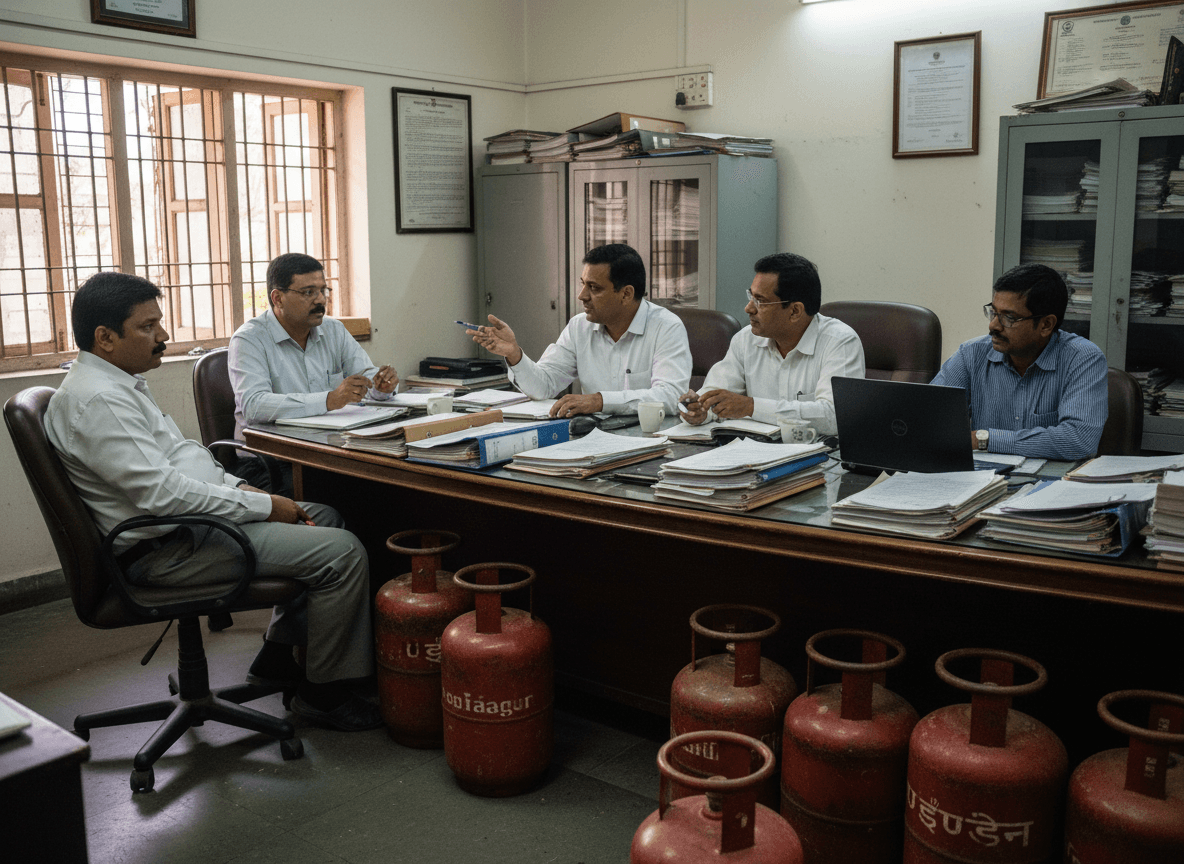
Indian government officials discuss energy policy amid LPG cylinders.
The Indian government has approved a capped allocation of Liquefied Petroleum Gas (LPG) for critical sectors including polymer, steel, and pharmaceuticals, according to recent reports. This move aims to mitigate the impact of ongoing energy supply disruptions and sustain industrial productivity.
Under the new policy, eligible industrial units can access up to 70% of their previous LPG consumption levels. A daily cap of 200 tonnes has been established for all qualifying industries, with priority given to essential and specialized processes. This allocation strategy is designed to ensure efficient distribution and prevent resource depletion.
The decision comes as industries face increasing pressure from fluctuating energy markets and supply chain vulnerabilities. By securing a dedicated LPG supply, the government intends to provide a stable operational environment for key manufacturing sectors. The policy reflects a strategic effort to balance industrial needs with broader energy management objectives.
This measure is particularly relevant for sectors reliant on continuous and high-intensity energy inputs. Polymer production, steel manufacturing, and pharmaceutical processing all require consistent energy sources to maintain output and quality. The LPG allocation is expected to alleviate some of the operational challenges these industries currently face.
The policy’s effectiveness will depend on implementation and monitoring to ensure equitable distribution and prevent misuse. However, initial reactions from industry stakeholders suggest cautious optimism about the potential to stabilize production levels and mitigate energy-related risks.
About the Author