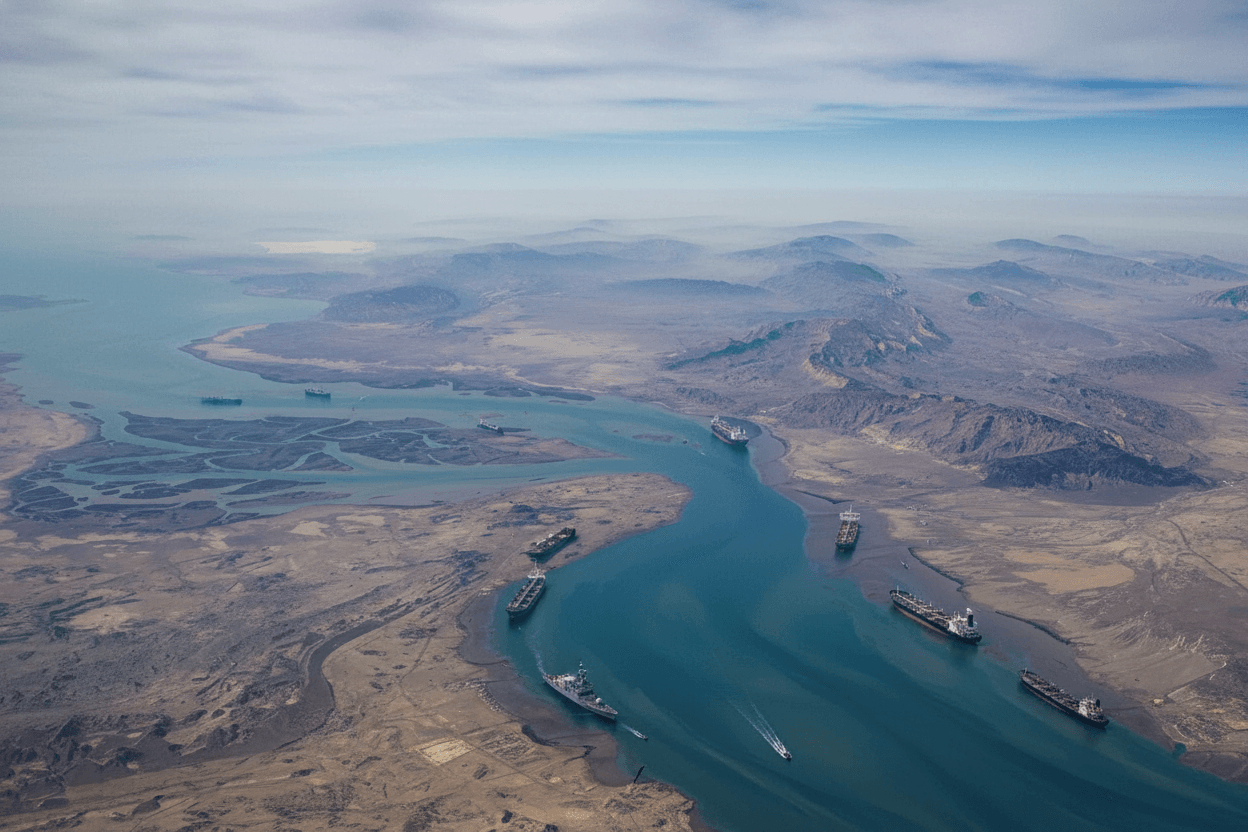
An aerial view of the Strait of Hormuz shows numerous cargo ships and tankers navigating the strategic waterway.
Shipowners are closely monitoring potential ceasefire terms that could briefly reopen the Strait of Hormuz, aiming to move over 800 vessels currently stranded in the Persian Gulf. Weeks of disruption, triggered by tightened Iranian control after reported US and Israeli strikes, have significantly impacted global energy flows, leaving numerous ships waiting on both sides of the critical waterway.
The near-total shutdown of the Strait, a vital artery for oil and gas shipments, has raised concerns about supply chain vulnerabilities and potential price volatility in energy markets. The situation underscores the geopolitical risks inherent in maritime trade routes and the sensitivity of global energy infrastructure to regional conflicts.
Shipowners are evaluating the safety and feasibility of navigating the Strait under the proposed ceasefire conditions, balancing the urgent need to resume operations against the potential for renewed hostilities. The incident highlights the importance of diplomatic efforts to ensure the security and stability of key trade routes.
About the Author