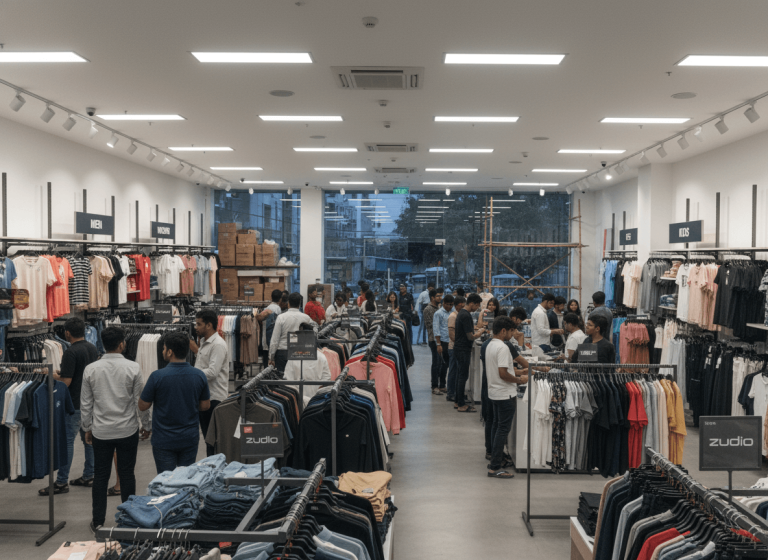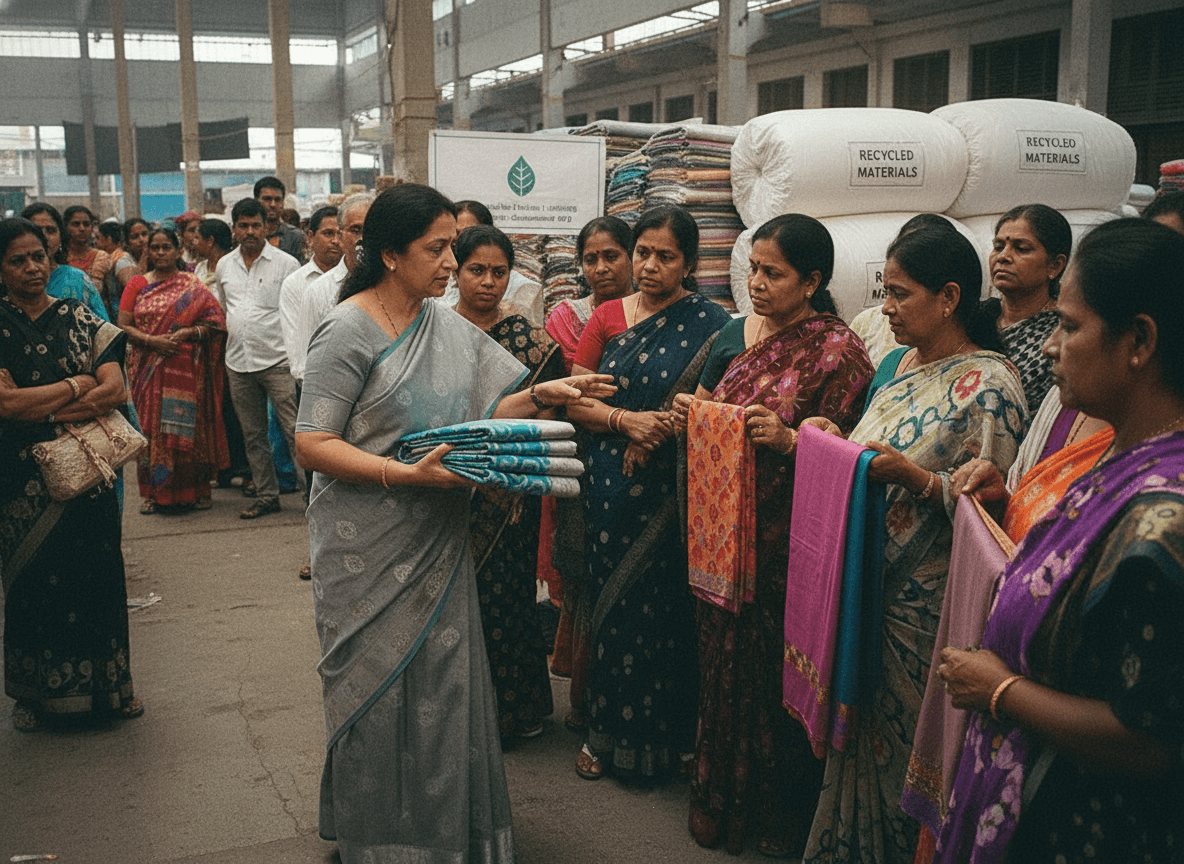
Government official discusses sustainable textiles with women consumers at a market.
A recent government study indicates that women account for 55.5% of textile purchases, highlighting their significant influence on the sector. The study points to sarees and trousers as key product categories, demonstrating specific areas of consumer demand.
Beyond the dominance of women consumers, the research underscores a shift in material preferences. Man-made fibers are increasingly favored over traditional cotton, suggesting potential investment opportunities in synthetic textile production and innovation.
Since 2010, the textile market has experienced substantial growth, creating a dynamic environment for investors. A notable trend is the rising consumer preference for sustainable and recycled textiles, signaling a move towards environmentally conscious purchasing decisions. This trend may lead to increased investment in companies focused on sustainable textile technologies and supply chains.
Technical textiles, including items like masks and sanitary napkins, are also experiencing heightened demand, particularly in rural areas. This growth could attract investment in the production and distribution of specialized textile products targeting specific needs.
The increasing demand for sustainable textiles could drive capital towards companies employing innovative recycling processes and eco-friendly materials. Investors may also focus on companies that effectively target the rural market with essential technical textile products.
About the Author